Implantable collamer lens (ICL) surgery is an effective method of vision correction often considered for patients with particularly high or complicated prescriptions. But while many patients may have been told that ICL surgery is their only option, this may not necessarily be the case. With state-of-the-art technology and world-renowned expertise, we are often able to use Laser Eye Surgery to treat patients with even very high prescriptions.
What is ICL Surgery?
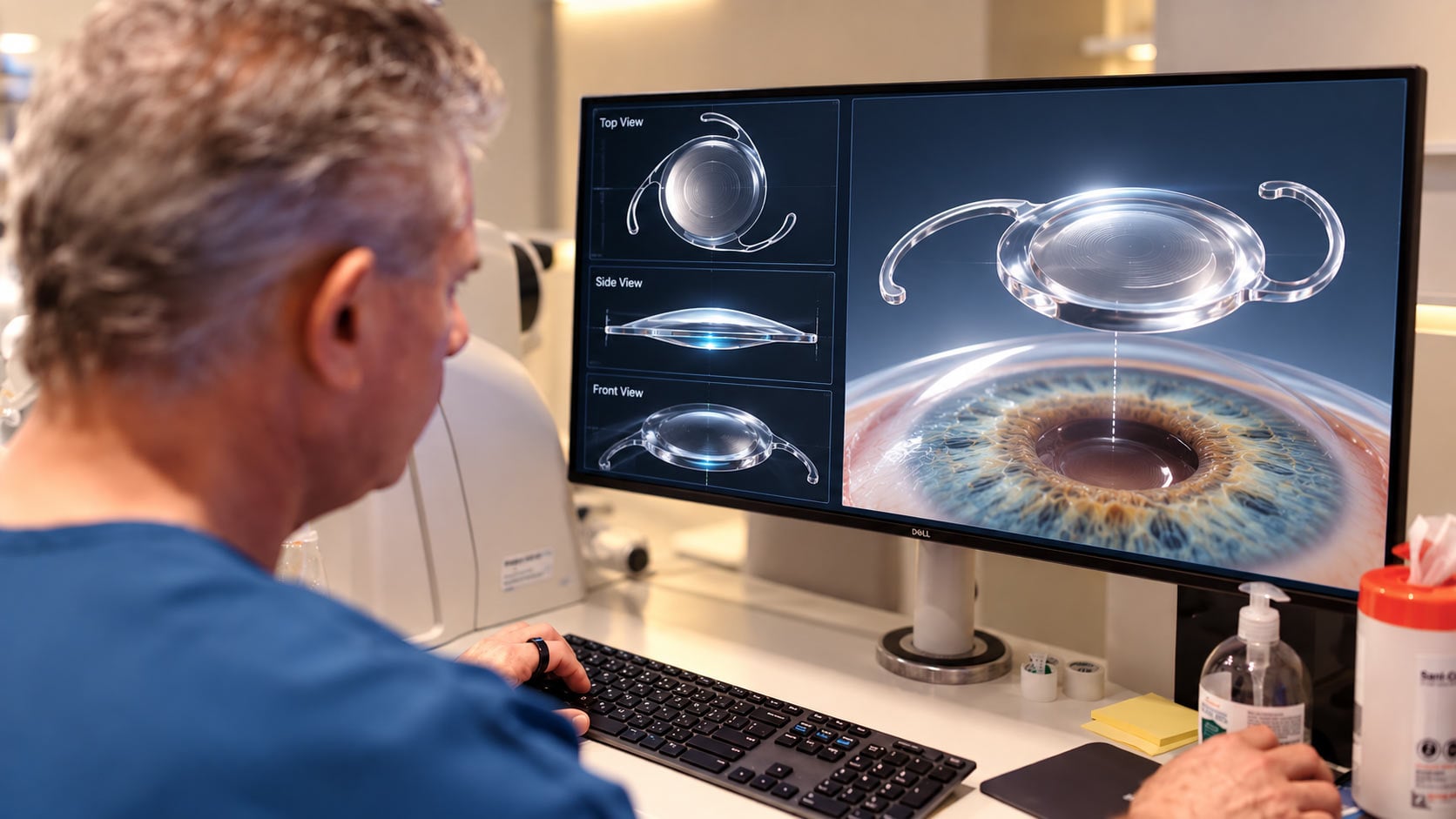
ICL Surgery was developed in the early-mid 1990s, building on the earlier invention of intraocular lenses (IOLs), which were first invented as a treatment for cataracts in the 1940s. In this context, the synthetic lenses are used to replace cataract-affected lenses, which become clouded as the condition progresses. Later, phakic IOLs were developed for correcting refractive errors.
An earlier version of the procedure involved implanting phakic IOLs in the anterior chamber of the eye – the space between the cornea and the iris. However, this technique was later found to be associated with the development of complications, including lens dislocation and glaucoma. As a result, posterior chamber IOLs were developed and the first, the Staar Collamer implant, received FDA approval in 1998.
Today, ICL surgery can be used to correct common refractive errors, such as myopia (short-sightedness), hyperopia (long-sightedness), and astigmatism.
How Does ICL Surgery Work?
Unlike cataract surgery, which involves removing the natural lens from the eye and replacing it with a synthetic one, ICL surgery for refractive errors involves implanting lens inside the eye in front of the natural lens. The lens is positioned behind the iris where it can remain in place indefinitely. In essence, ICL surgery is like having a permanent contact lens placed inside the eye.
The procedure is relatively non-invasive and takes around 20-30 minutes to complete. Moreover, the treatment can be completely reversed or adjusted at a later date, if required – for example, if cataract surgery is needed.
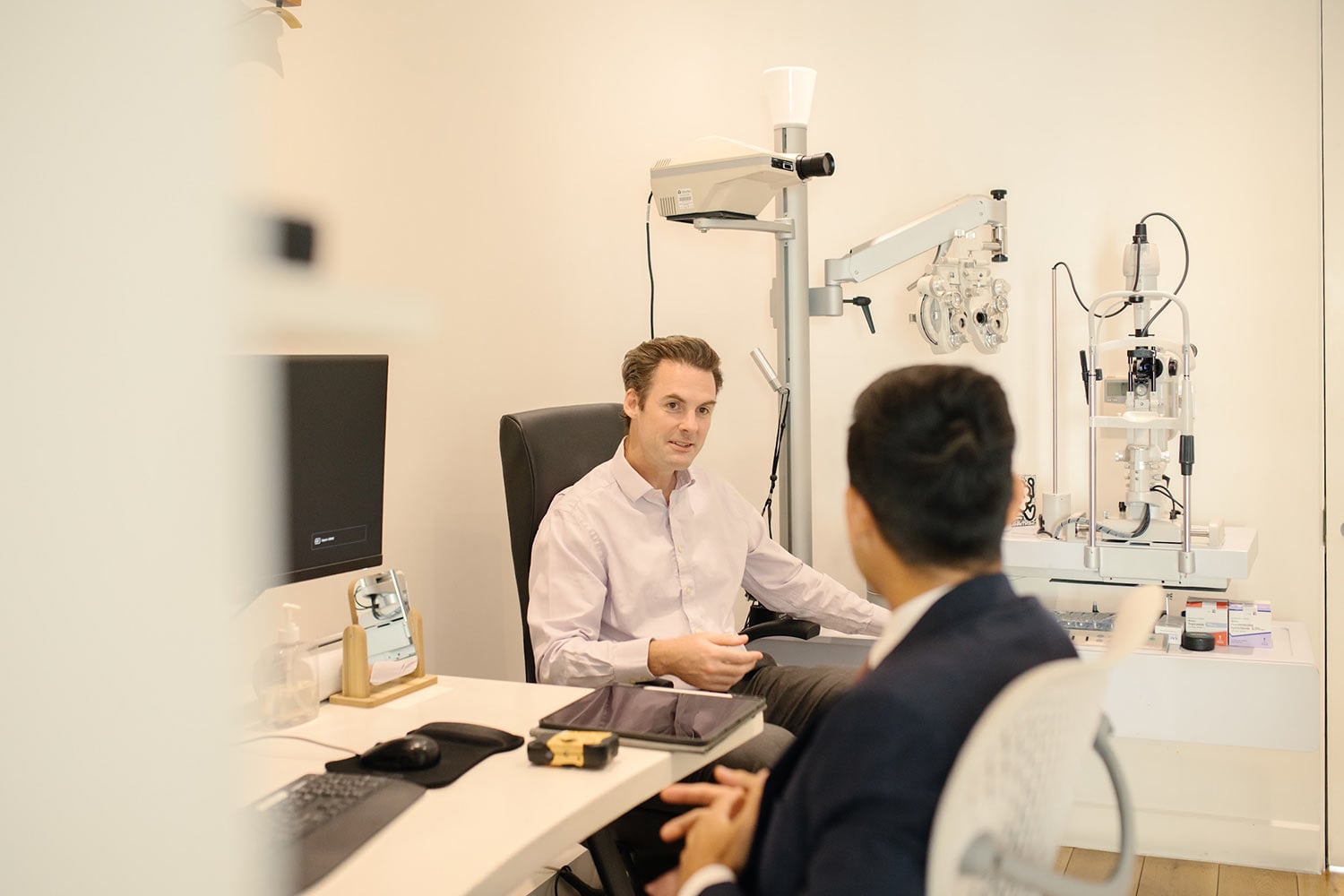
ICL surgery may be recommended for patients who are deemed unsuitable for other vision correction treatments, such as Laser Eye Surgery.
In the video below, our founder, Professor Dan Reinstein, explains who may be suitable for ICL surgery…
As Professor Reinstein explains, the most suitable method of correction should be decided by a qualified doctor based on a range of factors. Some alternatives to ICL surgery include…
Glasses and Contact Lenses
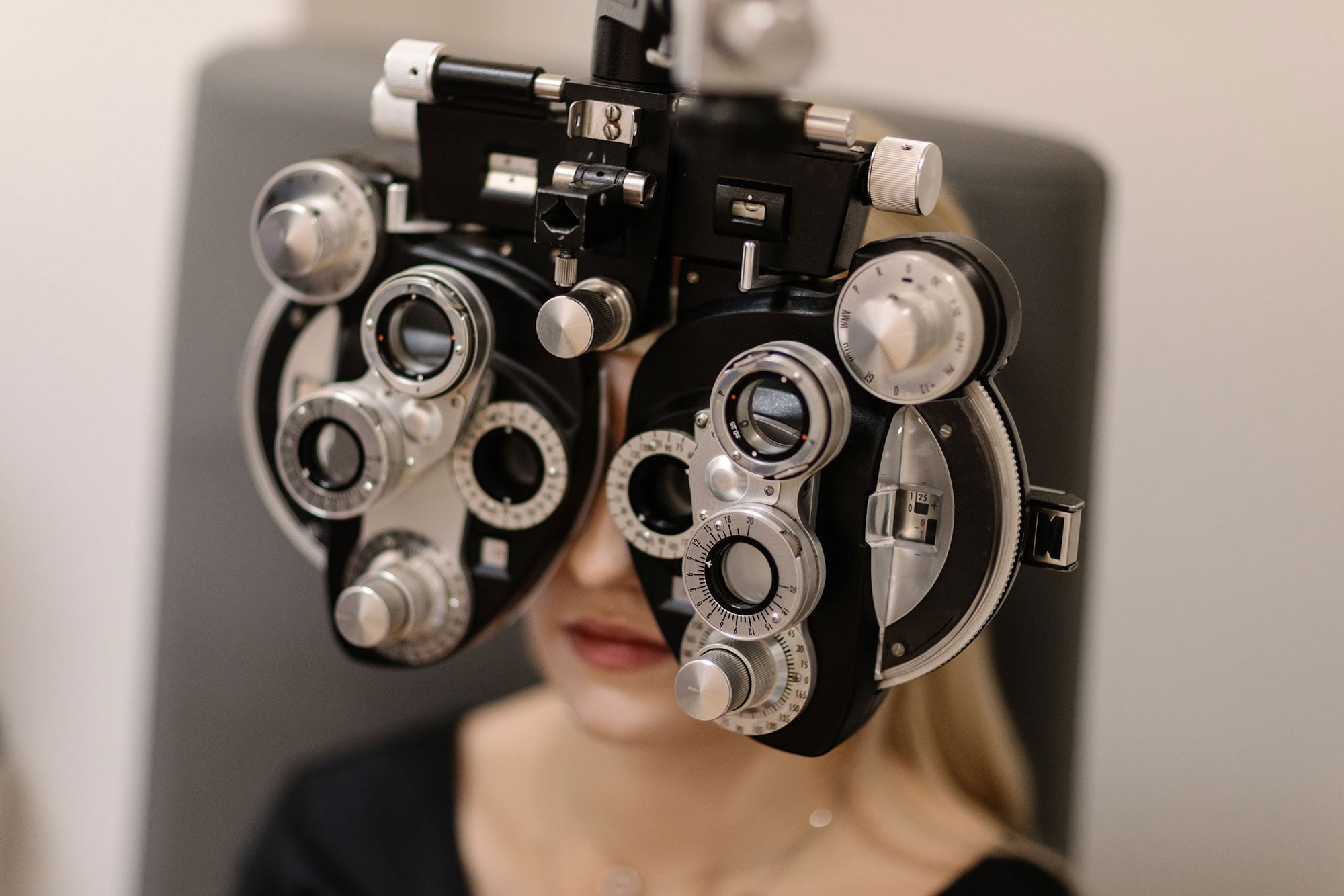
Glasses and contact lenses are typically the go-to for the initial correction of refractive errors. They are widely available and can effectively correct a vast range or prescriptions; however, many people eventually become tired of the drawbacks of external visual aids. For example:
Glasses can be easily lost or broken, potentially leading to costly replacements. Moreover, glasses frames can affect your peripheral vision, external lenses can become scratched or distorted by things such as water droplets and steam. Depending on your prescription and the consequent thickness of your lenses, images may also appear larger or smaller than they are in reality.
Contact lenses offer discretion and are effective against the vast majority of prescriptions; however, they also have some downsides. Their direct contact with the cornea can limit oxygen flow around the surface of the eye, which can lead to discomfort, redness, and dry eyes. It is also advised that contact lenses only be worn for a certain amount of time per day. Failing to adhere to these recommendations, as well as improper lens use and fitting, can increase the risk of infections.
Laser Eye Surgery
Laser Eye Surgery involves using ultra-precise lasers to remove a portion of tissue from the cornea, effectively reshaping the eye. This allows the surgeon to adjust the refracting power of the cornea, so that it directs light more effectively at the retina at the back of the eye. These treatments can treat a wide range of prescriptions, including long-sightedness, short-sightedness, astigmatism, and even presbyopia.
As it adjusts the cornea – the clear outer window of the eye – Laser Eye Surgery is less invasive than ICL Surgery. As such, it has a lower overall risk profile, speedier recovery times, and can be performed in just a matter of minutes.
Therefore, in the majority of cases, ICL surgery is only considered if a patient is found to be unsuitable for Laser Eye Surgery, or if it would not be possible to fully correct the refractive error with Laser Eye Surgery. However, the prescription limit for Laser Eye Surgery can vary from clinic to clinic. For example, at London Vision Clinic, we have access to the latest technology and world-renowned surgeons, which allows us to treat much higher prescriptions than the norm. So, we may be able to treat your high prescription with Laser Eye Surgery – even if you have been turned away by another clinic!
Furthermore, Laser Eye Surgery can be used in combination with ICL surgery to correct any residual refractive error which may not have been fully corrected by the intraocular lens – a technique called Bioptics.
Professor Reinstein explains why ICL surgery might be advised over Laser Eye Surgery at London Vision Clinic…
Clear lens exchange (CLE), Refractive Lens Exchange (RLE) or Permanent Lens Replacement (PLR)
These names all refer to the same procedure, which is used for cataract surgery. This procedure involves removing the eye’s natural, crystalline lens and replacing it with a synthetic collamer lens. Ideally, CLE should only be considered as an alternative treatment when Laser Eye Surgery or ICL Surgery are not suitable.
If you’d like to learn more about the treatment options at London Vision Clinic – from Laser Eye Surgery to ICL Surgery – get in touch with one of our friendly clinic coordinators today. Alternatively, Book a Consultation to find out which treatment could be best for you.