
FREE Consultation
What is a Keratoconus?
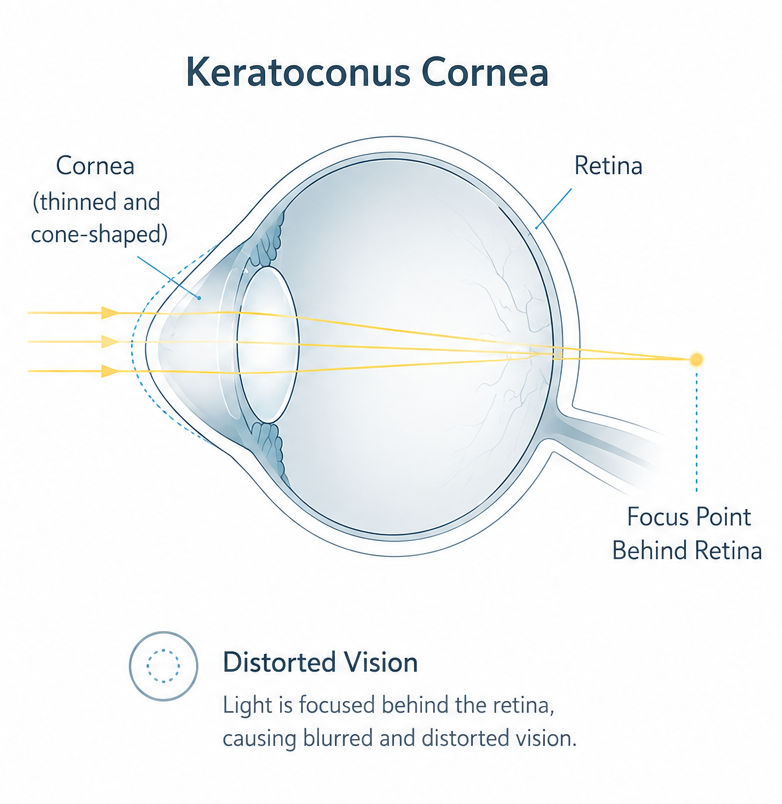
Keratoconus develops when the collagen fibres that help maintain the cornea’s strength and shape begin to weaken. Over time, this loss of structural stability allows the cornea to become thinner and less able to withstand the natural pressure inside the eye, causing it to gradually protrude forwards.
As the shape of the cornea becomes increasingly irregular, light entering the eye is scattered and distorted rather than being focused precisely. This can lead to blurred vision, ghosting, glare, halos around lights and increasing levels of astigmatism. Many patients find that glasses prescriptions change frequently as the condition progresses, particularly during their teens and twenties when keratoconus is often first diagnosed.
The exact cause of keratoconus is not fully understood, although genetics, chronic eye rubbing and certain underlying conditions are believed to play a role. The condition can affect one or both eyes and may progress at different rates in each eye. Without appropriate monitoring and treatment, keratoconus can continue to alter the shape of the cornea and significantly impact visual quality over time.
Keratoconus Treatment From London Vision Clinic
Keratoconus is a progressive eye condition that affects the shape and strength of the cornea, the clear front surface of the eye. As the cornea gradually becomes thinner and begins to bulge forwards into a cone-like shape, vision can become increasingly distorted, making everyday activities such as reading, driving and screen use more challenging.
The good news is that keratoconus treatment has advanced significantly over the last two decades. Modern diagnostic technology allows the condition to be detected earlier than ever before, while innovative treatments can help stabilise the cornea, slow progression and improve visual quality. At London Vision Clinic, we offer personalised keratoconus care designed to protect long-term eye health and help patients achieve the best possible vision for their lifestyle.
What You Say About London Vision Clinic
Recovery After Corneal Cross-Linking
Cross-linking is designed to strengthen and stabilise the cornea. Vision may initially appear blurred or fluctuate as the surface of the eye heals.
0
1–3
WEEK
2–4
MONTHS
This timeline is a general guide. Recovery varies according to the severity of keratoconus, the cross-linking technique used and whether another procedure is performed. Follow your clinical team’s advice about eye drops, contact lenses, work, exercise and driving.
Why Early Diagnosis Matters
Keratoconus often develops gradually, meaning many patients assume they simply need a stronger glasses prescription. It is not uncommon for people to experience frequent prescription changes for several years before the underlying cause is identified. During this time, the cornea may continue to change shape, leading to increasing levels of visual distortion and astigmatism.
Early diagnosis allows specialists to monitor the condition closely and identify whether progression is occurring. In many cases, detecting keratoconus before significant vision loss develops provides the greatest opportunity to preserve long-term visual quality and reduce the likelihood of more complex treatment being required later.
Technology for Long-Term Vision
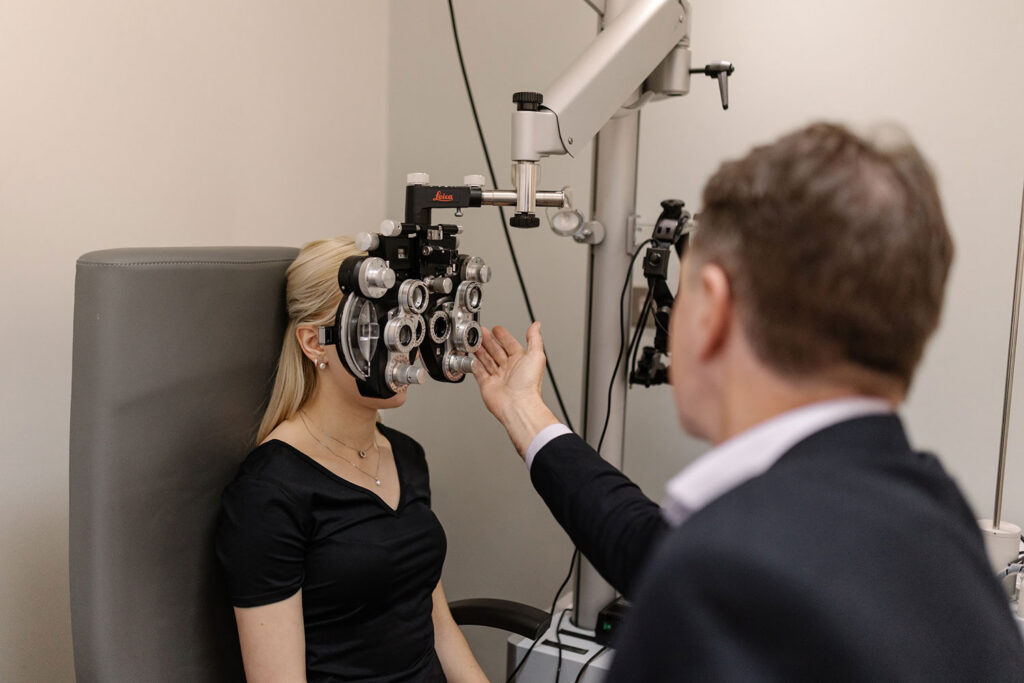
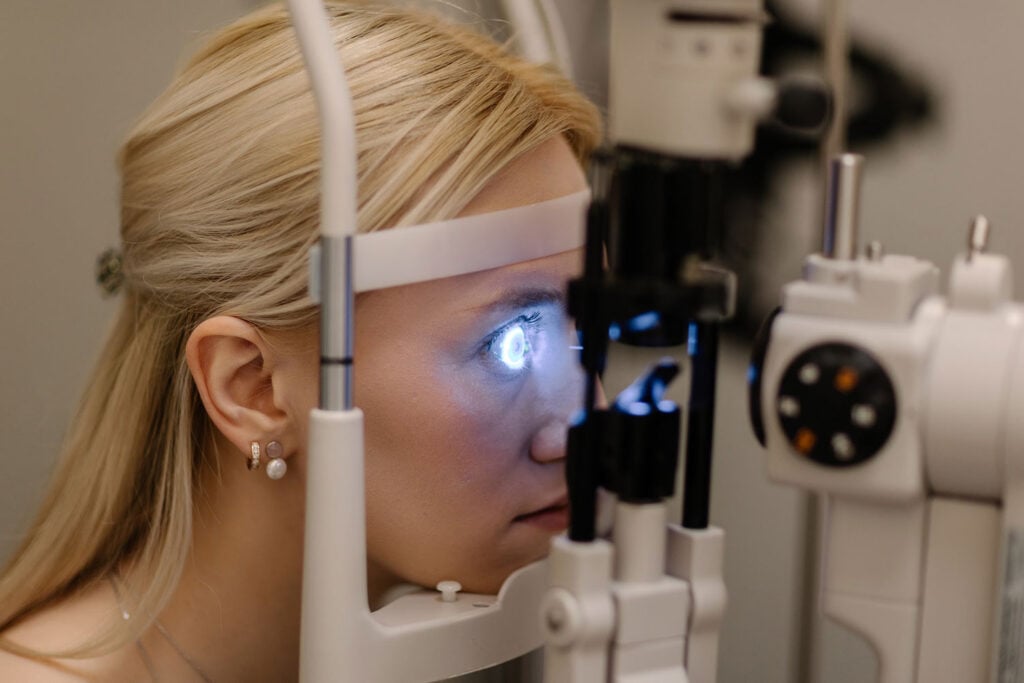
Modern keratoconus care has evolved significantly over the last decade. Advanced corneal imaging systems can now create highly detailed maps of the cornea, allowing specialists to detect subtle structural changes that may not be visible during a routine eye examination.
At London Vision Clinic, detailed diagnostic testing helps guide personalised treatment decisions and long-term monitoring strategies. By combining advanced technology with specialist expertise, it is often possible to manage keratoconus more effectively, helping patients maintain clearer, more comfortable vision for years to come.
| Common Symptom | How It May Affect You |
|---|---|
| Blurred Vision | Objects may appear out of focus even when wearing glasses or contact lenses. |
| Increasing Astigmatism | Frequent prescription changes may be needed as the shape of the cornea continues to change. |
| Ghosting or Double Vision | Patients may see multiple images, shadows or streaks around objects, particularly at night. |
| Glare and Halos | Bright lights, headlights and screens may become increasingly difficult to tolerate. |
| Difficulty Driving at Night | Visual distortions and reduced contrast can make night-time driving more challenging. |
| Eye Strain and Headaches | Constant visual effort to achieve focus may lead to fatigue, headaches and reduced visual comfort. |
How Keratoconus Care Can Change Over Time
Keratoconus does not progress in the same way for everyone. Regular corneal scans help determine whether the condition is stable and which form of care may be appropriate.
Keratoconus severity is not determined by prescription alone. Your specialist will assess corneal shape, thickness, steepness, visual quality and evidence of change between scans before recommending treatment.
This pathway is provided as a general guide. Some people remain stable for many years, while others require earlier treatment. Cross-linking is primarily intended to prevent further progression and does not necessarily remove the need for glasses or contact lenses. Source: Moorfields Eye Hospital.
Concerned About Keratoconus?
If you have noticed increasing astigmatism, frequent prescription changes, blurred vision or difficulties with night driving, keratoconus may be affecting the shape of your cornea. Our experienced specialists can provide a comprehensive assessment to determine whether keratoconus is present and advise on the most appropriate treatment options for your eyes.
At London Vision Clinic, patients benefit from advanced corneal imaging, world-class expertise and personalised treatment planning designed to protect long-term vision. Whether you require ongoing monitoring, specialist management or advice on modern treatment options, our team is here to help you make informed decisions about your eye health.
Book a Consultation Meet Our SpecialistsFAQs
What are the early signs of keratoconus?
The earliest signs of keratoconus often include blurred vision, increasing astigmatism, sensitivity to light and frequent changes in glasses prescriptions. Many patients first notice that their vision is no longer fully corrected by glasses, particularly when driving at night or viewing distant objects.
Can keratoconus cause blindness?
Keratoconus does not usually cause complete blindness, but it can significantly affect visual quality if left untreated. As the cornea becomes more irregular, vision may become increasingly distorted and difficult to correct. Early diagnosis and appropriate management are important for protecting long-term sight.
How is keratoconus diagnosed?
Keratoconus is diagnosed using advanced corneal imaging technology that maps the shape, curvature and thickness of the cornea. These detailed scans allow specialists to detect even subtle changes in the cornea, often before significant symptoms develop.
What treatments are available for keratoconus?
Treatment depends on the severity and progression of the condition. Options may include specialist contact lenses, corneal cross-linking to strengthen the cornea, intracorneal ring segments and, in more advanced cases, corneal transplantation. At London Vision Clinic, treatment recommendations are tailored to each patient’s individual needs and long-term visual goals.