
FREE Consultation
What is Presbyopia?
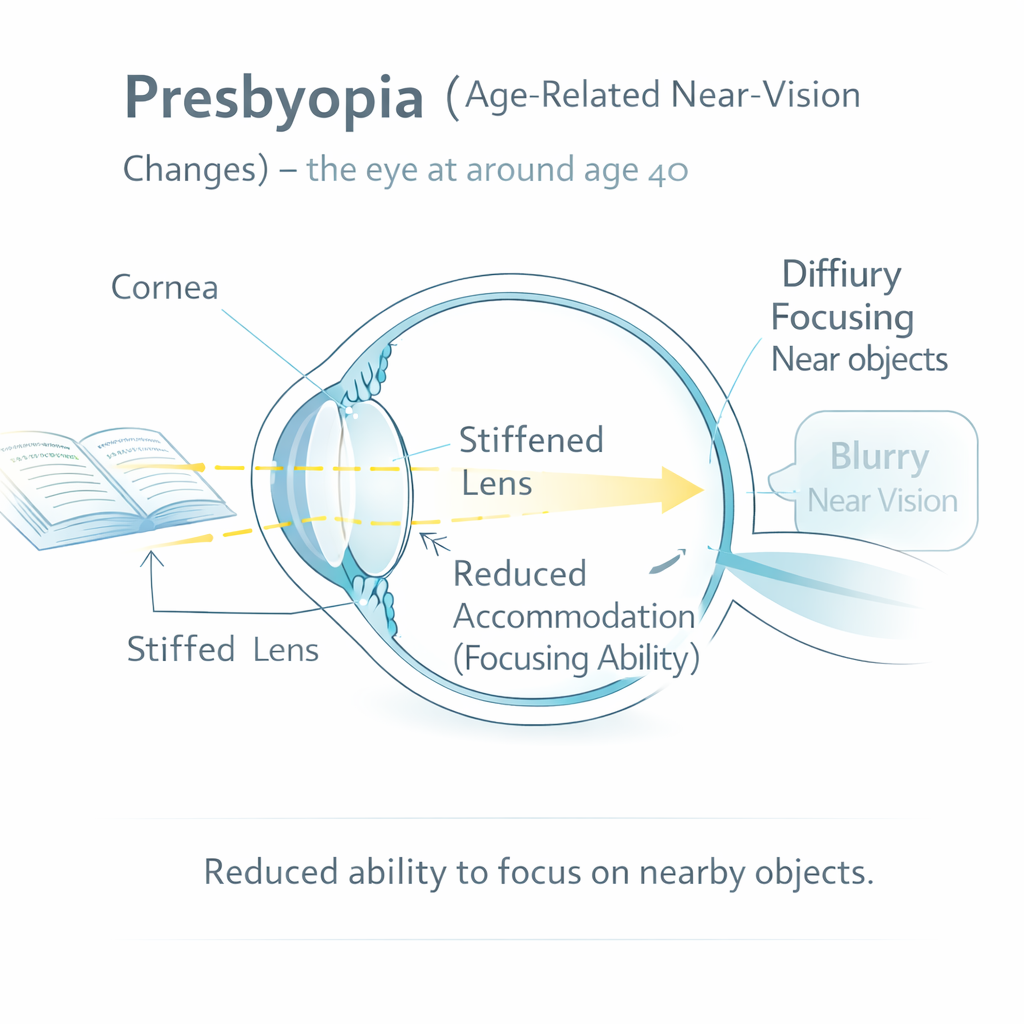
Presbyopia is an age-related change in vision that affects the eye’s ability to focus clearly on near objects. It is not a disease, but a natural process that occurs as part of normal ageing.
Presbyopia develops when the natural lens inside the eye gradually becomes less flexible. In younger eyes, the lens changes shape easily to focus on objects at different distances.
As a result, near and intermediate vision becomes increasingly blurred. Reading small print, using a phone, working on a laptop or checking labels and menus often becomes more difficult and tiring.
Most people begin to notice the early effects of presbyopia from their early to mid-forties, even if they have never previously needed glasses.
In the video below, one of our consultant surgeons explains how presbyopia develops and how modern treatment can correct it.
Presbyopia Treatment London
Vision correction has evolved into one of the most precise and clinically advanced areas of modern eye care. Continuous innovation in diagnostics, laser technology and lens design now allows surgeons to treat age-related vision changes with a level of accuracy and personalisation that was not possible even a few years ago.
Despite this progress, many people still assume that needing reading glasses is simply an unavoidable part of getting older. In reality, modern presbyopia treatments can safely and very effectively restore functional near and intermediate vision for a wide range of patients.
At London Vision Clinic, our surgeons routinely provide advanced presbyopia correction using both laser and lens-based solutions, carefully tailored to each patient’s eyes, lifestyle and long-term visual goals.
What You Say About London Vision Clinic
Different Types Of Presbyopia
Presbyopia can be described in several clinical stages, depending on how much focusing ability remains.
Incipient presbyopia refers to the very early stage, when small changes in near vision are present but symptoms may still be mild and intermittent. Many patients first notice this when reading in low light or after prolonged screen use.
Functional presbyopia occurs when near vision becomes consistently blurred and reading glasses or near correction are required for everyday tasks.
Advanced (or absolute) presbyopia describes the stage at which the eye has lost almost all remaining accommodation. Near vision can no longer be achieved without optical correction.
The speed at which presbyopia progresses varies between individuals and is influenced by factors such as previous refractive error, visual demands and overall eye health.
Treating Presbyopia
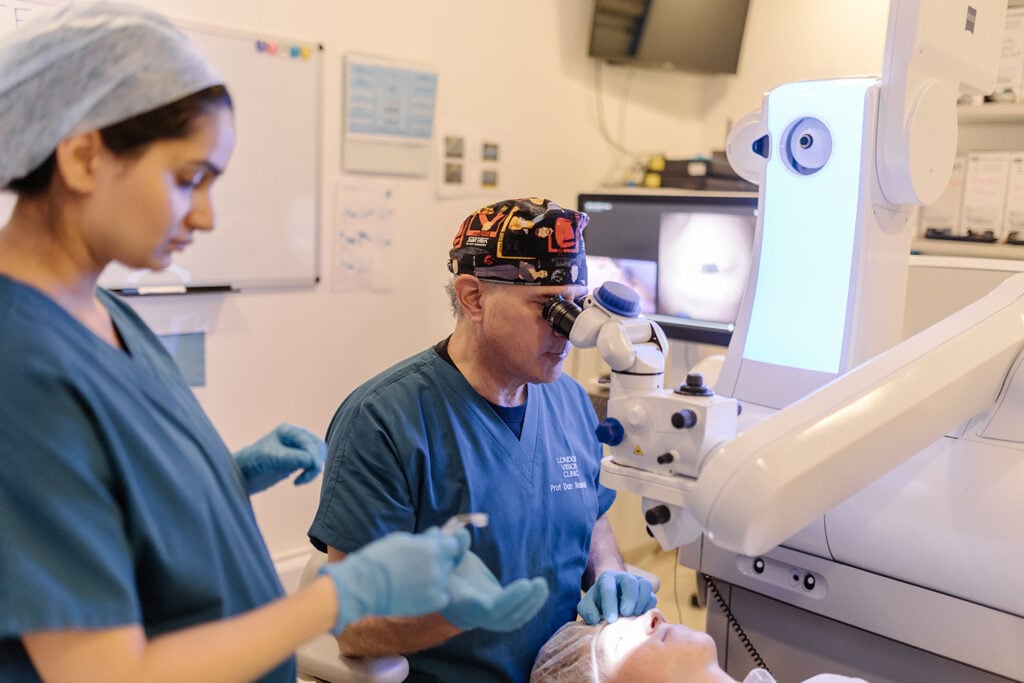
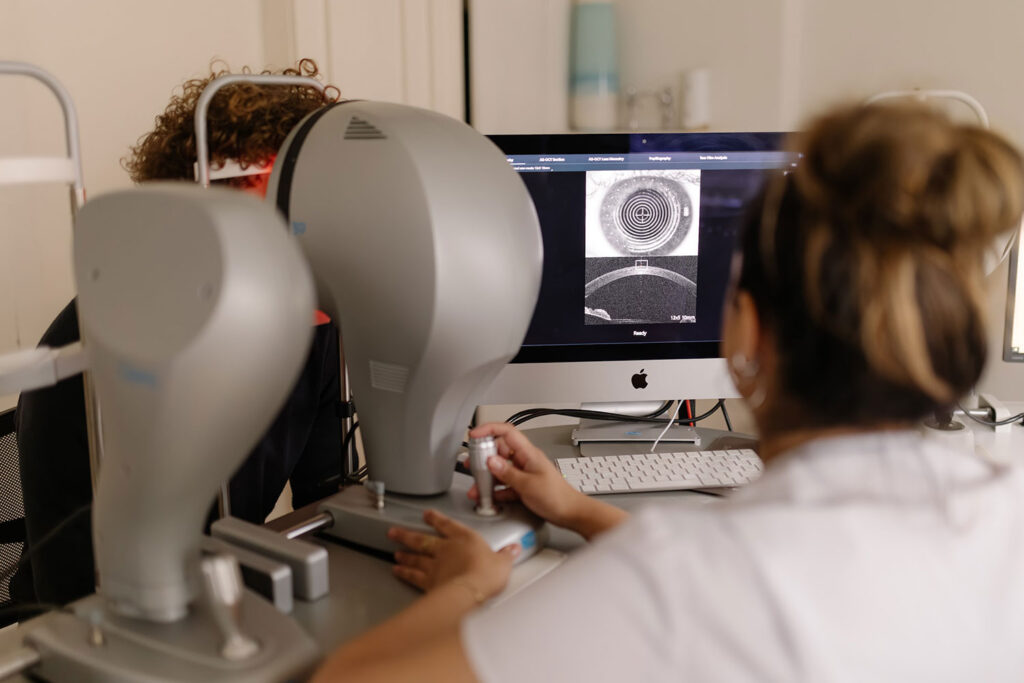
Presbyopia cannot be corrected in the same way as short-sightedness or long-sightedness alone, because the underlying issue is the loss of the eye’s natural focusing ability rather than a simple optical mismatch.
For suitable patients, one of the most advanced laser solutions is PRESBYOND® Laser Blended Vision.
This treatment uses highly precise laser reshaping to create a carefully balanced visual system between the two eyes. One eye is optimised for distance vision and the other is optimised for near vision, while maintaining a natural range of focus and depth perception.
The brain blends the two images together, allowing patients to see clearly across a wide range of distances with minimal reliance on reading glasses.
PRESBYOND® is particularly suitable for patients who already have myopia, hyperopia or astigmatism in addition to presbyopia and would like a laser-based solution.
Recovery After PRESBYOND® Laser Blended Vision
Your eyes begin healing immediately, while your brain gradually learns to combine near, intermediate and distance vision into one continuous visual range.
0
24 HRS
WEEK
2–4
MONTHS
Healing and visual adaptation are different processes. The surface of the eye can recover relatively quickly, while your brain may need additional time to become fully accustomed to the personalised blend between near and distance vision.
Recovery times are an average guide and vary according to your prescription, eye health and the procedure used. Surface laser and lens-based presbyopia treatments follow different recovery pathways. You must meet the required vision standard and receive appropriate advice before driving.
Alternative Treatment Options for Presbyopia
Although laser-based presbyopia correction is an excellent solution for many people, it is not suitable for every patient. Factors such as corneal thickness, ocular surface health, existing eye conditions and overall visual requirements must be carefully assessed during consultation. For patients who are not suitable for corneal laser treatment or who would benefit from a more comprehensive optical solution, lens-based procedures are often recommended.
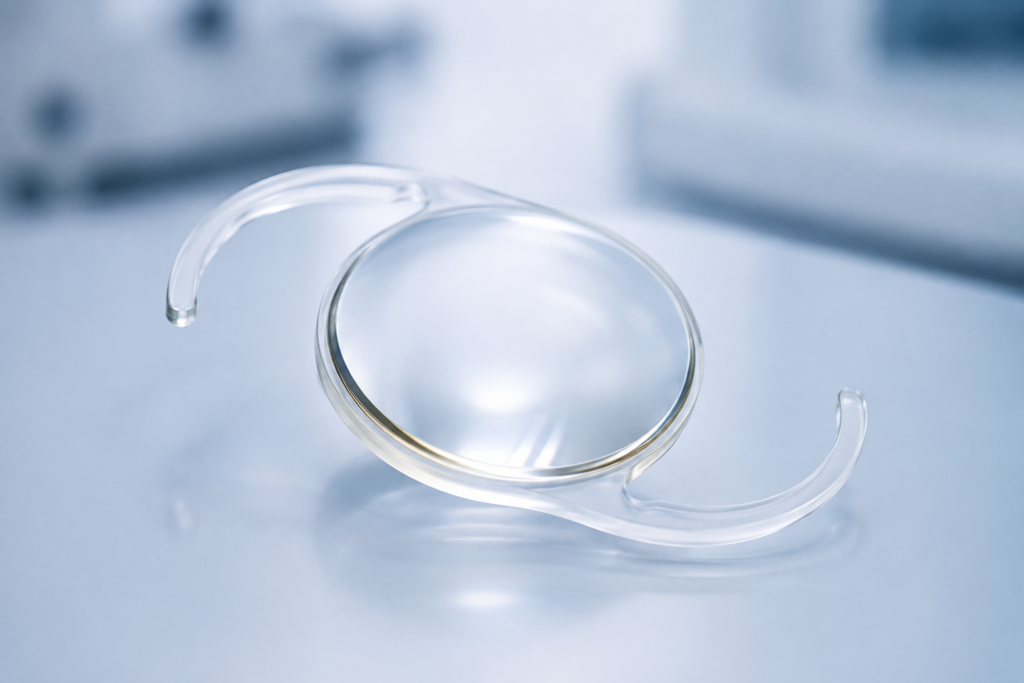
In these cases, the natural lens of the eye is replaced with an advanced artificial intraocular lens designed to restore vision across multiple distances. This is commonly referred to as lens exchange or refractive lens replacement. Modern presbyopia-correcting lenses can significantly reduce dependence on both distance and reading glasses and are particularly well suited to patients who are already experiencing early lens changes or who wish to future-proof their vision.
Where Are You on the Presbyopia Journey?
Near vision usually changes gradually as the natural lens inside the eye becomes less flexible with age.
Age is only one part of the picture. The most appropriate treatment also depends on your prescription, corneal health, natural lens clarity, visual priorities and whether early cataract changes are present.
Age ranges and treatment options are provided as a general guide. Presbyopia develops differently for each person, and glasses may still be useful for certain detailed tasks following treatment. Your surgeon will recommend the most appropriate option after a complete assessment.
FAQs
Which presbyopia treatments are available at London Vision Clinic?
Suitable patients may be offered PRESBYOND® Laser Blended Vision, an advanced laser treatment designed to create a continuous range of vision from near to far. Lens-based procedures may be more appropriate when changes within the natural lens are present. Your recommendation will depend on your age, eye health, prescription, lifestyle and long-term visual needs.
Which treatment is best for correcting astigmatism?
There is no single treatment that is best for everyone. Some patients are ideally suited to LASIK or SMILE, while others may benefit from a surface laser procedure, an implantable contact lens or lens replacement surgery. At London Vision Clinic, detailed diagnostic testing allows your surgeon to recommend the safest and most appropriate solution for your individual eyes rather than relying on a standard treatment pathway.
Can I have presbyopia treatment if I work or commute in London?
Yes. Many patients arrange their assessment and follow-up appointments around work and travel within London. You will need time away from screens and visually demanding tasks immediately after treatment, although the amount of time required depends on the procedure performed. The clinical team will provide personalised guidance about returning to work, travelling on public transport and resuming normal activities.
How soon can I travel home after presbyopia treatment in London?
Most patients return home on the day of their procedure, but you should not drive yourself. We recommend arranging for someone to accompany you or planning suitable transport from the clinic. Your surgeon will explain when you can safely travel, drive and return to everyday activities based on your treatment and early recovery.