
FREE Consultation
What is a Pterygium?
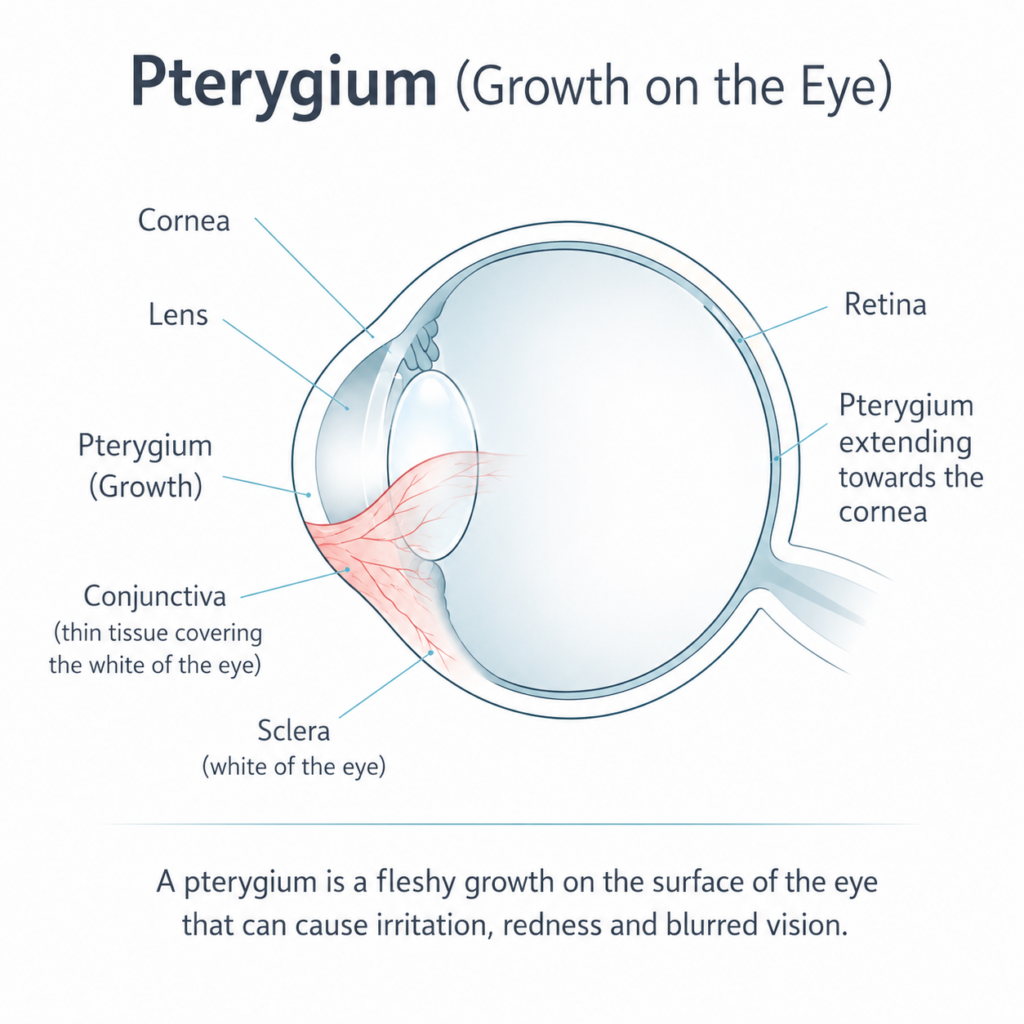
Pterygium is a common eye condition that affects the outer surface of the eye. Often referred to as “surfer’s eye,” a pterygium appears as a fleshy, triangular growth that develops on the conjunctiva, the thin transparent tissue covering the white part of the eye. While it most commonly begins on the side closest to the nose, it can gradually extend towards the cornea, the clear front window of the eye.
Although pterygium is not cancerous, it can continue to grow over time. The condition is often associated with long-term exposure to sunlight, wind, dust and dry environments, which can irritate the surface of the eye and contribute to its development.
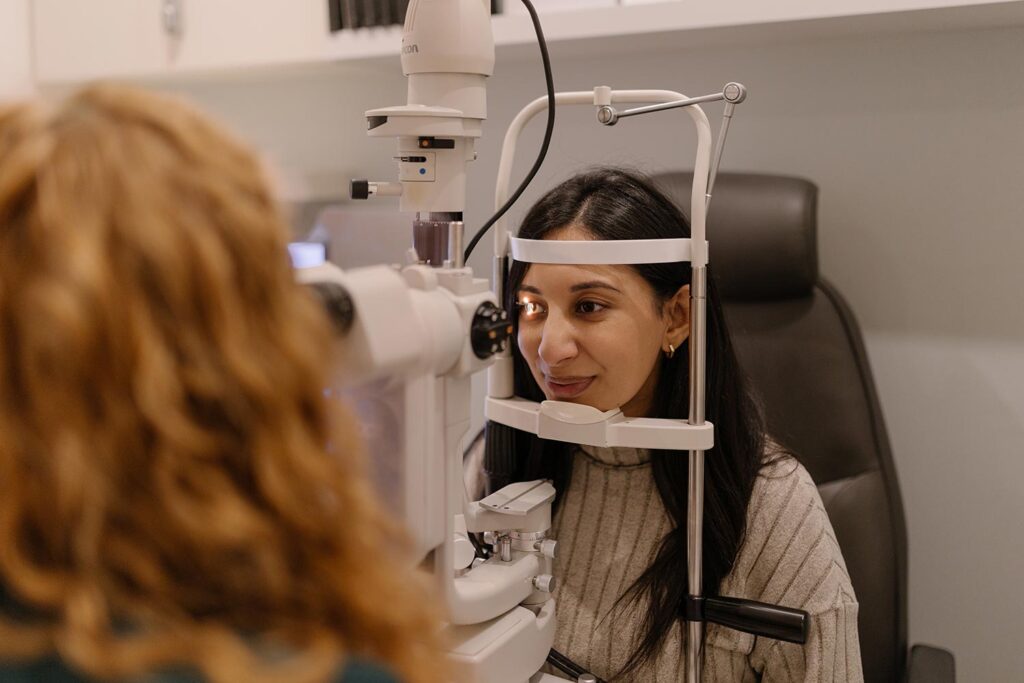
Most patients are surprised by how straightforward the process is. Following an initial consultation and detailed examination, our team can advise whether treatment is necessary and guide you through the options available. Booking an appointment at London Vision Clinic is simple, and our experienced team will ensure you receive personalised advice tailored to your symptoms, eye health and long-term visual goals.
Pterygium Eye Treatment From London Vision Clinic
For many London patients, pterygium becomes more than a cosmetic concern. The condition can cause persistent irritation, redness and dryness that becomes increasingly noticeable during everyday activities such as commuting, working at a computer or spending long periods in air-conditioned environments. Some patients describe a constant feeling that something is trapped in the eye, while others become frustrated by the appearance of the growth itself. As pterygium progresses, it may begin to affect vision by altering the shape of the cornea and inducing astigmatism. This can make reading, driving and screen use less comfortable, particularly if the growth continues to extend towards the centre of the eye. Early assessment can help determine whether monitoring or treatment is the most appropriate next step.
Modern pterygium surgery is a highly refined procedure designed to remove the abnormal tissue while preserving the health and appearance of the eye. Advanced surgical techniques can significantly reduce irritation, improve comfort and help restore a more natural cosmetic appearance. For patients whose vision has been affected, treatment may also improve visual quality by reducing distortion caused by the growth.
What You Say About London Vision Clinic
Could These Symptoms Be Caused by a Pterygium?
A pterygium can affect the appearance, comfort and, in some cases, the vision of the eye.
| COMMON SYMPTOM | WHAT YOU MAY NOTICE |
|---|---|
|
01
Redness
|
The eye may appear persistently red or inflamed, particularly after a long day or exposure to screens, wind and sunlight. |
|
02
Irritation or Grittiness
|
You may experience a persistent sensation of sand, dust or a foreign body being trapped inside the eye. |
|
03
Dry or Watery Eyes
|
Disruption to the tear film can leave the eye feeling dry and uncomfortable or cause it to water more frequently. |
|
04
Blurred Vision
|
A larger pterygium can alter the shape of the cornea, potentially causing astigmatism and reducing visual clarity. |
|
05
Sensitivity to Light
|
Bright sunlight, headlights and glare may feel increasingly uncomfortable as irritation develops across the eye’s surface. |
|
06
Visible Growth
|
A raised, fleshy or wedge-shaped growth may become visible on the white of the eye and gradually extend towards the cornea. |
When should you seek advice? If a growth is changing in size, causing persistent discomfort or beginning to affect your vision, a specialist eye assessment can establish whether treatment is required.
When Is Pterygium Surgery Recommended?
Surgery in London is typically considered when a pterygium causes significant discomfort, recurrent inflammation or visual problems. If the growth starts to extend onto the cornea, it can alter the shape of the eye and induce astigmatism, leading to blurred or distorted vision that may not be fully corrected with glasses alone.
Modern pterygium surgery is designed not only to remove the abnormal tissue but also to reduce the likelihood of recurrence and improve the appearance of the eye. For many patients, treatment provides relief from ongoing irritation while restoring confidence in the appearance and comfort of their eyes.
Recovery After Pterygium Surgery
Most patients gradually return to their usual routine as the eye becomes more comfortable and the redness settles.
0
1–3
3–7
2
6–12
Recovery times are an average guide and can vary between patients. Follow your surgeon’s personalised aftercare advice and use all prescribed eye drops as directed. Source: Guy’s and St Thomas’ NHS Foundation Trust.
Can a Pterygium Go Away on Its Own?
A pterygium will not usually disappear without treatment. In many cases, the growth remains stable for years and causes only mild symptoms that can often be managed with lubricating eye drops and regular monitoring. However, some pterygia continue to grow slowly over time, becoming more noticeable and increasingly uncomfortable.
If the growth begins to affect vision, cause persistent irritation or become cosmetically concerning, treatment may be recommended. Regular eye examinations allow your surgeon to monitor any changes and determine whether intervention is necessary before the condition begins to impact your quality of life.
How Common Is Pterygium in London?
London-wide diagnosis figures are not currently published, but a major specialist study gives us a useful indication of the condition’s clinical presence.
There is currently not enough London-specific data to confirm an annual increase. Pterygium remains clinically relevant, particularly among people with a history of prolonged exposure to sunlight, hot or dry climates, wind and dust.
Understanding the figures: These numbers relate to surgically removed specimens submitted to a specialist pathology service and do not represent every person diagnosed with pterygium in London. The yearly figure is an average calculated across the study period.
Source: Quhill H, Magan T, Thaung C and Sagoo MS.
Prevalence of co-existent neoplasia in clinically diagnosed pterygia in a UK population
, published in Eye, 2023.
Concerned About a Pterygium?
Whether you are experiencing redness, irritation, blurred vision or are concerned about the appearance of a pterygium, our experienced surgeons can provide a detailed assessment and personalised treatment plan tailored to your needs.
At London Vision Clinic, you will be seen by world-class eye surgeons using advanced diagnostic technology and modern surgical techniques designed to protect long-term eye health, improve comfort and achieve the best possible visual outcome. We welcome patients from across London and throughout the UK seeking specialist care for pterygium and other complex eye conditions.
Book a Consultation Meet Our SurgeonsFAQs
Will a pterygium continue to grow if left untreated?
Is pterygium surgery painful?
Pterygium surgery is typically performed under local anaesthetic, meaning the eye is numb throughout the procedure. Most patients experience little to no discomfort during treatment and only mild irritation or a gritty sensation during the early stages of recovery.
Can a pterygium come back after surgery?
Modern surgical techniques are designed to minimise the risk of recurrence. While no procedure can guarantee that a pterygium will never return, advanced approaches used by experienced surgeons significantly reduce the likelihood compared with older methods.
How quickly can I be seen at London Vision Clinic?
Patients can arrange a consultation quickly and receive a comprehensive assessment from an experienced eye surgeon. During your appointment, we will evaluate the size and impact of the pterygium, discuss treatment options and advise whether monitoring or surgery is the most appropriate next step for your eyes.