
FREE Consultation
What is Astigmatism?
Astigmatism is one of the four most common refractive errors. It is caused by an abnormality in the shape of the eyes. In healthy eyes, the corneas have a spherical shape, like a football. In corneal astigmatism, the corneas are shaped more like a rugby ball. As a result, light is directed into the eye with two points of focus, creating a blurred image.
Astigmatism can also affect the lenses, this is known as lenticular astigmatism. Almost everyone has some degree of astigmatism. While it is often inherited, it can also develop as a result of injury or disease.
Thankfully, though, not all these people will require correction to address the eye strain, headaches, and blurry vision that can come with this common refractive error. However, for those with more severe astigmatism, external visual aids have traditionally been required to address the symptoms. Of course, today there is another option available, Laser Eye Surgery.
What You Say About London Vision Clinic
Treating Astigmatism with Laser Eye Surgery From London
Since the late 1980s, Laser Eye Surgery has successfully treated millions of people around the world. At London we treat myopia (short-sightedness) as it was initially designed. The procedure has helped people ditch their glasses and contact lenses by also correcting hyperopia (long-sightedness), presbyopia, and astigmatism.
Laser Eye Surgery works by changing the shape of the cornea to adjust the way light is refracted into the eye. However, unlike other types of refractive error, correcting astigmatism involves correction in more than one plane.
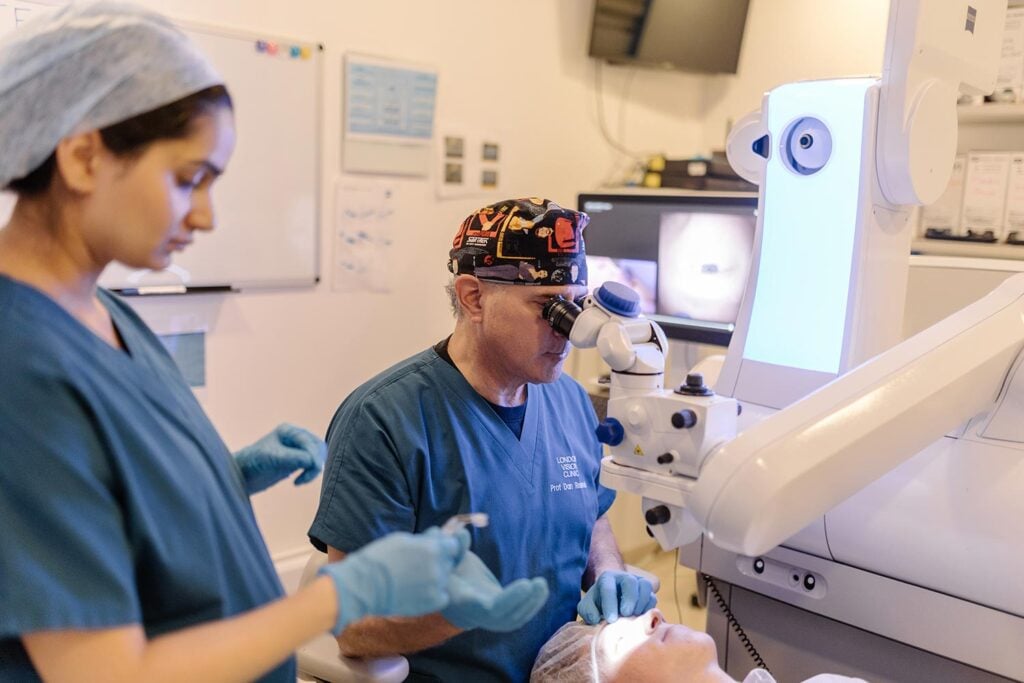
Recovery After Astigmatism Laser Eye Surgery
Vision can begin improving quickly, although your individual recovery will depend on the treatment recommended for your eyes.
0
24 HRS
WEEK
1–4
UP
Recovery times are an average guide and vary according to your prescription, eye health and type of treatment. You must meet the required vision standard and receive appropriate advice before driving.
Laser Eye Surgery is a Safe and Effective Solution to Astigmatism
With access to the latest technology and world-renowned surgeons, we can correct astigmatism with LASEK/PRK, LASIK, and SMILE Pro.
While the basis behind these three procedures is largely the same, access to the cornea is gained in different ways. In PRK/LASEK (the surface procedures), a small section of corneal epithelium is removed completely. In LASIK (the most common procedure), a small flap is created on the surface of the cornea. Finally, in ReLEx SMILE, a high-precision laser is used to create a “keyhole” incision.
A second laser is then used to remove parts of this tissue, reshaping the cornea and correcting the error.
In the video below, Dr Glenn Carp explains how Laser Eye Surgery is used to correct Astigmatism.
What are the Alternatives to Treating Astigmatism?
For most people, glasses will be the first port of call to correct the effects of astigmatism. Some people may choose to wear contact lenses instead, or as well as, glasses due to their added discretion. However, both of these external visual aids have their problems. Unfortunately, many people are unaware of the alternative solutions available.
While Laser Eye Surgery is often an effective solution for astigmatism, it isn’t always the best option. However, at London Vision Clinic, we will likely be able to recommend an alternative treatment.
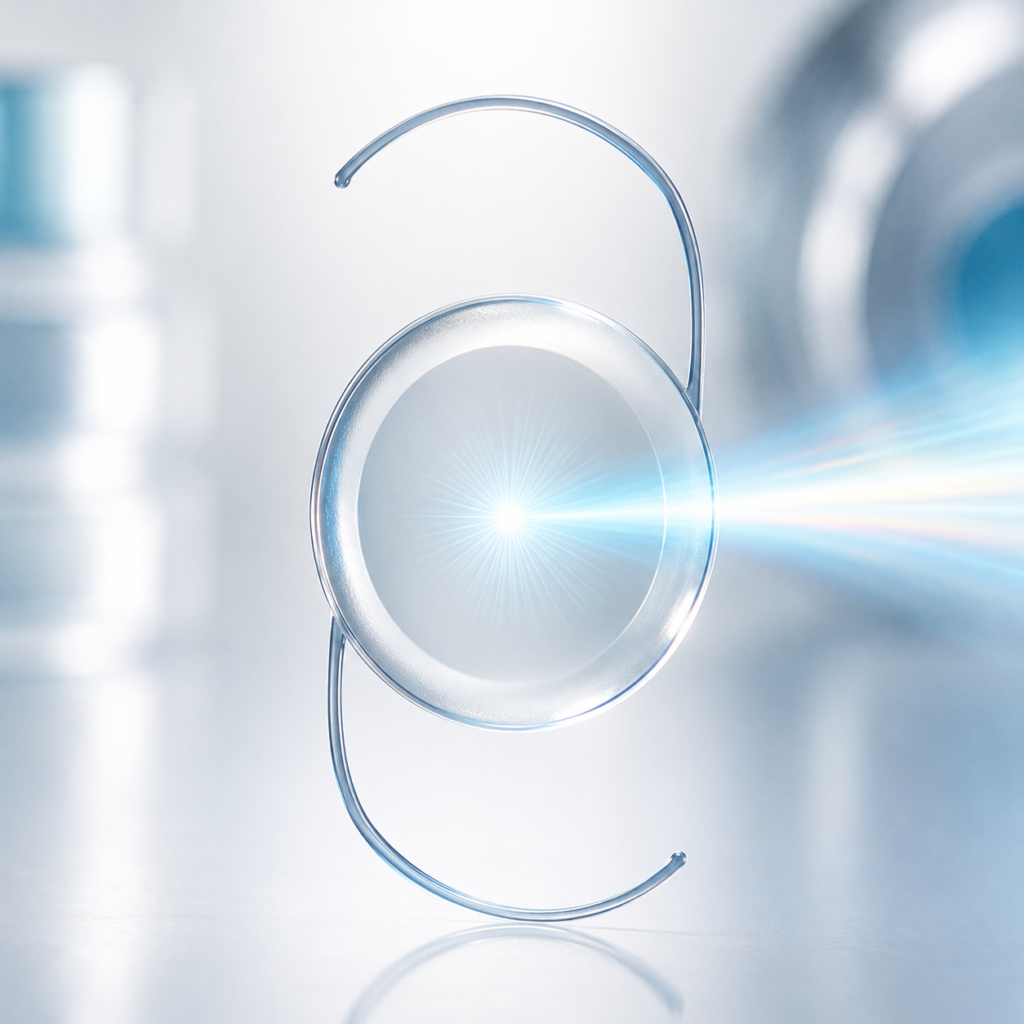
This can include Implantable Collamer Lens (ICL) surgery, which can be used to correct astigmatism up to 6.00 D. This procedure involves implanting an artificial lens in front of the eye’s natural crystalline lens. In a similar way to an external contact lens, this lens corrects the way light is directed into the eye, offering a long-term solution to astigmatism.
If you’d like to learn more about our treatments for astigmatism, why not get in touch with one of our friendly clinic coordinators today? Alternatively, Book a Consultation to find out if you could be suitable for treatment.
Where Are You on the Astigmatism Scale?
The cylinder value on your prescription indicates the strength of your astigmatism.
Your cylinder number is only part of the picture. Treatment suitability also depends on the axis and type of astigmatism, your overall prescription, age, prescription stability, corneal thickness and detailed corneal mapping.
Astigmatism ranges and treatment options are provided as a general guide. Source: The Royal College of Ophthalmologists. Your surgeon will recommend the most appropriate option following a complete assessment.
FAQs
Can astigmatism be permanently corrected with Laser Eye Surgery?
Laser Eye Surgery can provide long-lasting correction by precisely reshaping the cornea so that light focuses more evenly inside the eye. LASIK, LASEK or PRK, and SMILE may all be considered depending on the type and degree of astigmatism, your prescription and the health of your corneas. Although the treated astigmatism should not simply return, your eyes can continue to change naturally with age.
Which treatment is best for correcting astigmatism?
There is no single treatment that is best for everyone. Some patients are ideally suited to LASIK or SMILE, while others may benefit from a surface laser procedure, an implantable contact lens or lens replacement surgery. At London Vision Clinic, detailed diagnostic testing allows your surgeon to recommend the safest and most appropriate solution for your individual eyes rather than relying on a standard treatment pathway.
Can astigmatism be treated if I also have short sight, long sight or presbyopia?
Yes. Astigmatism frequently occurs alongside short sight or long sight, and these prescriptions can often be corrected during the same procedure. If you are experiencing age-related difficulty with reading and close work, your assessment can also explore options designed to improve vision across more than one distance. Your recommended treatment will depend on your age, prescription, eye health and visual priorities.
How soon can I return to work and travel around London after treatment?
Recovery depends on the procedure performed. Many LASIK and SMILE patients return to office-based work and normal daily activities within a few days, while LASEK and PRK usually require a longer initial recovery. You must not drive home after treatment, so patients should arrange transport or travel with a companion. Your clinical team will explain when you can safely return to screens, exercise, driving and commuting.