For many patients, the most difficult part of laser eye surgery happens before they ever enter the treatment room. It happens while reading stories online, imagining the laser, wondering how they will keep their eyes still and replaying one persistent question:
The question almost everyone asks
Does laser eye surgery hurt?
The reassuring answer is that anaesthetic eye drops are used to numb the surface of the eye before treatment. Most patients describe pressure, movement or unusual visual sensations rather than pain during the procedure. However, honest reassurance matters more than sweeping promises. Every person experiences treatment differently, and some procedures can produce more postoperative discomfort than others. Understanding what is likely to happen before, during and after surgery can replace much of the fear with something far more useful: preparation.
Why Does Laser Eye Surgery Feel So Frightening?
Anxiety often grows when something is unfamiliar, important and outside our direct control. Laser eye surgery includes all three. We depend on our vision throughout every waking moment, so it is entirely reasonable to feel protective of our eyes. Add words such as “laser”, “surgery” and “cornea”, and the imagination can quickly build a short clinical procedure into a much larger event.
For many people, the fear is not caused by what actually happens. It is caused by unanswered questions:
- Will I be able to see what the surgeon is doing?
- What happens if I blink or move?
- Will the laser hurt?
- How long will I be in the treatment room?
- What will my eyes feel like afterwards?
- What happens if I become anxious during treatment?
These are sensible questions. A specialist consultation should give you time to ask them without feeling rushed or embarrassed.
The anticipation gap
Before treatment, your mind fills in the missing details. Once each stage has been explained clearly, the imagined experience and the real clinical process often look very different.
What Laser Eye Surgery Actually Feels Like
Laser eye surgery does not feel like an ordinary eye examination, but it is generally much less dramatic than patients imagine. Before treatment begins, anaesthetic drops are applied to numb the eye. Your surgeon will then guide you through the procedure one stage at a time.
| What you may be imagining | What patients more commonly experience |
|---|---|
| A painful laser touching the eye | The laser does not physically touch or burn the eye. Anaesthetic drops numb its surface. |
| Trying desperately not to blink | A small instrument keeps the eyelids comfortably apart, so blinking is not your responsibility. |
| Needing to remain perfectly still | Your head and eye are carefully positioned, and modern systems help the surgeon maintain accurate treatment alignment. |
| Watching the surgery happen | You may see lights, colours, shadows or temporary blurring, but not a detailed view of the procedure. |
| A long period inside the treatment room | The active laser stage is brief. More time is spent preparing, checking and positioning the eyes carefully. |
Some patients notice a sensation of pressure for a short time, particularly while the eye is being held steadily in position. Vision may become dim, blurred or temporarily dark at certain moments. These sensations can feel unusual, but your surgeon will have explained them beforehand and will continue speaking to you throughout treatment.
Your Surgery-Day Journey, One Step at a Time
Knowing the sequence can make the day feel much more manageable. Although details vary according to the treatment recommended, the experience generally follows a carefully controlled pathway.
1
Arrival
The team confirms your details, answers final questions and reviews the immediate aftercare instructions.
2
Preparation
Anaesthetic drops numb the eyes before you are positioned comfortably beneath the laser system.
3
Treatment
Your surgeon guides you through each stage while the selected technique corrects the focusing power of the eye.
4
Recovery Room
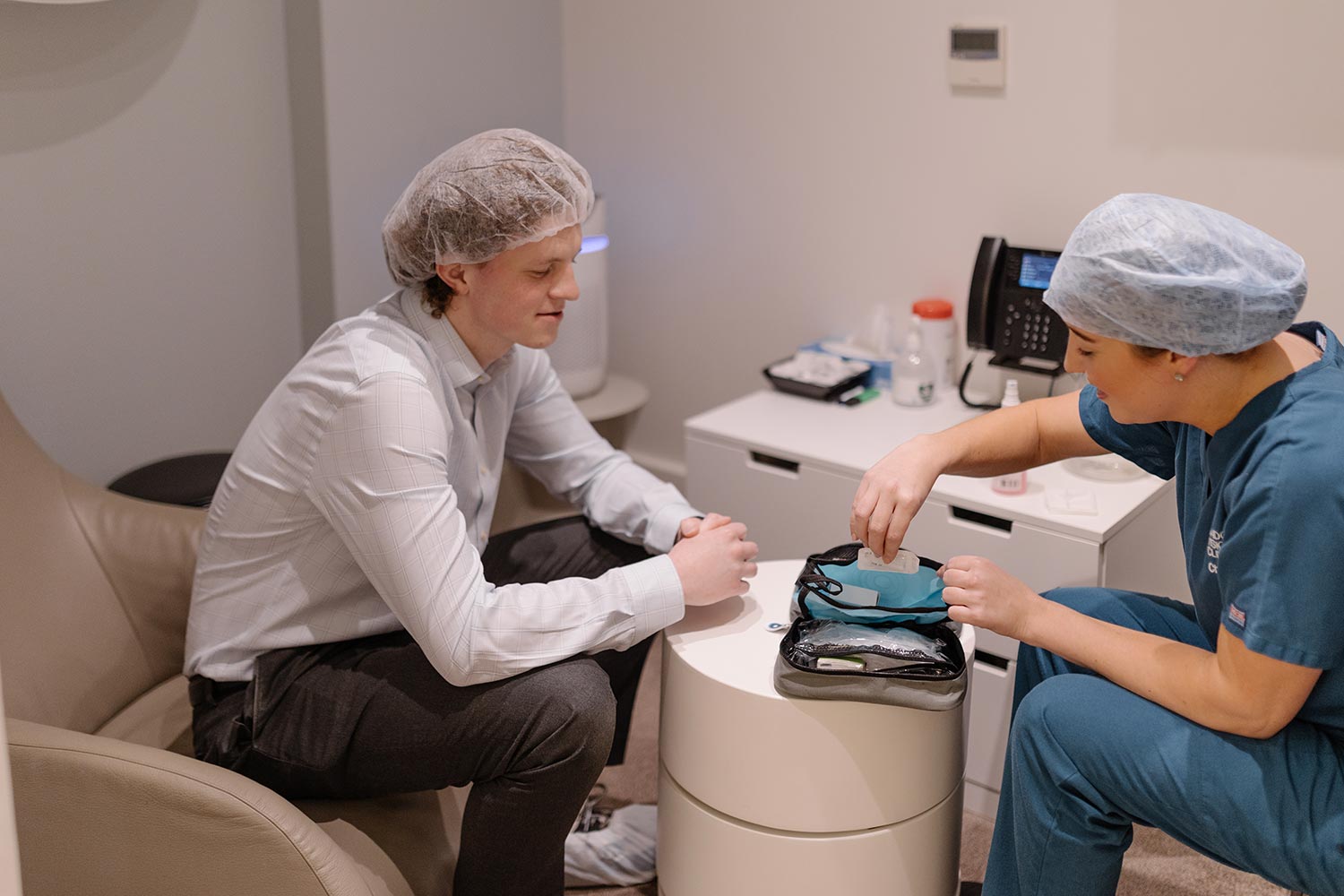
You rest briefly while the team checks your eyes and goes through your drops and home-care routine.
The treatment itself is only one part of the process. Much of your appointment is devoted to preparation, safety checks and making sure you understand what happens next.
For a wider view of the complete pathway, read about the laser eye surgery journey at London Vision Clinic.
Will I Feel Pain During Laser Eye Surgery?
The anaesthetic drops used before treatment are designed to prevent pain from the surface of the eye. Most patients report little more than pressure or unfamiliar sensations during LASIK or SMILE Pro. However, it is important to separate the treatment itself from the recovery period. Once the anaesthetic begins to wear off, your eyes may feel watery, gritty, sensitive or uncomfortable.
A simple comfort guide
What Might Laser Eye Surgery Feel Like?
Most people experience unfamiliar sensations rather than pain during laser treatment. The level of discomfort afterwards depends partly on the procedure and individual healing response.
Illustrative sensation scale
More noticeable discomfort
Anaesthetic Eye Drops
Minimal sensation
What it may feel like: Cool liquid entering the eye, similar to ordinary eye drops. Brief stinging is possible but usually settles quickly.
During SMILE Pro
Unusual rather than painful
What it may feel like: Gentle pressure, changing lights and temporary blurring or dimming of vision while the eye is held steadily in position.
During LASIK
Pressure may be noticeable
What it may feel like: Firm pressure for a short period, followed by lights, shadows and blurred vision while the cornea is reshaped.
First Hours After SMILE Pro or LASIK
Usually mild
What it may feel like: Watering, light sensitivity, grittiness, tired eyes or the sensation that something small is in the eye.
First Days After PRK/LASEK
Can be more noticeable
What it may feel like: Soreness, watering, sensitivity to light and a stronger gritty or burning sensation while the corneal surface heals.
Remember: sensation is personal
This chart is an illustrative guide, not a medical pain score. Some patients notice very little, while others experience more discomfort. Your surgeon will explain what is typical for your recommended procedure and how postoperative symptoms can be managed.
How this feels and how long it lasts depend partly on the procedure performed:
SMILE Pro
A small-incision, flap-free procedure. Patients commonly describe pressure during treatment and relatively mild discomfort afterwards, although experiences vary.
LASIK
A thin corneal flap is created before the eye is reshaped. Recovery is generally rapid, with temporary watering, sensitivity or grittiness possible.
PRK/LASEK
A surface-based treatment with a longer healing period. More noticeable discomfort can occur during the first few days while the surface layer repairs.
The best procedure is not automatically the newest or the one with the shortest recovery. Your surgeon should recommend the approach most appropriate for your prescription, corneal structure, eye health and lifestyle. You can compare SMILE Pro, LASIK and PRK/LASEK laser eye surgery in more detail before your consultation.
What Makes SMILE Pro Different?
SMILE Pro is a minimally invasive form of laser eye surgery primarily used to correct short-sightedness and astigmatism in suitable patients. Instead of creating a corneal flap, the laser forms a precisely shaped piece of tissue inside the cornea. The surgeon removes this tissue through a small keyhole opening, altering the way the eye focuses light.
London Vision Clinic uses the latest-generation ZEISS VISUMAX 800 laser for SMILE Pro. The laser-delivery stage is completed in seconds, although preparation, positioning and careful surgical checks take additional time. The small-incision approach can reduce disruption to the corneal surface and nerves. This may support postoperative comfort and make SMILE Pro particularly appealing to some people with active lifestyles or concerns about dry-eye symptoms. Suitability must still be established through detailed examination.
Learn how the procedure works on the clinic’s dedicated SMILE Pro treatment page.
What If I Blink, Look Away or Move?
This is one of the most common concerns, but patients are not expected to control every natural reflex themselves. A small eyelid holder prevents blinking during treatment. Your head is supported, the eye is carefully positioned and the clinical team monitors you throughout the procedure. Modern laser systems also include sophisticated positioning and tracking features.
You will normally be asked to look towards a target light. It may become blurred, move or appear to disappear temporarily as the procedure progresses. That does not mean anything has gone wrong. If you need to cough, sneeze or communicate with the surgeon, you can speak. You are not left alone beneath the laser, and the treatment is not an uncontrolled process that continues regardless of your movement.
A Simple Plan for Managing Surgery-Day Nerves
Feeling nervous does not mean you are making the wrong decision. It means you understand that treatment is important. The aim is not necessarily to eliminate every trace of anxiety, but to stop uncertainty from controlling the experience.
Your calm-treatment checklist
Write down your questions before the consultation.
Tell the clinical team if you feel particularly anxious.
Ask what you may see and feel during your specific procedure.
Arrange transport home before treatment day.
Prepare a quiet place where you can rest afterwards.
Follow the clinic’s instructions about contact lenses, makeup and medication.
Try to avoid filling gaps in your knowledge with dramatic videos, anonymous comments or somebody else’s treatment experience. The most useful information is the guidance that applies to your eyes, your procedure and your clinical plan.
What Happens Immediately Afterwards?
After treatment, you will be taken to a comfortable recovery area. Your vision may initially appear misty or blurred, and your eyes may be sensitive to light. Before you leave, the team will explain how and when to use your eye drops, what activities to avoid and how to contact the clinic if you are concerned. You should arrange for someone to accompany you or organise suitable transport because you will not be able to drive home.
Your first follow-up appointment will normally take place soon after treatment so the clinical team can check your healing and advise when you can return to activities such as work, driving, exercise and prolonged screen use. Recovery varies between patients and procedures. Follow the instructions given by your own surgeon rather than relying on a generic online timeline. London Vision Clinic explains its longer-term approach on its laser and lens surgery aftercare page.
From Fear to Informed Confidence
Laser eye surgery is a significant decision, and nobody should feel pressured to proceed before they are comfortable. The purpose of a consultation is not simply to book an operation. It is to understand your eyes, explore the appropriate treatment options and decide whether the potential benefits and limitations are right for you.
The most useful change in perspective
You do not need to arrive feeling fearless. You need to arrive informed, supported and able to ask questions.
For many patients, the days or weeks spent imagining treatment are far more difficult than the few minutes spent experiencing it. Once the unknown has been replaced with a clear explanation, laser eye surgery can feel much more manageable. You can also read the experiences of people who have already completed treatment through the clinic’s patient reviews and testimonials.
Replace Uncertainty With Clear Answers
A specialist consultation can help you understand whether laser eye surgery is suitable, which procedure may be recommended and exactly what to expect at every stage.
Alternatively, call 020 7224 1005
Individual experiences, recovery times and outcomes vary. Laser eye surgery is not suitable for everyone, and a comprehensive clinical assessment is required before treatment can be recommended.