No eye is perfectly spherical. Small variations in curvature are completely normal, but when those differences prevent light from focusing evenly, they can produce the blurred or distorted vision associated with astigmatism.
Astigmatism is one of the most common refractive errors and can occur alongside short-sightedness or long-sightedness. A mild degree may have little noticeable effect, while more significant astigmatism can make objects appear blurred, stretched or shadowed at different distances. Some people also experience eye strain, visual fatigue, headaches or difficulty seeing clearly at night, particularly when driving or looking at bright lights against a dark background.
If astigmatism affects your everyday vision, the three principal forms of correction are glasses, contact lenses and refractive surgery. Each can provide excellent vision when prescribed appropriately, but they work in very different ways. Glasses and contact lenses correct the way light enters the eye while they are being worn. Laser Eye Surgery changes the focusing shape of the cornea itself, potentially reducing the need for an external lens.
Three ways to correct astigmatism
Glasses
Correct light before it reaches the eye using a precisely prescribed cylindrical lens.
Contact Lenses
Sit on the eye and provide optical correction without spectacle frames.
Laser Eye Surgery
Reshapes the cornea to change how the eye focuses light without external lenses.
What Is Astigmatism?
At the front of the eye is the cornea, a transparent structure that provides much of the eye’s focusing power. In an eye without clinically significant astigmatism, the curvature allows incoming light to form a clear focus. With astigmatism, the focusing power differs between meridians of the eye. Instead of producing one precise focal point, light may be spread across more than one focal plane, causing blur or distortion.
Astigmatism is often described using the comparison between a football and a rugby ball. This can be helpful as a simple illustration, but the real shape of the cornea is more complex. Astigmatism can be regular, where the principal curves follow an organised pattern, or irregular, where the surface is less predictable. It may arise from the cornea, the natural lens inside the eye or a combination of both. Identifying the type and source is essential because not every form of astigmatism should be treated in the same way.
Astigmatism is not an eye disease. It is a focusing error. However, irregular or changing astigmatism can sometimes be associated with a corneal condition, which is why detailed mapping is required before surgery.
How Does Astigmatism Affect Vision?
Some patients experience blur at all distances, while others notice that certain lines, letters or lights appear clearer in one direction than another. Headlights may produce glare, streaks or starbursts, and small text can appear shadowed. The brain can compensate for mild astigmatism, particularly when someone is young, but the effort required to maintain focus may contribute to tired eyes or headaches after prolonged reading and screen use.
The figures written on a glasses prescription help describe the correction required. The cylinder value represents the amount of astigmatism, while the axis describes its orientation in degrees. A prescription should not be viewed as a treatment decision on its own, however. Corneal topography, tomography, visual quality and the stability of the measurements provide a much fuller understanding of the eye.
Option One: Glasses
Glasses remain the simplest and most accessible method of correcting astigmatism. A cylindrical component is incorporated into the spectacle lens to compensate for the unequal focusing power of the eye. When the prescription and axis are accurate, glasses can provide clear, comfortable vision and reduce symptoms such as squinting, eye strain and headaches.
They are non-invasive, easy to update when a prescription changes and available in a wide range of designs and prices. Some patients may also qualify for help with the cost through the NHS. For children, people with changing prescriptions and anyone who does not want surgery or contact lenses, glasses can be an excellent long-term solution.
Where Can Glasses Become Limiting?
Patients with a stronger astigmatic prescription may need time to adapt when their lenses are first fitted or updated. The correction can initially make floors, doorframes or other straight lines appear slightly tilted, although this usually settles as the visual system adapts. Thick lenses, frame position and lens rotation can also influence visual quality, particularly with higher prescriptions.
Glasses may mist in changing temperatures, become marked by rain, interfere with helmets or protective equipment and restrict peripheral vision. They can also be lost or broken and require periodic replacement. These drawbacks do not make glasses a poor form of correction, but they explain why some patients begin exploring other options.
Option Two: Contact Lenses
Contact lenses provide vision correction directly on the eye, offering a wider natural field of view without spectacle frames. Modern toric contact lenses are designed specifically for astigmatism. Unlike a standard spherical contact lens, a toric lens contains different focusing powers across different meridians and must remain correctly orientated to provide stable vision.
Manufacturers use different stabilisation designs to help the lens settle into the intended position. Even so, some wearers notice intermittent blur when a soft toric lens rotates after blinking, moving quickly or rubbing the eye. A lens that fits one person comfortably may not behave in the same way on another eye, so professional fitting and follow-up remain important.
What About Rigid and Scleral Lenses?
Rigid gas-permeable lenses maintain their shape on the eye. The layer of tears between the lens and cornea can mask some of the corneal irregularity, creating a smoother optical surface. This can deliver exceptionally clear vision for certain patients, particularly when the astigmatism is irregular and cannot be corrected adequately with a conventional soft lens.
Scleral lenses are larger rigid lenses that vault over the cornea and rest on the white part of the eye. They can be valuable for complex corneal conditions, but fitting and maintaining them requires specialist care. Neither rigid nor scleral lenses permanently makes the cornea more spherical; instead, they create a temporary optical surface while being worn.
The Contact Lens Trade-Off
Contact lenses offer freedom from glasses but introduce a daily routine of insertion, removal, cleaning and replacement. Some patients experience dryness, irritation or reduced wearing time, particularly when using screens for long periods or working in air-conditioned environments. Sleeping, showering or swimming in lenses can increase the risk of infection, while poor hygiene may lead to serious corneal complications.
For people who enjoy wearing contact lenses and tolerate them well, this routine may be entirely manageable. For those who repeatedly experience dryness, unstable vision or inconvenience, Laser Eye Surgery may offer an alternative, provided the cause of the contact-lens intolerance has been investigated first.
Option Three: Laser Eye Surgery
A persistent myth suggests that astigmatism cannot be corrected with Laser Eye Surgery. That may reflect the limitations of much earlier technology, but modern laser systems can treat many regular astigmatic prescriptions with a high degree of precision. The procedure does not insert another lens in front of the visual system. Instead, it selectively reshapes the cornea so that light can be focused more evenly.
The laser does not simply turn every cornea into a perfect sphere. Astigmatic treatment is planned according to the strength and orientation of the prescription, with tissue reshaped differently across the relevant corneal meridians. The aim is to create an optical profile that provides clearer and more balanced focus while preserving the structural integrity of the cornea.
Astigmatism frequently occurs alongside myopia, so both elements can often be corrected during the same procedure. You can learn more about the relationship between SMILE and short-sightedness in our guide to whether SMILE eye surgery can treat myopia.
Which Laser Procedure Can Treat Astigmatism?
LASIK, PRK or LASEK and SMILE Pro can all potentially correct astigmatism, but they achieve this using different surgical approaches. The most appropriate procedure depends on whether the astigmatism is regular, the accompanying spherical prescription, the shape and thickness of the cornea, tear-film health and the patient’s lifestyle.
LASIK
A thin corneal flap is created before an excimer laser applies the spherical and astigmatic correction beneath it. Early visual recovery is usually rapid.
PRK or LASEK
The excimer laser reshapes the corneal surface without creating a flap. Recovery is slower while the outer layer regenerates.
SMILE Pro
A femtosecond laser forms a lenticule within the cornea that includes the planned myopic and astigmatic correction.
SMILE Pro is principally used for short-sighted patients with or without astigmatism. LASIK or a surface laser procedure may therefore be more appropriate for other prescription profiles. Read more about SMILE Pro Laser Eye Surgery in London and how the small-incision procedure works.
Why Modern Diagnostics Make a Difference
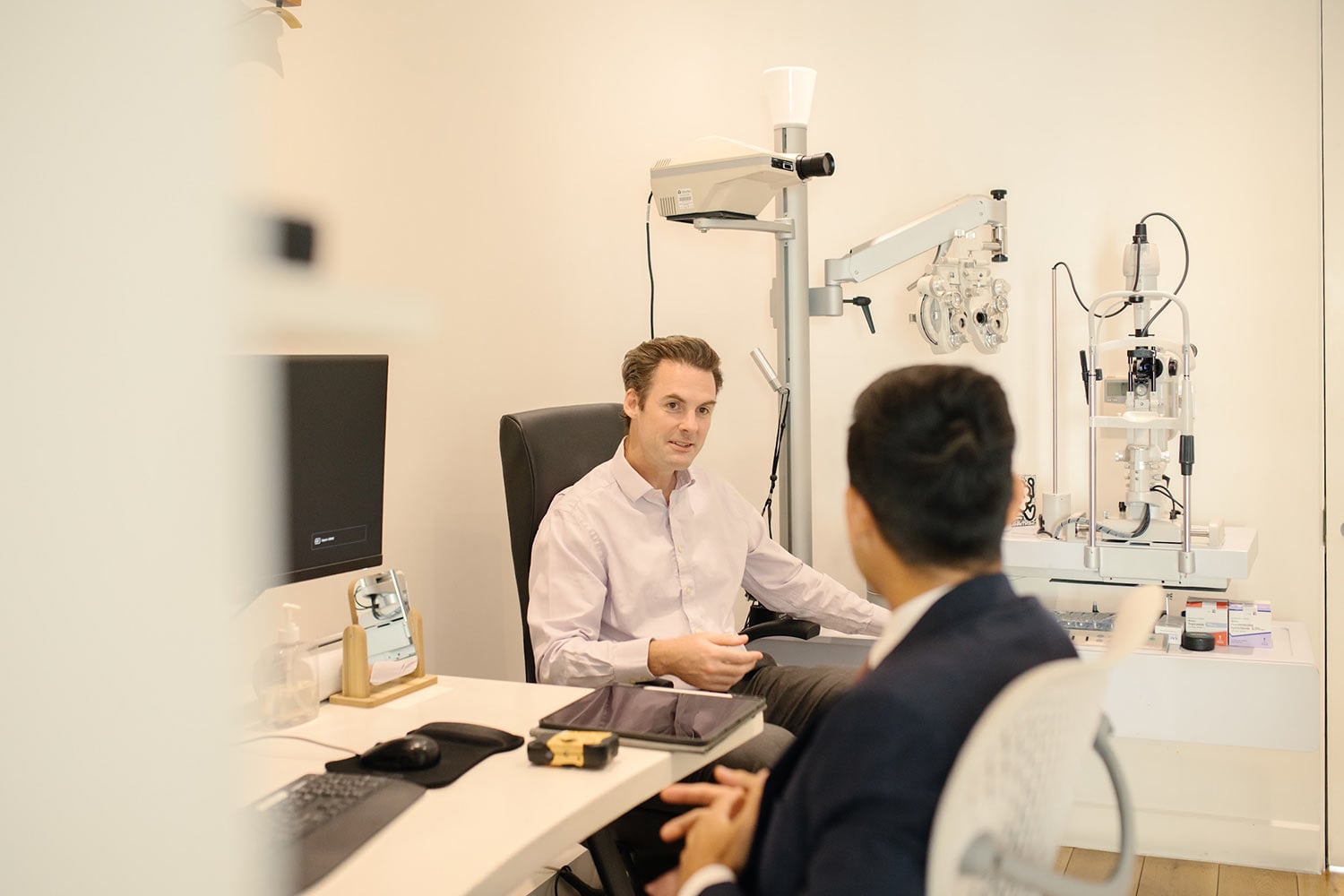
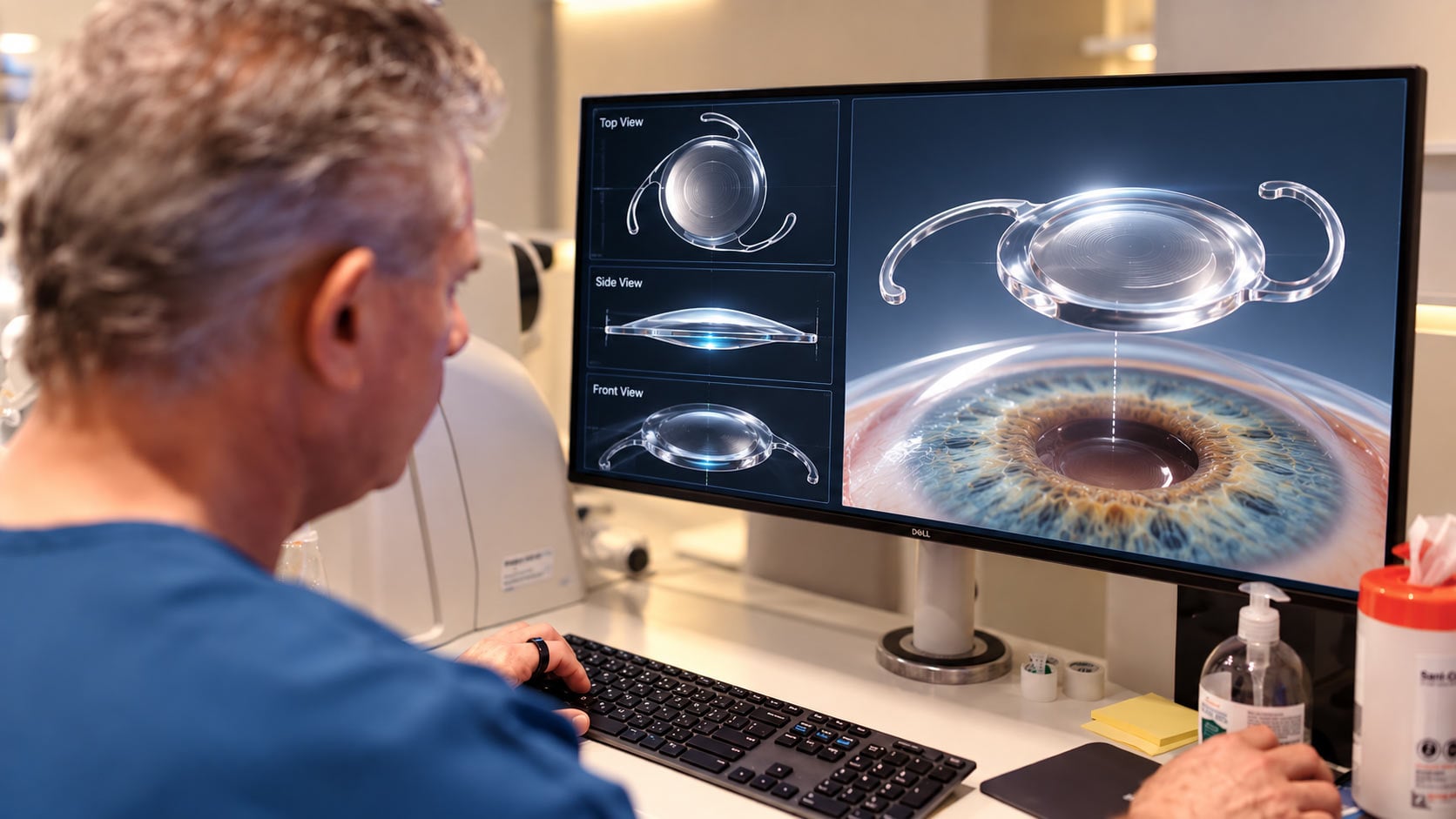
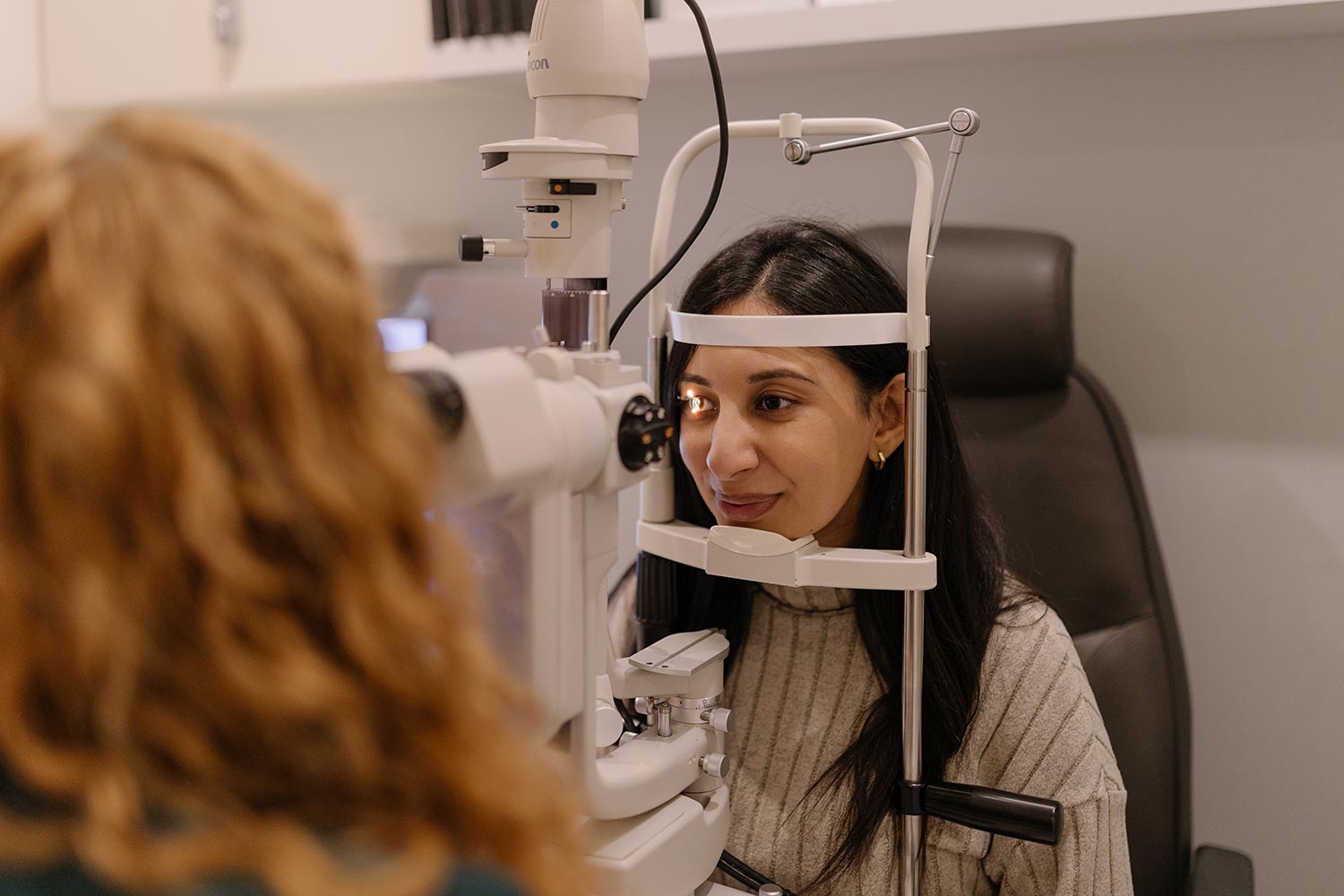
An astigmatism value on a spectacle prescription cannot reveal whether the cornea is suitable for surgery. Before treatment, the clinical team needs to establish where the astigmatism originates, whether it is regular and whether the shape of the cornea is stable. Advanced topography and tomography can map the cornea in three dimensions, including its front and back surfaces. Additional measurements can examine corneal thickness, pupil behaviour, ocular aberrations, tear-film quality and visual performance in different lighting conditions.
These tests can also identify subtle irregularities that may make elective corneal surgery inappropriate. This is particularly important when astigmatism is unexpectedly high, asymmetrical or changing. The purpose of advanced technology is not merely to produce more data; it is to give the surgeon enough information to select the safest procedure, personalise the correction and recognise when surgery should not proceed. Explore the diagnostic and Laser Eye Surgery technology used at London Vision Clinic.
The astigmatism accuracy chain
Correct axis
Personalised planning
Precise treatment
Each stage matters. Even sophisticated laser technology depends on accurate diagnostics and careful interpretation by the treating surgeon.
Why Surgeon Experience Matters
Technology measures and treats the eye, but the surgeon determines how those measurements should be interpreted. This is especially important with astigmatism because its apparent strength and axis can vary with tear-film instability, contact-lens wear, head position and the quality of the measurement. An experienced refractive surgeon will compare several sets of data rather than relying on one scan or spectacle prescription.
The surgeon must also decide whether the astigmatism should be treated through LASIK, surface laser surgery, SMILE Pro or a lens-based procedure. London Vision Clinic’s surgical team includes Professor Dan Reinstein, Dr Glenn Carp and Dr Fadi Kherdaji, bringing together extensive clinical experience, research and access to multiple treatment approaches. Learn more about the clinic’s surgeons and world-class expertise.
Can Laser Eye Surgery Permanently Correct Astigmatism?
Laser Eye Surgery permanently changes the shape of the treated corneal tissue. This means the correction does not disappear when glasses are removed or contact lenses are taken out. However, “permanent correction” should not be interpreted as a guarantee that the eyes will never change again. Prescriptions can shift over time, and age-related changes such as presbyopia or cataracts may later affect vision independently of the original astigmatism treatment.
Some patients may retain a small residual prescription or require an enhancement when clinically appropriate. The realistic objective is not to promise a mathematically perfect eye, but to provide high-quality functional vision and reduce dependence on corrective lenses within the safe capabilities of the individual eye.
Glasses, Contacts or Laser: Which Fits Your Life?
| Everyday consideration | Glasses | Contact lenses | Laser Eye Surgery |
|---|---|---|---|
| How it works | External optical correction | Correction worn on the eye | Corneal shape is surgically altered |
| Daily maintenance | Cleaning and occasional adjustment | Insertion, removal and strict hygiene | Eye drops and reviews during recovery |
| Sport and weather | Can mist, move or restrict equipment | Convenient, but water exposure requires care | Reduced reliance on wearable correction |
| Reversibility | Prescription can be replaced | Wear can be stopped | Corneal reshaping is permanent |
| Best suited to | People wanting a non-invasive and easily updated option | People comfortable with regular lens wear and care | Suitable adults seeking greater independence from lenses |
What Happens After Treatment?
Astigmatism correction does not end when the laser procedure finishes. Early reviews allow the clinical team to check that the cornea is healing normally, measure visual improvement and monitor symptoms such as dryness, glare or fluctuating focus. Patients receive eye drops and personalised instructions covering screen use, driving, exercise, swimming, make-up and eye rubbing.
Vision may improve rapidly after LASIK or SMILE Pro, while surface laser procedures require a longer initial recovery. In every case, the eye continues to settle beyond the first clear day. Structured follow-up care provides an opportunity to compare the result with the original treatment plan and address any concerns promptly. Patient experiences of consultations, surgery and aftercare can be explored through London Vision Clinic’s Laser Eye Surgery reviews.
When Might Laser Eye Surgery Be the Better Option?
Laser Eye Surgery may be attractive when glasses interfere with work, sport or everyday convenience, or when contact lenses cause persistent discomfort and unstable vision. It can also offer a more consistent optical correction because the treatment does not depend on a spectacle frame remaining correctly positioned or a toric lens maintaining its orientation throughout the day.
It is not automatically the best option for everyone. Patients with an unstable prescription, significant untreated dry eye, an irregular or structurally vulnerable cornea, or certain eye-health conditions may be advised to delay or avoid corneal surgery. In these circumstances, glasses, specialist contact lenses or a different surgical approach may provide a safer solution.
The Best Correction Begins With the Right Diagnosis
Astigmatism is not one uniform condition, and the number written in the cylinder section of a prescription tells only part of the story. The source, regularity, orientation and stability of the astigmatism all affect treatment planning. This is why a comprehensive diagnostic assessment is more valuable than selecting a procedure based on an advertised treatment range.
For suitable patients, modern Laser Eye Surgery can correct astigmatism alongside short-sightedness or long-sightedness and provide lasting freedom from daily optical correction. The best result comes from combining precise technology with experienced surgical judgement, realistic expectations and attentive care after treatment.
Could Your Astigmatism Be Corrected?
A comprehensive consultation can establish the type and source of your astigmatism and determine whether LASIK, surface laser treatment, SMILE Pro or another form of correction is most appropriate.
Please note: Laser Eye Surgery is a medical procedure. Suitability, recovery and results vary between patients, and this information should not replace a personalised assessment with a qualified eye surgeon.