For many people, laser eye surgery begins with a simple ambition: to see clearly without reaching for glasses or inserting contact lenses every morning. For Laura Dean-Osgood, however, the decision carried much greater significance.
After years of recurring contact lens complications, discomfort and hospital visits, Laura wanted to find a safer, more sustainable way to manage her vision. Her experience, originally documented in a two-part Reader’s Digest feature, began with a detailed consultation at London Vision Clinic and led to a life-changing result.
Laura’s starting point
More than three decades of contact lens wear, recurring infections, a potentially sight-threatening corneal ulcer and an increasing reliance on glasses.
When Contact Lenses Are No Longer the Right Answer
Laura had worn contact lenses consistently since the age of 16. Over time, she developed a potentially sight-threatening eye ulcer and experienced repeated infections and other complications.
During the following 16 years, she made regular visits to the accident and emergency department at Moorfields Eye Hospital. Understandably, she began using her contact lenses much more sparingly and relied on glasses for most of the time.
Contact lenses can provide excellent vision when they are fitted, worn and cared for correctly. However, they sit directly on the surface of the eye. Poor tolerance, dryness, overwear, contamination or sleeping in lenses can increase the risk of irritation and infection.
For Laura, the repeated cycle of lenses, discomfort and hospital treatment eventually became too much. She decided it was time to investigate whether refractive surgery could offer another way forward.
Choosing a Specialist Laser Eye Surgery Clinic in London
Laura did not approach the decision casually. Having already experienced serious problems with her eyes, she wanted to feel completely confident in the clinic and surgical team responsible for her care.
“I wanted to know I was in good hands-the best-so I booked an initial consultation at London Vision Clinic…”
Laura Dean-Osgood, originally speaking to Reader’s Digest
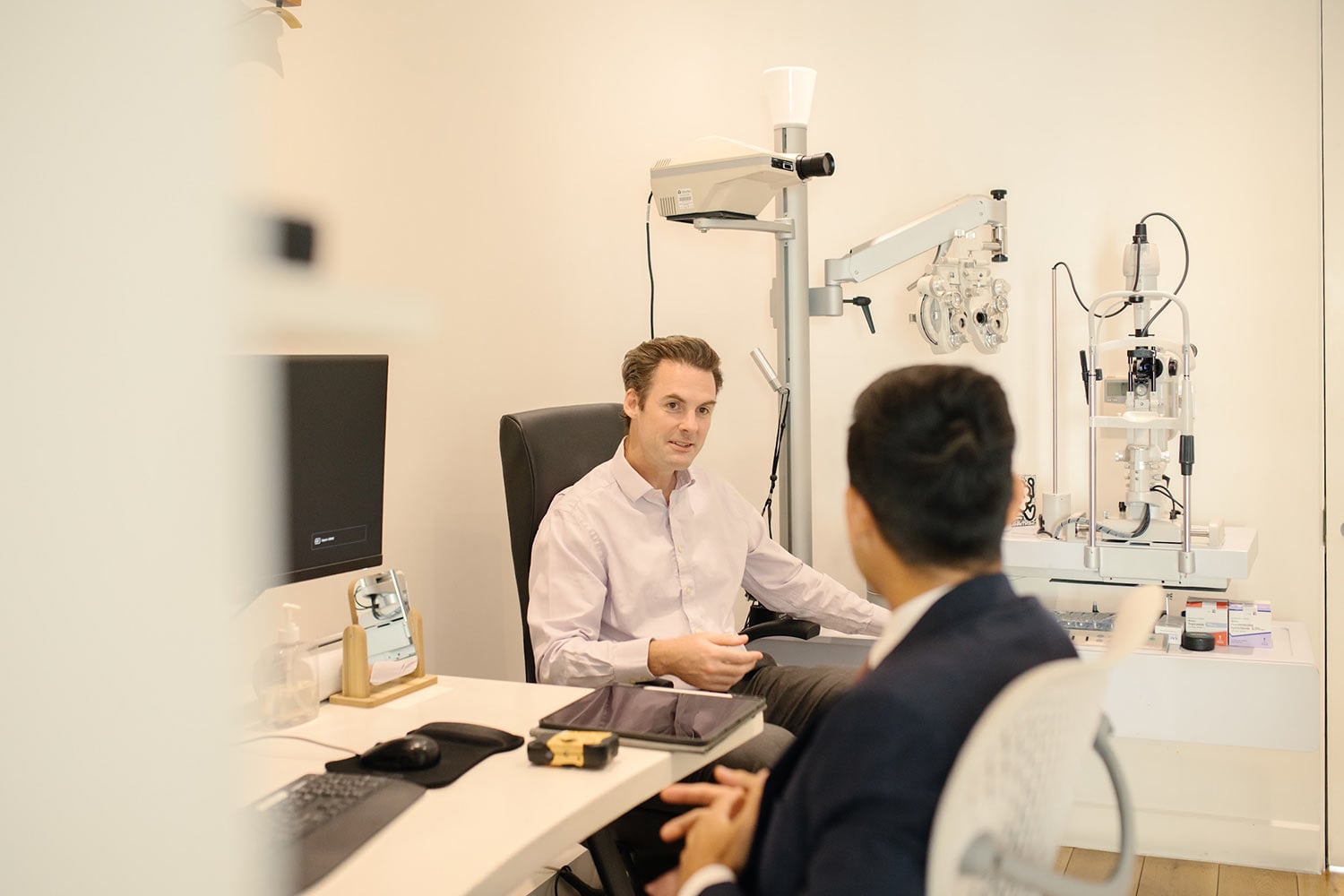
London Vision Clinic’s Harley Street team takes a highly individual approach to vision correction. Rather than recommending a procedure based only on a glasses prescription, the clinical assessment considers the health, shape, strength and optical characteristics of each eye.
This means the recommended treatment may differ from one patient to another. You can explore the clinic’s full range of laser and lens vision correction treatments, but the final recommendation should always follow detailed diagnostic testing and consultation with a refractive surgeon.
Why Laura’s Eyes Were Treated Before Surgery
Laura’s assessment identified a condition that was causing her eyes to become dry and irritated. Instead of proceeding immediately, the clinical team prescribed a course of lubricating eye drops and warm compresses.
This preparation was an important part of her treatment journey. A stable, healthy ocular surface supports accurate diagnostic measurements, surgical planning, postoperative comfort and the quality of the eventual visual result.
The principle is simple: prepare first, treat second
Assess
Examine the cornea, tear film, prescription and overall eye health.
Optimise
Treat dryness, irritation or inflammation before repeating key measurements.
Personalise
Recommend treatment only when the eyes are ready and the evidence supports it.
Having dry or sensitive eyes does not automatically mean someone is unsuitable for laser eye surgery. The cause, severity and stability of the condition must be assessed carefully. Some people require treatment before surgery, while others may be advised that a different vision correction procedure, or no surgery at all, would be safer.
Why ReLEx SMILE Was Recommended
Once Laura’s eyes were considered ready for treatment, she underwent ReLEx SMILE, a minimally invasive form of laser vision correction that was pioneering at the time.
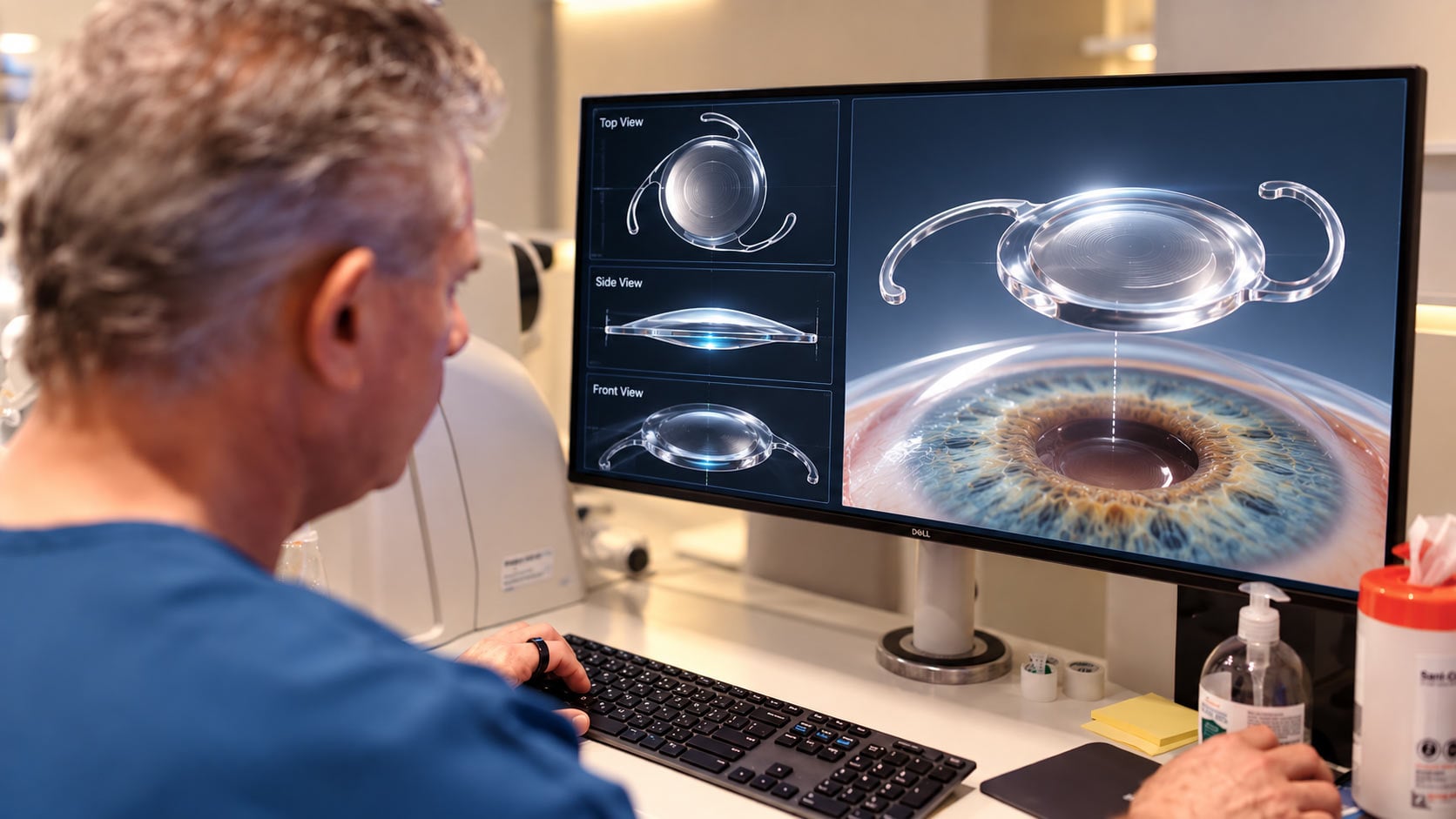
Unlike LASIK, SMILE does not require the creation of a large corneal flap. A femtosecond laser creates a precisely shaped piece of tissue, known as a lenticule, within the cornea. The surgeon then removes it through a small keyhole opening, changing the cornea’s focusing power.
The technique preserves more of the corneal surface and disrupts fewer corneal nerves than a flap-based procedure. This can make it particularly valuable for carefully selected patients concerned about ocular-surface sensitivity, although no procedure is entirely free from the possibility of temporary dryness.
Patients can now learn more about the latest evolution of Laura’s procedure on the clinic’s SMILE Pro laser eye surgery page.
From ReLEx SMILE in 2016 to SMILE Pro in 2026
Laura’s treatment took place in 2016. The fundamental keyhole principle remains, but the technology used to deliver SMILE has continued to advance.
| Then: Laura’s treatment in 2016 | Now: SMILE Pro in 2026 |
|---|---|
| Minimally invasive ReLEx SMILE | Latest-generation SMILE Pro treatment |
| Small keyhole opening | The same flap-free keyhole principle |
| Earlier-generation ZEISS laser platform | ZEISS VISUMAX 800 femtosecond laser |
| Advanced treatment for its time | Faster laser delivery with enhanced positioning and astigmatism alignment |
Modern equipment is only one part of the treatment. Detailed measurements, careful patient selection and surgeon-led planning remain essential. London Vision Clinic’s diagnostic and laser technology is used to build an individual profile of each eye rather than applying a standard treatment plan.
Laura’s Experience on the Day of Surgery
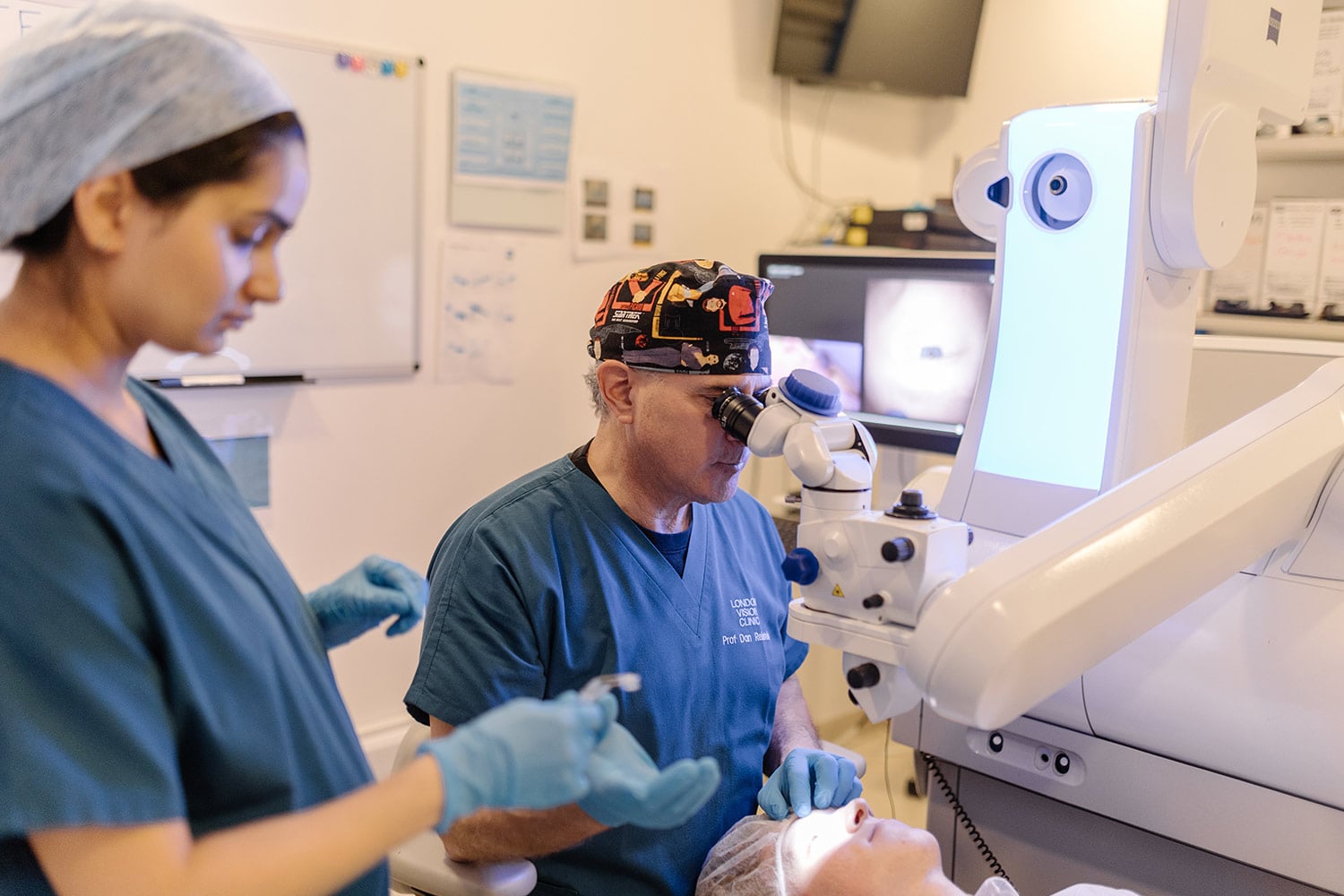
On arrival at the clinic, Laura was guided through her postoperative routine and prepared for the procedure. Anaesthetic eye drops were used to numb the surface of her eyes before treatment.
“I did feel some pushing on my eye, but absolutely no pain at all. When he was done with the first eye, he told me it was 100% perfect.”
Some awareness of gentle pressure is normal during SMILE because the eye must remain carefully positioned while the laser is operating. However, experiences vary, and every patient receives guidance about what to expect before treatment begins.
Laura then returned home to rest and followed the lubricating-drop schedule provided by the clinic.
“After four hours of resting, with 15-minute intervals to pop lubricating drops in, I was able to watch TV without my glasses!”
The Everyday Moments That Made the Difference
Clinical measurements are important, but the value of vision correction is often felt through small, ordinary moments: seeing the alarm clock, watching television, exercising, travelling or simply starting the day without searching for glasses.
One month after surgery, Laura was still noticing the difference her new vision made to daily life.
“Now, when I wake up, I just get up-no more reaching for my glasses, hunting for them with blurry eyes. I’ll probably never forget the morning after surgery: waking up and looking around and seeing everything almost perfectly.”
Laura’s experience is personal to her and should not be interpreted as a guarantee that every patient will have the same recovery or result. Prescription, age, corneal health, tear-film stability and healing response can all influence an individual outcome.
Could SMILE Pro Be Suitable for Someone With Contact Lens Intolerance?
It may be an option, but contact lens intolerance alone does not determine suitability. A comprehensive assessment is needed to establish why the lenses have become uncomfortable and whether the eyes are healthy enough for treatment.
Your consultation may consider:
- Your current prescription and whether it is stable
- The shape, thickness and biomechanical strength of the cornea
- Tear-film quality and the health of the ocular surface
- Previous ulcers, infections, scarring or contact lens complications
- Pupil behaviour and vision in different lighting conditions
- Your age, occupation, lifestyle and long-term visual needs
London Vision Clinic offers several forms of laser and lens-based correction. The objective of the assessment is not simply to confirm whether surgery is possible, but to identify which approach offers the most appropriate balance of safety, visual quality and long-term stability.
Specialist Vision Correction on Harley Street
Laura chose London Vision Clinic because she wanted confidence in the people caring for her eyes. That principle remains central to the clinic’s approach in 2026.
Its surgeons have contributed to the research, development and teaching of modern refractive surgery, including SMILE and advanced corneal diagnostics. You can learn more about the clinic’s specialist refractive surgeons and clinical expertise.
For people comparing treatment options, the clinic also provides transparent information about laser eye surgery prices and finance, while further patient experiences can be found on the London Vision Clinic reviews page.
Could Your Vision Story Be Next?
If glasses or contact lenses are affecting your comfort, confidence or everyday routine, a specialist assessment can help you understand whether modern vision correction may be suitable for your eyes.
Laura’s story was originally documented by Reader’s Digest in 2016. Individual experiences, recovery times and visual outcomes vary. A comprehensive consultation is required before any treatment can be recommended.