Learn More About Your Journey to Clearer, Glasses-Free Vision
Thinking about laser eye surgery can feel like a big step, especially if you are unsure what the process actually involves. Most patients arrive at their consultation with plenty of questions, a few nerves and often years of frustration with glasses or contact lenses.
While every patient journey is unique, the overall treatment process tends to follow the same carefully structured path. At London Vision Clinic, every stage has been designed to help you feel informed, comfortable and confident from your very first enquiry through to long-term aftercare.
The Laser Eye Surgery Journey at London Vision Clinic
From advanced screening and personalised diagnostics to surgery day and long-term aftercare, every stage of treatment is carefully planned around your eyes, your lifestyle and your visual goals.
Laser Eye Surgery: The Five Key Steps
Below, we will guide you through the five key stages of the laser eye surgery process at London Vision Clinic. By the end, you will have a much clearer understanding of how modern treatment works and why detailed preparation and aftercare play such an important role in achieving excellent results.
We believe no other clinic offers a more comprehensive assessment process or the same level of personalised aftercare. But first, let’s begin at the start of the journey.
“The whole process is unbelievable. To be able to see perfectly after wearing glasses since childhood is a wonderful feeling. I’m still finding things now that surprise me and remind me how difficult glasses can be.”
Step 1: Get in Touch
Every laser eye surgery journey starts with a conversation.
Our experienced clinic coordinators are available to answer questions, explain treatment options and arrange your initial consultation. Alternatively, you can use our online enquiry form to book an appointment at a time that suits you.
Importantly, speaking to us does not place you under any obligation to proceed with treatment. For many patients, this first stage is simply about understanding what options may be available for their eyes.
Talk to an expert now or Book a Consultation to begin your journey.
Step 2: The Comprehensive Consultation
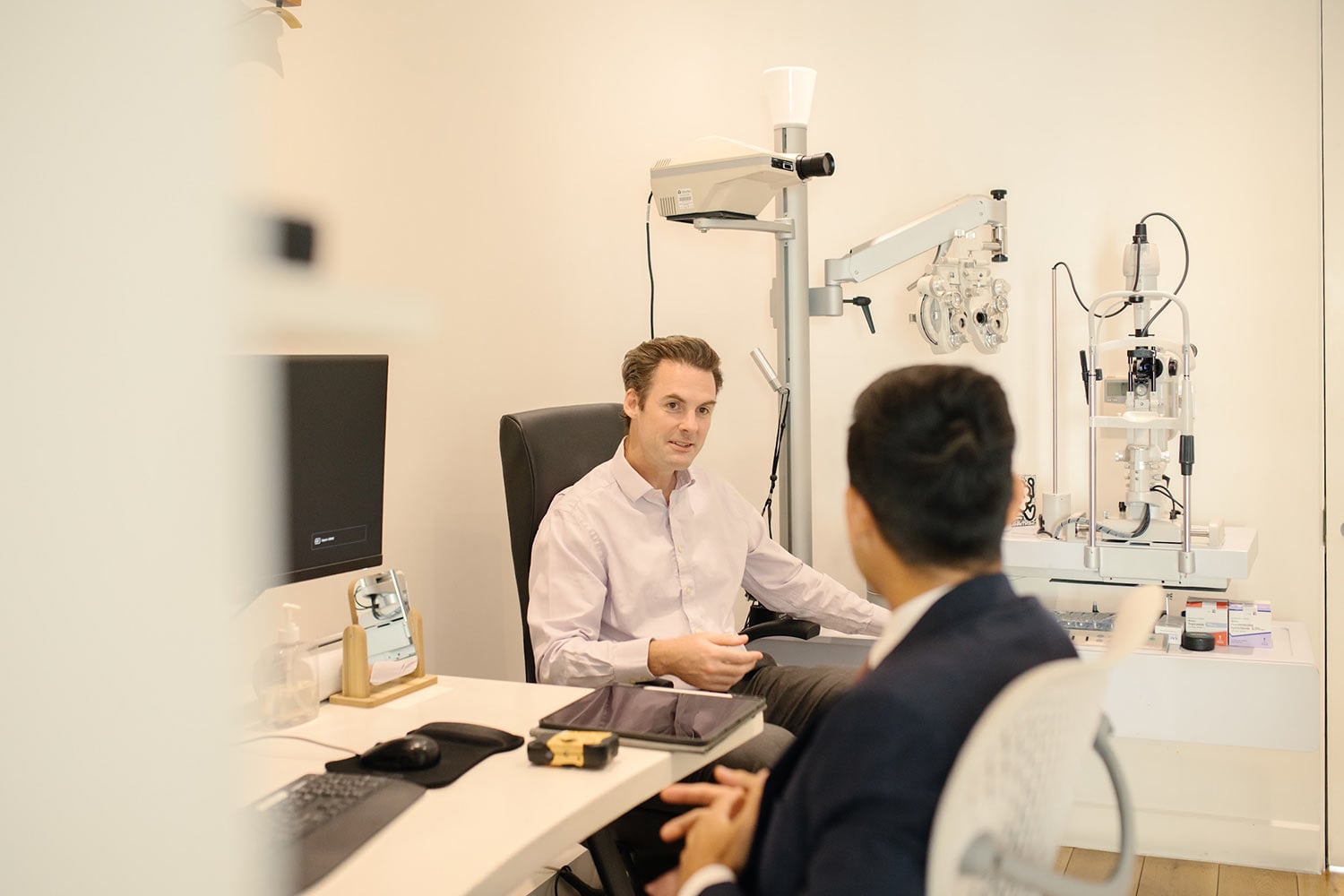
Your consultation is one of the most important parts of the entire process. At this stage, we assess not only whether you are suitable for treatment, but also which procedure may offer the safest and most effective outcome for your eyes.
At London Vision Clinic, the main part of your initial assessment is complimentary. However, this is far more than a basic sight test. In fact, many patients describe it as the most detailed eye examination they have ever experienced.
Unlike clinics that rush through assessments, we dedicate significant time to understanding the fine structure of your eyes in exceptional detail. This careful approach helps reduce risk and improve the precision of treatment planning.
Before testing begins, your Patient Care Coordinator (PCC) will explain the process clearly, answer questions and help you feel at ease.
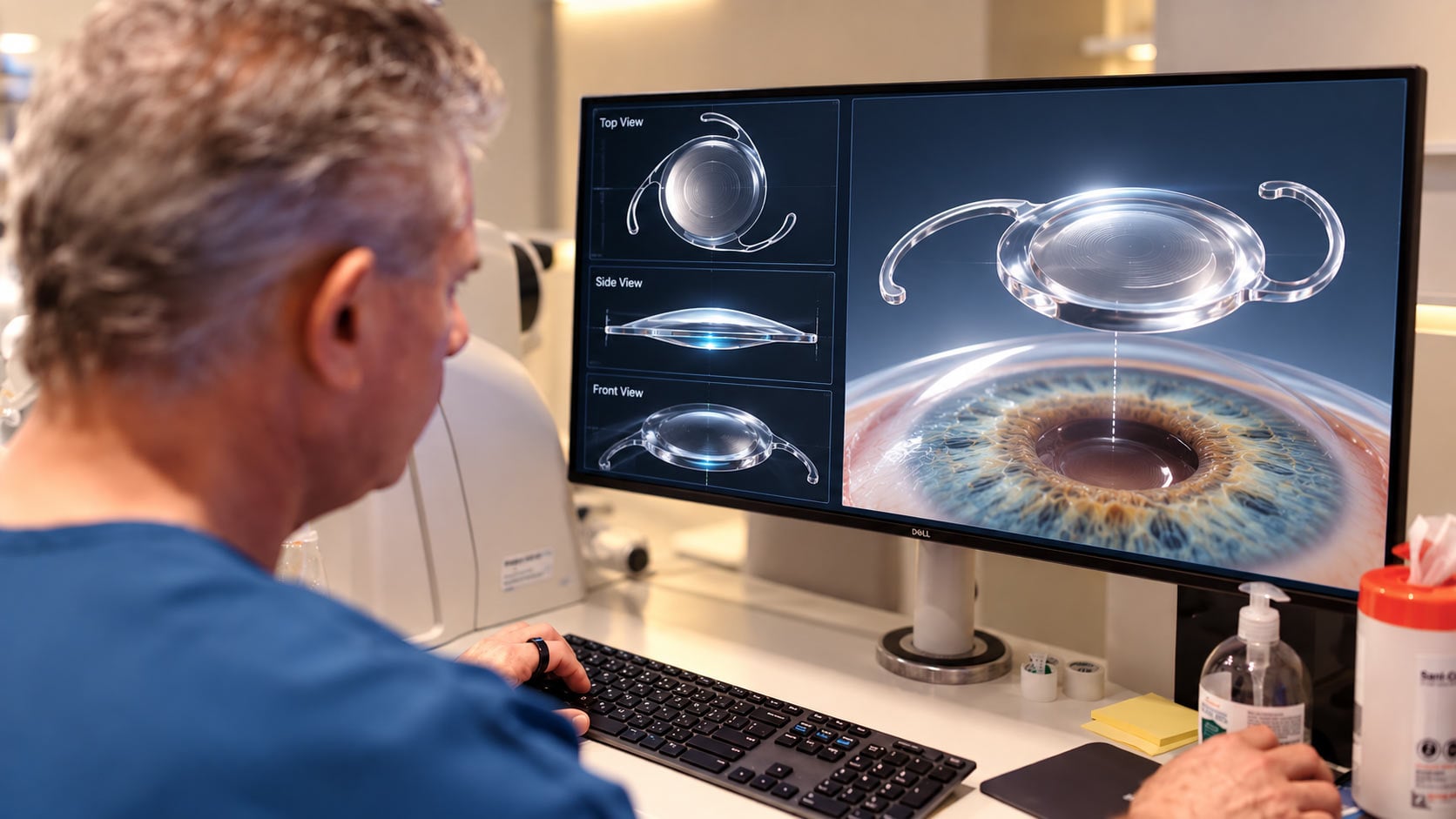
Advanced Corneal Mapping
Detailed 3D imaging measures the shape and thickness of your corneas with extraordinary precision.
Visual Quality Testing
We assess subtle optical imperfections that can affect contrast, night vision and visual sharpness.
Personalised Planning
Every treatment plan is tailored around your prescription, eye structure and visual lifestyle.
Some Initial Tests
The first stage of screening involves measuring the exact geometry of your corneas. Since laser eye surgery reshapes the cornea, it is essential to confirm the corneal structure is healthy and suitable for treatment.
We also assess tiny optical imperfections unique to your eyes that may affect visual quality. These measurements can help improve visual sharpness and increase the chances of achieving 20/20 vision or better.
Your pupils will also be measured carefully, particularly in low-light conditions, to assess any increased risk of glare, halos or night-vision disturbances.
Optometrist Assessment
Following the initial tests, one of our specialist optometrists will perform a detailed eye health examination. This includes assessing tear film quality, contrast sensitivity and overall visual performance.
Some patients may also undergo scanning with the Artemis Insight 100™ corneal scanner, developed in collaboration with Professor Dan Reinstein. This advanced ultrasound imaging system measures the individual layers of the cornea with exceptional precision and can be particularly useful for patients with thinner corneas or astigmatism.
If age-related near vision changes are present, we may also assess whether you are suitable for PRESBYOND® Laser Blended Vision.
Ophthalmic Exam
If you are found suitable and decide to proceed, your optometrist will complete a full ophthalmic examination to gather additional data for your personalised treatment plan.
Some of these tests require pupil-dilating eye drops, which may temporarily blur your vision or increase light sensitivity for a few hours afterwards.
Step 3: Treatment Day
Once treatment day arrives, it is completely normal to feel excited, nervous or a mixture of both. By this stage, however, your eyes have already been mapped and analysed in extraordinary detail.
Before surgery begins, your ophthalmic surgeon performs one final examination to confirm all measurements and treatment settings.
The procedure itself is remarkably quick. Depending on the type of Laser Eye Surgery performed and the complexity of your prescription, treatment on both eyes is often completed within minutes.
Your surgeon will guide you through each stage of the procedure. While you may feel pressure or unusual sensations, the treatment itself should not be painful.
Modern Eye-Tracking Technology
Advanced laser eye-tracking systems monitor even the smallest eye movements during surgery, helping ensure treatment remains precise and accurately centred throughout the procedure.
Step 4: Aftercare
Although the procedure itself is quick, recovery and aftercare remain an important part of the process.
Immediately after treatment, the eyes naturally begin their healing response. Mild swelling, blurred vision, dryness or halos around lights are common during the early healing phase and usually improve steadily over time.
Much of the initial healing occurs within the first 24 hours following LASIK, and many patients are able to return to work and normal daily activities quickly. However, every patient heals differently.
Our aftercare programme includes follow-up appointments, recovery monitoring and a personalised eye drop regimen designed to support healing and reduce infection risk.
You will also receive protective eye shields and detailed guidance on returning safely to driving, exercise, screen use and other daily activities.
Step 5: Enjoying Life with Greater Visual Freedom
Eventually, the appointments, eye drops and recovery period become a thing of the past. What remains is the freedom many patients describe as genuinely life-changing.
Simple moments begin to feel easier. Walking in from the cold without fogged-up lenses. Falling asleep without removing contact lenses. Swimming, exercising or travelling without constantly thinking about glasses.
While these changes may seem small individually, together they can have a significant impact on quality of life.
And even years after treatment, our team remains available should you ever wish to return for further advice, reassurance or follow-up support.
Ready to Take the First Step?
Laser eye surgery is often far more straightforward and comfortable than patients expect. At London Vision Clinic, our experienced team will guide you through every stage of the process with detailed diagnostics, personalised care and long-term support.
To learn more about our laser eye surgery treatment options, get in touch with one of our patient care coordinators or Book a Consultation today.