LASIK, LASEK and SMILE Pro all use advanced laser technology to improve vision, but they reach and reshape the cornea in different ways. If you have started researching laser eye surgery, you have probably encountered an alphabet of unfamiliar names. LASIK, LASEK, PRK, SMILE and SMILE Pro can easily sound like competing versions of the same treatment. In reality, the distinction is much clearer than the terminology suggests. These procedures share the same broad objective: to change the focusing power of the cornea so that light reaches the retina more accurately. The principal difference is how the surgeon reaches the corneal tissue that needs to be reshaped.
LASIK uses a thin hinged flap. LASEK and PRK work through the surface of the cornea. SMILE Pro creates a precisely shaped piece of tissue inside the cornea and removes it through a small keyhole opening.
The 60-second answer
LASIK creates a flap and generally offers rapid visual recovery.
LASEK or PRK treats the surface without creating a permanent flap, but healing takes longer.
SMILE Pro corrects vision from within the cornea through a small keyhole opening.
That does not mean one is automatically better than the others. The right procedure depends on the structure of your eyes, your prescription, ocular-surface health, age, occupation, lifestyle and long-term visual requirements.
What Does Laser Eye Surgery Actually Change?
To understand the differences between LASIK, LASEK and SMILE Pro, it helps to understand what laser vision correction is trying to achieve. The cornea is the transparent, curved window at the front of the eye. Together with the natural lens inside the eye, it bends incoming light so that it can focus on the retina. If the shape or focusing power of the eye is not correctly balanced, light may focus in front of the retina, behind it or across more than one focal point. This produces refractive errors such as:
- Myopia: short-sightedness, where distant objects appear blurred
- Hyperopia: long-sightedness, which can affect near and distance vision
- Astigmatism: irregular focusing that can blur vision at multiple distances
- Presbyopia: the age-related loss of near focusing ability
Laser eye surgery carefully reshapes corneal tissue to alter the way light is focused. However, presbyopia involves the ageing natural lens rather than simply the shape of the cornea. Patients with presbyopia may therefore require a specialised approach such as PRESBYOND® Laser Blended Vision or a lens-based treatment. London Vision Clinic provides a wider explanation of the available laser eye surgery treatments and the refractive conditions they may be used to address.
LASIK vs LASEK vs SMILE Pro at a Glance
| Comparison | LASIK | LASEK / PRK | SMILE Pro |
|---|---|---|---|
| Access method | Thin hinged corneal flap | Outer surface layer is moved or removed | Small keyhole opening |
| Tissue reshaping | Excimer laser reshapes tissue beneath the flap | Excimer laser reshapes exposed corneal tissue | Femtosecond laser creates an internal lenticule |
| Corneal flap | Yes | No | No |
| Typical recovery profile | Usually rapid | More gradual while the surface heals | Usually rapid, although early clarity varies |
| Early discomfort | Often mild | Can be more noticeable during surface healing | Often mild |
| Common clinical role | Established option for a broad range of suitable patients | Useful when avoiding a flap offers an advantage | Minimally invasive correction, primarily for myopia and astigmatism |
| Important consideration | The cornea must safely support both the flap and correction | Longer recovery and temporary discomfort must be planned for | Available prescription range differs from LASIK and surface treatment |
This table provides a general comparison rather than a treatment recommendation. Recovery, comfort and suitability vary between individuals.
LASIK: Vision Correction Beneath a Corneal Flap
LASIK reaches the treatment area by creating a thin, hinged flap on the front of the cornea.
LASIK stands for laser-assisted in situ keratomileusis. It is one of the most established forms of laser vision correction and remains an important treatment for appropriately selected patients. During LASIK, a femtosecond laser creates a precise flap in the cornea. The surgeon gently lifts this flap before an excimer laser reshapes the underlying stromal tissue according to the patient’s individual treatment plan. Once the correction is complete, the flap is repositioned. It naturally adheres without stitches and begins healing quickly.
What can LASIK treat?
LASIK may be used to correct myopia, hyperopia and astigmatism across an appropriate prescription range. A modified laser treatment may also form part of a PRESBYOND® plan for suitable patients affected by presbyopia. Whether LASIK can safely correct a particular prescription depends on more than the number written on a glasses prescription. The surgeon must calculate the proposed correction alongside the thickness, curvature, regularity and biomechanical properties of the cornea.
What is the main appeal of LASIK?
LASIK is known for its relatively rapid visual recovery. Many patients can resume a range of ordinary activities within the first few days, subject to the instructions given at their postoperative examination. The surface epithelium remains largely intact because the laser correction takes place beneath the flap. This helps explain why early recovery is generally more comfortable and faster than after PRK or LASEK.
Why might LASIK not be recommended?
LASIK requires sufficient suitable corneal tissue to create the flap and perform the planned correction safely. Corneal thickness is important, but it is not the only factor. Irregular corneal shape, biomechanical weakness, ocular-surface problems, previous eye surgery, particular occupations or a substantial risk of direct eye impact may influence the recommendation. The existence of a flap does not make LASIK an inferior procedure. It means its anatomy and long-term implications need to be appropriate for the individual patient.
Read more about LASIK laser eye surgery in London.
LASEK and PRK: Modern Surface Laser Treatments
LASEK and PRK reach the treatment area through the corneal surface without creating a permanent flap.
PRK and LASEK are sometimes described as older laser procedures. Although they predate LASIK and SMILE Pro, that does not make them obsolete. They remain valuable modern treatments when a surface-based approach provides the most appropriate balance of corneal preservation, safety and visual outcome.
What is the difference between PRK and LASEK?
The epithelium is the thin, naturally renewing layer of cells covering the front of the cornea. In PRK, the epithelium is gently removed before the excimer laser reshapes the tissue beneath it. A protective contact lens is then placed over the eye while a new epithelial layer develops.
In LASEK, the epithelial layer is loosened and moved aside before laser correction. It may then be repositioned over the treated area, depending on the technique used. As with PRK, a bandage contact lens protects the eye during early healing. The important point is that both are surface procedures. Neither creates the deeper hinged flap associated with LASIK.
Why would a surface treatment be selected?
PRK or LASEK may be considered when avoiding a corneal flap offers a clinical or practical advantage. Potential reasons can include:
- Corneas that cannot safely accommodate the proposed LASIK flap and correction
- Certain superficial corneal scars or epithelial irregularities
- Occupations or activities carrying an increased possibility of eye impact
- Previous surgery or anatomical characteristics affecting treatment planning
- A prescription and corneal profile better suited to surface correction
A thin cornea does not automatically make someone suitable for PRK or LASEK. Its shape, strength, symmetry and health must all be considered.
Why does recovery take longer?
The epithelium must regenerate across the treated area. During this initial healing period, patients may experience watering, light sensitivity, soreness, blurred vision or a gritty sensation. A protective contact lens is normally worn for the first part of recovery. Vision then improves progressively rather than following the rapid early recovery commonly associated with LASIK. Long-term visual quality can be comparable with other laser procedures in appropriately selected patients. The principal difference is often the route taken to the result and the experience during healing.
Explore the clinic’s guide to PRK and LASEK surface laser treatment.
SMILE Pro: Keyhole Laser Vision Correction
SMILE Pro creates the correction inside the cornea and removes it through a small access opening.
SMILE stands for small incision lenticule extraction. The procedure was previously widely described as ReLEx SMILE. Its latest technological evolution is known as SMILE Pro.
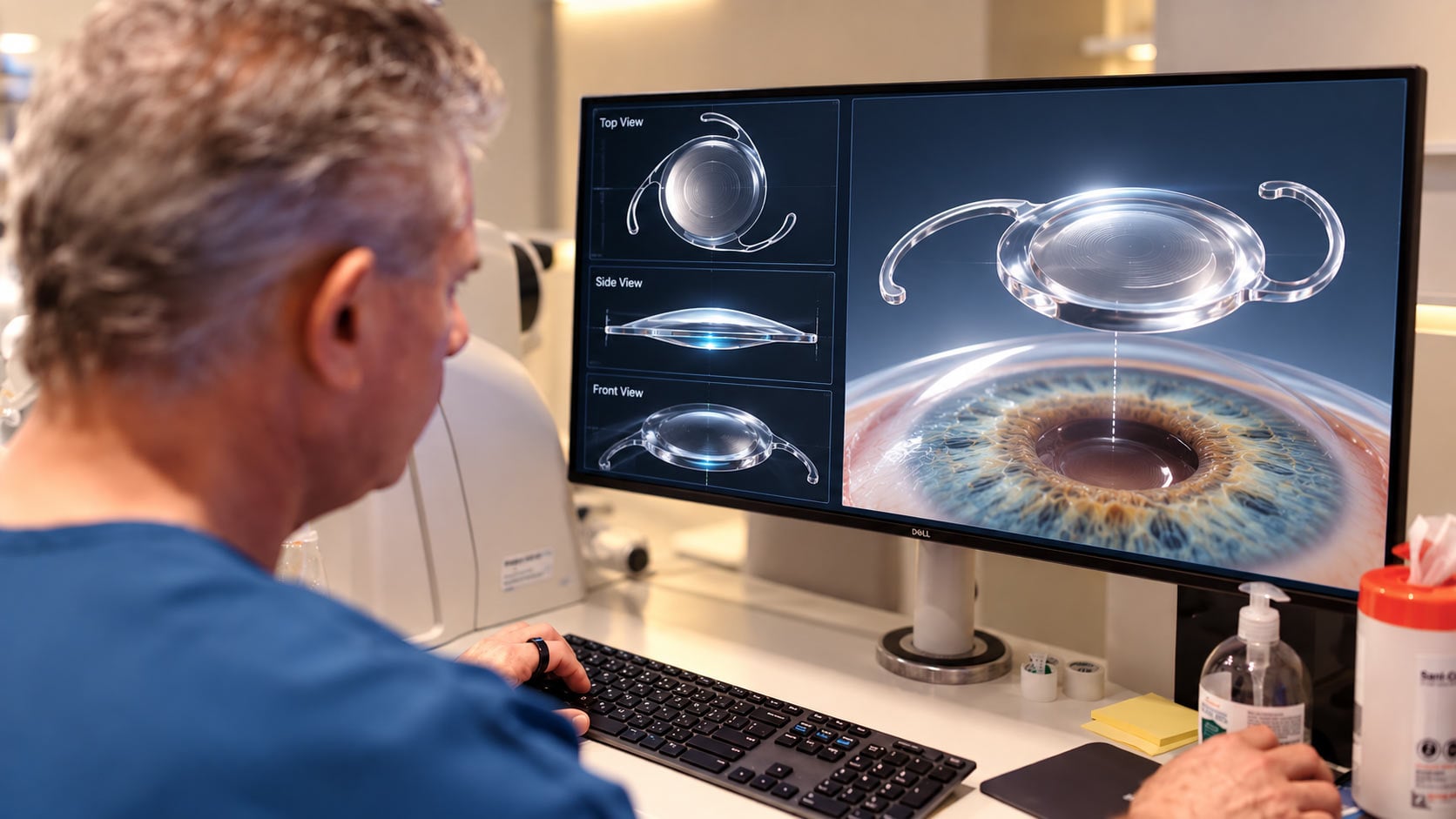
Unlike LASIK and surface laser surgery, SMILE Pro does not use an excimer laser to reshape an exposed area of corneal tissue. Instead, a femtosecond laser creates a precisely calculated disc of tissue, known as a lenticule, within the cornea. The surgeon removes this lenticule through a small keyhole opening. Removing it changes the shape and focusing power of the cornea without requiring a LASIK flap or broad surface treatment.
What can SMILE Pro treat?
SMILE Pro is principally used to correct myopia and astigmatism in suitable patients. The available treatment range and eligibility criteria differ from those of LASIK and PRK/LASEK. This is one reason why patients should not select a procedure based only on its popularity or recovery profile. The proposed treatment must be capable of correcting the individual refractive error while preserving a safe and stable corneal structure.
What are the potential advantages?
Because SMILE Pro uses a small opening and does not create a flap, it preserves more of the corneal surface and disrupts fewer anterior corneal nerves than LASIK. This can make it particularly appealing for some patients with active lifestyles or concerns about ocular-surface sensitivity. However, dry eyes still require careful investigation, and no laser procedure can guarantee that postoperative dryness will not occur. SMILE Pro may also be considered for some prescriptions or corneal profiles that are unsuitable for LASIK. This does not mean that every patient rejected for LASIK can safely undergo SMILE Pro.
How has SMILE technology changed?
London Vision Clinic now performs SMILE Pro using the ZEISS VISUMAX 800 femtosecond laser. This latest-generation platform delivers the laser stage in less than ten seconds and includes digital assistance for positioning and astigmatism alignment. Technology is important, but the machine does not decide whether treatment is appropriate. Diagnostic quality, surgical planning and the experience required to interpret each patient’s measurements remain fundamental.
Learn more about SMILE Pro keyhole laser eye surgery.
The Most Important Difference Is Not the Laser
Patients often focus on procedure names, but the most important stage happens before a laser is selected.
A safe recommendation requires a detailed understanding of the entire visual system. Two patients with the same glasses prescription may receive different recommendations because their corneal structure, tear film, age or visual requirements are different.
What determines the treatment recommendation?
- Your prescription
- The type and strength of refractive error influence which procedures can provide an appropriate correction.
- Corneal thickness and shape
- The surgeon must establish whether the cornea can safely support the planned treatment while maintaining long-term structural stability.
- The corneal epithelium
- Mapping the outer corneal layer can reveal irregularities that affect diagnosis, treatment planning and the suitability of different procedures.
- Tear-film and ocular-surface health
- Dryness, inflammation or contact lens intolerance may need treatment before reliable measurements or surgery can proceed.
- Age and near vision
- From the forties onwards, the ageing natural lens and presbyopia become increasingly important parts of treatment planning.
- Occupation and lifestyle
- Contact sports, physical work, night driving, screen use and visual priorities can influence the most appropriate route.
London Vision Clinic uses advanced imaging and diagnostic systems to examine more than a standard prescription alone. Its laser eye surgery technology includes corneal tomography, topography, biomechanical assessment and detailed epithelial mapping.
Which Procedure May Suit Different Priorities?
The following examples explain how certain characteristics may influence a discussion. They are not a substitute for examination and should not be used to choose your own operation.
What may influence your treatment?
Your Eyes, Lifestyle and Visual Priorities
The best procedure is not chosen from a name alone. Your surgeon will consider how your eyes are built, how you use your vision and what you need from treatment.
Rapid Early Recovery
LASIK and SMILE Pro generally offer faster early recovery than PRK or LASEK, although individual vision and comfort will vary.
Avoiding a Corneal Flap
SMILE Pro, PRK and LASEK are flap-free. The preferred method will depend on your prescription and detailed corneal measurements.
Long-Sightedness
LASIK or surface laser treatment may be considered. SMILE Pro is principally used to correct myopia and astigmatism.
High-Impact Activities
A flap-free approach may be considered when direct impact to the eye is a realistic occupational, sporting or lifestyle concern.
Corneal Surface
PRK or LASEK may sometimes be preferred when a superficial scar or epithelial condition needs to be considered during treatment planning.
Reading Vision Changes
Patients affected by presbyopia need an assessment of near, intermediate and distance vision rather than a standard distance-only correction.
No single procedure wins every category. Your diagnostic results allow your surgeon to balance safety, visual goals, recovery and long-term eye health.
Does the Newest Procedure Always Produce the Best Result?
No. Newer technology can expand the range of treatment possibilities, improve precision and alter the recovery experience, but it does not make established procedures redundant. LASIK remains an excellent treatment when flap-based correction suits the patient’s anatomy. PRK and LASEK remain valuable when surface treatment offers a clinical advantage. SMILE Pro provides a minimally invasive option for appropriate myopic and astigmatic prescriptions.
The best result comes from matching the procedure to the eye rather than matching the patient to the most heavily advertised procedure.
Laser eye surgery is not a menu from which patients should be expected to select a procedure unaided.
The surgeon’s role is to interpret the measurements, understand your priorities and recommend the safest appropriate treatment.
LASIK, LASEK and SMILE Pro FAQs
Which laser eye surgery has the fastest recovery?
LASIK and SMILE Pro generally provide faster early visual recovery than PRK or LASEK. Your ability to return to work, driving or exercise depends on your individual healing and the advice provided at your follow-up appointments. Although vision may improve quickly, the eyes still need time to settle fully.
Is SMILE Pro better than LASIK?
SMILE Pro is not automatically better than LASIK for every patient. It uses a small incision and does not require the creation of a corneal flap, which may make it attractive for people with active lifestyles or concerns about dry eye. LASIK remains an excellent and highly established option with fast recovery and the ability to treat a broad range of prescriptions. Detailed diagnostics are needed to establish which procedure is better suited to your eyes.
Why might a surgeon recommend LASEK instead of LASIK?
LASEK may be recommended when preserving more of the corneal structure is important, or when the cornea is not considered suitable for a flap-based procedure. It can also be appropriate for people whose work, hobbies or sports increase the possibility of an impact to the eye. Recovery usually takes longer than with LASIK, but the final aim remains the same: clearer vision with less dependence on glasses or contact lenses.
Which procedure is best for dry eyes?
There is no single procedure that is best for every person with dry eyes. SMILE Pro may cause less disruption to some of the corneal nerves involved in tear-film regulation than flap-based LASIK, but suitability still depends on the type and severity of dryness. Existing dry eye should be identified and managed before any laser treatment is recommended.
Can LASIK, LASEK and SMILE Pro treat astigmatism?
Yes, all three procedures can potentially correct astigmatism as well as short-sightedness. LASIK and LASEK may also be used for certain long-sighted prescriptions. The available treatment range depends on the technology used, your prescription and the shape and health of your cornea.
Does laser eye surgery hurt?
Anaesthetic eye drops are used before treatment, so most patients experience pressure, movement or unusual sensations rather than pain during the procedure. LASIK and SMILE Pro may be followed by mild irritation, watering or grittiness. LASEK usually causes more discomfort during the first few days because the surface layer of the cornea needs to heal.
How long do the results of laser eye surgery last?
Laser eye surgery permanently reshapes the cornea. However, your eyes can continue to change naturally as you get older. This is particularly relevant after the age of 40, when presbyopia gradually affects near vision. Some people may eventually need reading glasses or another form of vision correction even when their original distance treatment remains stable.
What happens if I am unsuitable for laser eye surgery?
Being unsuitable for one laser procedure does not necessarily mean that vision correction is impossible. Depending on your age, prescription and eye health, alternatives such as implantable contact lenses or lens replacement surgery may be considered. A responsible clinic should explain why a particular treatment is unsuitable and discuss any appropriate alternatives without pressuring you into a decision.
How do I know which treatment is right for me?
The only reliable way to choose between LASIK, LASEK and SMILE Pro is through a comprehensive consultation and diagnostic assessment. Your surgeon will consider your prescription, corneal thickness, corneal shape, tear-film quality, pupil size, age, occupation and lifestyle before recommending the safest and most appropriate option.
The Best Procedure Is the One That Fits Your Eyes
It is easy to approach laser eye surgery as a competition between LASIK, LASEK and SMILE Pro. In reality, these procedures are different tools designed to solve similar vision problems in slightly different ways.
LASIK offers rapid recovery and a long-established treatment pathway. LASEK avoids creating a deeper corneal flap and may suit eyes that require a surface-based approach. SMILE Pro provides keyhole-style laser correction through a very small incision. Each has strengths, limitations and specific suitability criteria.
The most important decision is therefore not simply which procedure sounds newest or promises the shortest recovery. It is choosing an experienced clinic that carefully measures your eyes, listens to how you use your vision and explains why one treatment is being recommended over another.
Ready to Find Your Best Vision Correction Option?
A detailed eye assessment can reveal whether LASIK, LASEK, SMILE Pro or an alternative treatment is best suited to your prescription, eye health and lifestyle. You will then have the information needed to make a confident and informed decision.
Please note: Laser eye surgery is a medical procedure, and individual results, recovery times and suitability can vary. The information in this guide is general and should not replace a personalised consultation with a qualified eye surgeon.