LASIK, LASEK, PRK, SMILE Pro, wavefront-guided treatment, femtosecond lasers and branded clinic packages: the language surrounding Laser Eye Surgery can make a relatively straightforward choice feel unnecessarily complicated. Some treatment names describe a genuinely different surgical technique. Others refer to the laser platform being used, a particular method of planning the correction or simply a name created by an individual provider.
This matters because patients can easily assume that a longer treatment menu means a clinic offers more types of surgery. In reality, most modern corneal Laser Eye Surgery can be organised into three core approaches:
The three procedures worth understanding
PRK and LASEK
The correction is performed at the surface of the cornea without creating a flap.
LASIK
A thin corneal flap provides access to the tissue that is reshaped by the laser.
SMILE Pro
A small piece of corneal tissue is created internally and removed through a tiny incision.
The safest option cannot be identified by selecting the procedure with the newest name. It depends on your prescription, corneal shape, tissue thickness, tear-film health, age and the way you use your eyes.
Why Are There So Many Laser Eye Surgery Names?
Terms such as UltraLASIK, AccuWave, wavefront LASIK and other branded variations may sound like separate operations. Often, however, they describe additional technology, treatment-planning software or a clinic’s own package built around one of the three established surgical approaches. That does not mean the technology is unimportant. Advanced imaging, eye tracking, laser speed and personalised treatment planning can all contribute to the patient experience and the accuracy of the correction. However, a marketing name should not prevent you from understanding what is physically being done to your eye.
A useful question to ask: “Is this a different surgical procedure, or is it a particular technology or treatment package being used to perform LASIK, surface laser treatment or SMILE?”
Price should also be considered alongside the experience of the surgeon, the quality of the diagnostic assessment and the aftercare provided. A low advertised figure may not represent the full treatment journey. You can read more about the potential differences behind Laser Eye Surgery pricing.
1. PRK and LASEK: Surface Laser Treatments
PRK was the first widely performed form of Laser Eye Surgery and helped establish the foundations of modern laser vision correction. LASEK is a closely related surface treatment. Both procedures reshape the cornea without creating a LASIK-style flap. The clear cornea at the front of the eye helps focus light. Its outermost protective layer is called the epithelium. During PRK, this thin layer is removed from the treatment area so that an excimer laser can reshape the underlying corneal tissue. The epithelium then naturally regenerates during recovery. With LASEK, the epithelium is loosened and moved aside before the laser correction is performed. The precise handling of this surface layer differs from PRK, but the recovery experience and the reasons for recommending the procedures are broadly similar. This is why PRK and LASEK are frequently grouped together as surface laser treatments.
What happens during surface laser treatment?
Prepare the surface
The epithelial layer is carefully removed or moved away from the treatment area.
Reshape the cornea
An excimer laser applies the planned correction to the exposed corneal tissue.
Protect the eye
A temporary bandage contact lens supports comfort while the surface heals.
Why is PRK or LASEK still used in 2026?
Surface laser treatment remains valuable because it preserves a flap-free corneal structure. It may be considered when the cornea is unsuitable for LASIK, when a superficial corneal irregularity must be taken into account or when a patient’s occupation or sport creates a meaningful risk of direct eye impact.
The main trade-off is recovery. The surface must regenerate, so discomfort, watering, light sensitivity and blurred vision are more noticeable during the first few days. Functional visual recovery is also slower than it usually is after LASIK or SMILE Pro.
Learn more about how PRK and LASEK are performed.
2. LASIK: Fast Visual Recovery Through a Corneal Flap
LASIK became the best-known form of Laser Eye Surgery because it combines effective vision correction with relatively rapid early recovery.
During modern LASIK, a femtosecond laser is typically used to create a thin, precisely measured flap within the cornea. The surgeon lifts this flap before an excimer laser reshapes the underlying tissue according to the patient’s treatment plan. The flap is then carefully repositioned, where it naturally adheres without stitches.
Because most of the corneal surface remains intact, patients generally experience less early discomfort than they would after PRK or LASEK. Many notice a significant improvement in vision by the following day, although clarity and comfort can continue to settle over the following weeks.
Why might LASIK be recommended?
LASIK can treat a broad range of suitable short-sighted, long-sighted and astigmatic prescriptions. It may appeal to patients who want a short period away from work and a relatively quick return to normal daily activities.
However, LASIK is not suitable for every eye. Corneal thickness and shape must support the creation of a flap and the planned laser correction. Tear-film quality, prescription stability and the condition of the ocular surface must also be assessed carefully.
Explore the procedure in more detail in our guide to LASIK Laser Eye Surgery.
3. SMILE Pro: Vision Correction Through a Small Incision
SMILE Pro stands for Small Incision Lenticule Extraction. It introduced a different method of reshaping the cornea without removing the surface epithelium or creating a LASIK flap.
During SMILE Pro, a femtosecond laser creates a precisely shaped disc of tissue, known as a lenticule, within the cornea. The surgeon removes this tissue through a small incision. Removing the lenticule changes the shape and focusing power of the cornea, correcting the patient’s prescription.
The key difference
SMILE Pro corrects vision without creating a flap. The lenticule is formed within the cornea and removed through a small opening, leaving most of the corneal surface undisturbed.
This small-incision approach may be attractive to suitable patients with active lifestyles. It may also reduce disruption to some of the corneal nerves involved in tear-film regulation, although dry-eye risk is not eliminated and every patient still requires a detailed ocular-surface assessment.
SMILE Pro is principally used to treat short-sightedness, with or without astigmatism. LASIK or a surface laser procedure may therefore remain more appropriate for certain prescriptions, including many long-sighted corrections.
How the Three Procedures Differ
| Treatment feature | PRK/LASEK | LASIK | SMILE Pro |
|---|---|---|---|
| Surgical approach | Corneal surface | Corneal flap | Small incision |
| Flap created? | No | Yes | No |
| Early recovery | More gradual | Usually rapid | Usually rapid |
| Early discomfort | More noticeable while the surface heals | Generally mild | Generally mild |
| Common reason for selection | A surface-based, flap-free approach is preferred | A broad correction range with rapid early recovery | Small-incision correction for suitable short-sighted prescriptions |
This comparison is a general guide. Treatment suitability, recovery and results vary between patients.
Do You Choose the Procedure, or Does Your Surgeon?
You should be fully involved in the decision, but it should not be based on marketing names or recovery speed alone. Your surgeon must first establish which procedures can be performed safely on your eyes.
A comprehensive assessment may examine:
- Your current prescription and whether it is stable
- Corneal thickness, curvature and three-dimensional shape
- The strength and expected stability of the cornea
- Tear-film quality and signs of dry eye
- Pupil size and vision in lower light
- The health of the retina and other internal eye structures
- Your age and the possible influence of presbyopia
- Your occupation, sport, lifestyle and visual priorities
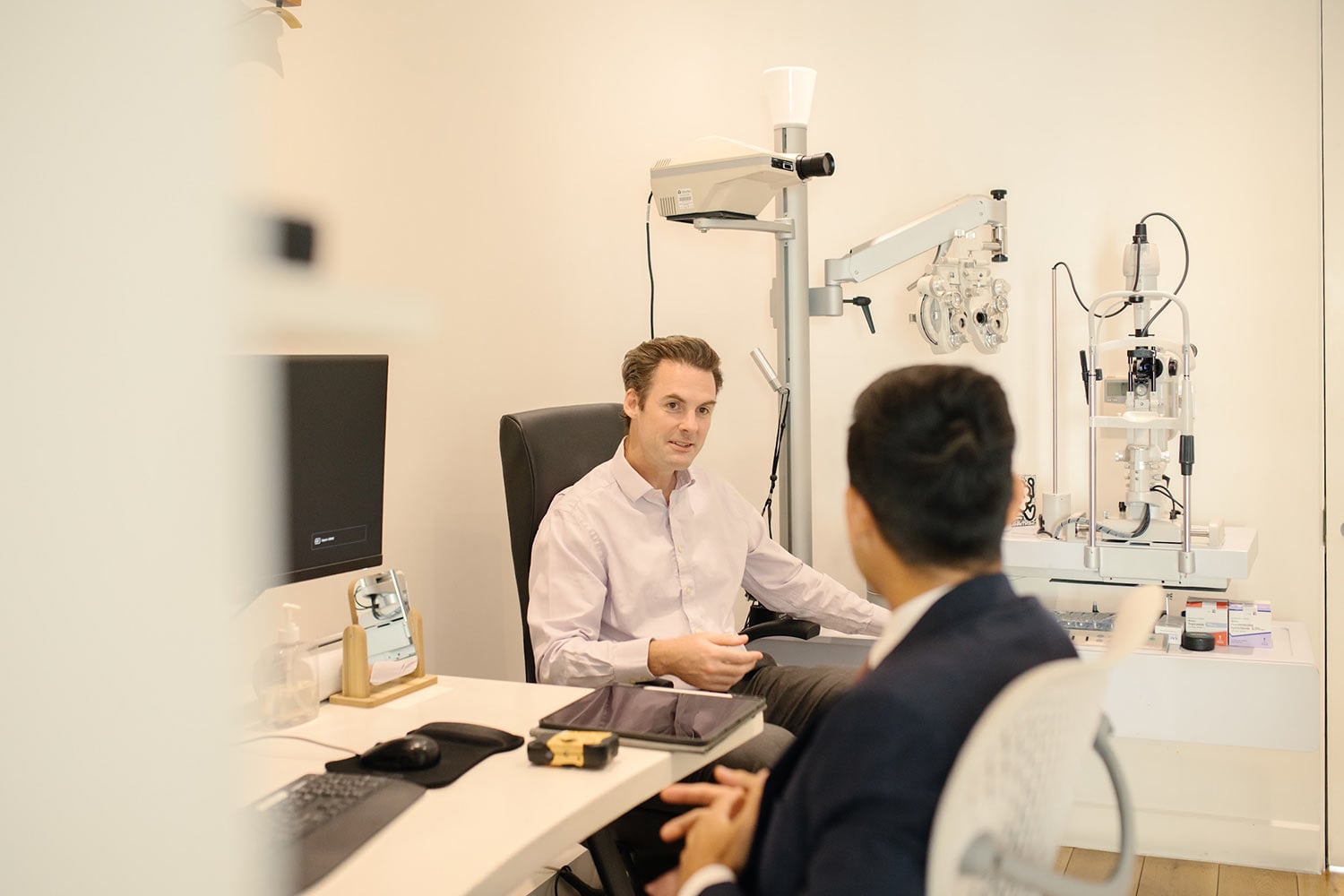
Once these results have been reviewed, the surgeon can explain which options are suitable, why one may be preferred and what compromises or recovery differences you should understand.
What If None of the Three Procedures Is Suitable?
Not everyone is suited to corneal Laser Eye Surgery. This may be because of the prescription, corneal measurements, dry eye, another eye condition or age-related changes within the natural lens. In these circumstances, a lens-based option may sometimes be more appropriate. Implantable Collamer Lenses can correct vision without removing corneal tissue, while lens replacement procedures may be considered for patients whose natural lens has become a more important part of their visual problem.
Being advised against LASIK does not necessarily mean that you have no options. Equally, an alternative procedure should only be recommended after its benefits, limitations and risks have been discussed properly.
The Name Matters Less Than the Assessment
Laser Eye Surgery has changed substantially since PRK was introduced in the 1980s, but the fundamental objective remains the same: to alter the focusing power of the eye and reduce dependence on glasses or contact lenses.
PRK and LASEK achieve this from the corneal surface. LASIK works beneath a carefully created flap. SMILE Pro reshapes the cornea through a small incision. The techniques are different, but none is automatically best for every patient.
The most important part of the process is therefore not decoding every treatment name on a clinic’s website. It is having your eyes examined thoroughly, understanding the procedure being recommended and receiving a clear explanation of why it is suitable for you.
Find the Right Approach for Your Eyes
A detailed consultation can establish whether surface laser treatment, LASIK, SMILE Pro or a non-laser alternative is most appropriate for your vision and long-term eye health.
Please note: Laser Eye Surgery is a medical procedure. Suitability, recovery and results vary, and the information above should not replace a personalised assessment with a qualified eye surgeon.