Living with severe short-sightedness can make everyday life heavily dependent on glasses or contact lenses. For people with prescriptions of −10.00D, −15.00D or even higher, clear vision without correction may be limited to objects held very close to the face. Thick spectacle lenses, reduced peripheral vision and difficulties with contact lens wear can also become familiar frustrations. Many patients with exceptionally high prescriptions assume that laser eye surgery is not an option. However, advances in refractive surgery, implantable lens technology and diagnostic imaging mean that specialist treatment may still be possible. At London Vision Clinic, the emphasis is on understanding the individual eye and identifying the most appropriate correction, rather than applying a fixed prescription limit to every patient.
What Is Considered Very High Myopia?
Myopia, or short-sightedness, occurs when light focuses in front of the retina instead of directly onto it. This is often associated with an elongated eyeball or excessive optical focusing power. The stronger the negative prescription, measured in dioptres (D), the greater the correction required to bring distant objects into focus. High myopia is generally defined as −6.00D or stronger, although prescriptions of −10.00D, −15.00D and beyond present additional considerations. These include corneal structure, retinal health, the internal dimensions of the eye and the amount of optical correction required. For a broader explanation of prescription categories and the available surgical options, read our guide to ICL surgery for high prescriptions, which includes a detailed prescription comparison table.
Why Are Very High Prescriptions More Challenging to Treat?
Correcting severe myopia requires more than selecting a stronger lens or increasing the amount of laser treatment. Surgeons must understand how the proposed correction will affect the eye’s anatomy, whether sufficient corneal tissue can be preserved and whether the expected improvement justifies the potential risks. With laser eye surgery, larger corrections generally require more corneal tissue to be reshaped. This can limit suitability, particularly when the cornea is thin or has an unusual shape. However, laser surgery should not automatically be ruled out simply because a patient has a high prescription.
London Vision Clinic has extensive experience with specialist laser correction, and some patients who have been advised to consider ICL surgery elsewhere may still have suitable laser treatment options. The clinic explores this distinction in its article What Are the Alternatives to ICL Surgery?.
How Does ICL Surgery Correct Severe Short-Sightedness?
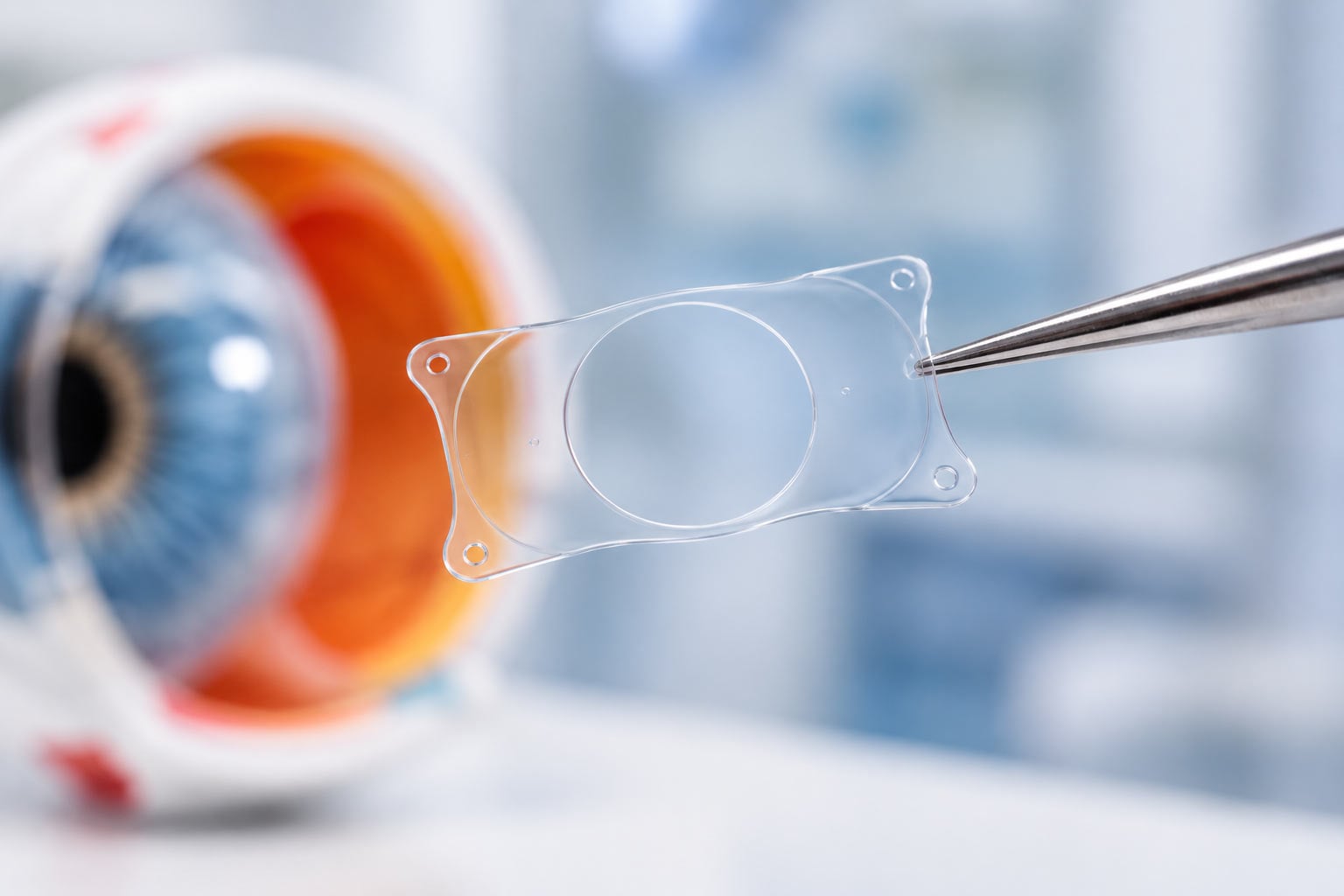
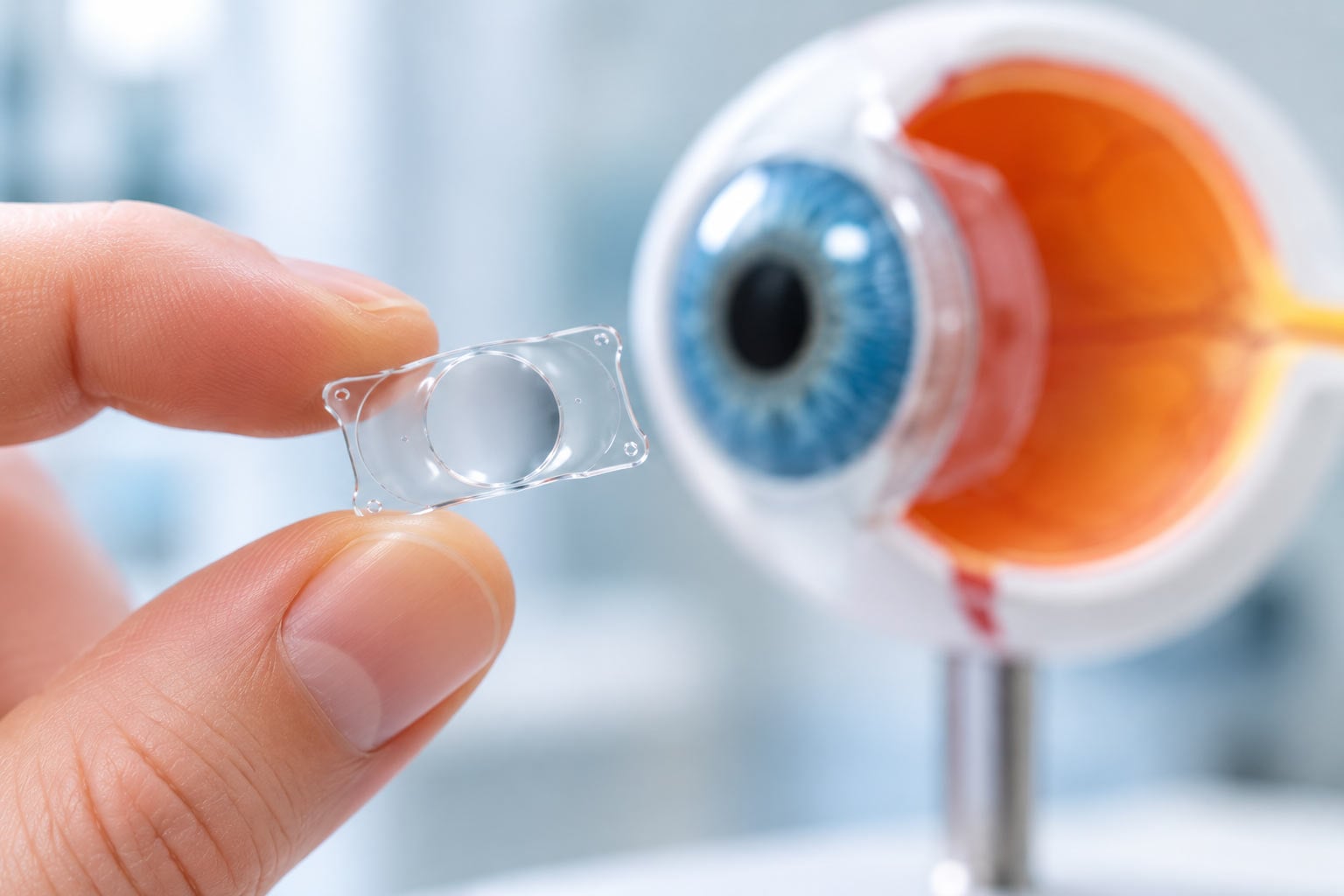
Implantable Collamer Lens surgery involves placing a specially designed corrective lens behind the iris and in front of the eye’s natural crystalline lens. Unlike LASIK, SMILE or PRK, the procedure does not require the removal of corneal tissue to correct the prescription. Instead, the implanted lens changes how light is focused onto the retina. This makes ICL an important option for selected patients with very high myopia, particularly where the required laser correction would be unsuitable for the cornea. The natural crystalline lens remains in place, preserving its existing focusing function, although this will still change naturally with age.
Patients considering the procedure can learn more about the technology, surgical process, benefits and potential risks on London Vision Clinic’s Implantable Contact Lens surgery page.
Can ICL Surgery Correct −10.00D, −15.00D or −20.00D?
Modern implantable lens technology can correct substantial degrees of short-sightedness, but the available correction depends on the lens model, its approved indications and the patient’s individual measurements. London Vision Clinic’s published ICL information describes treatment ranges extending to −20.00D, although not every patient within this range will be suitable.
| Prescription | Possible Treatment | Clinical Considerations |
|---|---|---|
| −10.00D | ICL or selected laser procedures | Corneal thickness, optical requirements and prescription stability. |
| −15.00D | ICL may be considered | Lens power, anterior chamber anatomy and retinal health. |
| −20.00D | Selected ICL models | Lens availability, approved indications and expected correction. |
| Beyond −20.00D | Individualised assessment | Standard lens ranges may be exceeded. Combined treatment is possible only in selected cases. |
Important: These are illustrative spherical prescriptions, not treatment eligibility thresholds. Astigmatism, lens availability, anatomical measurements and individual eye health can affect suitability. The clinical team must confirm the appropriate lens model and correction range.
What Happens if Your Prescription Is Beyond the Standard ICL Range?
Patients with exceptionally high prescriptions may require a more individualised approach. In some cases, a surgeon may investigate whether an implanted lens could provide a substantial reduction in myopia, with an additional laser procedure used to correct a remaining refractive error. This approach is known as bioptics. Combining procedures requires careful planning because each treatment introduces its own considerations. The cornea must still be suitable for laser correction, and the implanted lens must be appropriately sized and positioned. Not every prescription can be fully corrected, and some patients may be better served by retaining glasses or contact lenses.
For patients who want to understand how implantable lenses work, including the differences between ICL designs and conventional lens replacement, London Vision Clinic’s existing article What Are Implantable Collamer Lenses? provides additional technical background.
Why Does ICL Lens Sizing Matter More Than Prescription Strength Alone?
Although the optical power of an ICL is calculated to address the patient’s refractive error, selecting the correct physical size is equally important. The lens must sit within the eye in a stable position, with an appropriate separation from the natural crystalline lens. This separation is known as the vault. If the vault is too low, the implanted lens may sit too close to the natural lens, increasing the risk of complications such as cataract formation. Excessive vault can also create problems, including changes to the drainage angle and raised intraocular pressure. For this reason, accurate anatomical measurements are essential to safe treatment planning.
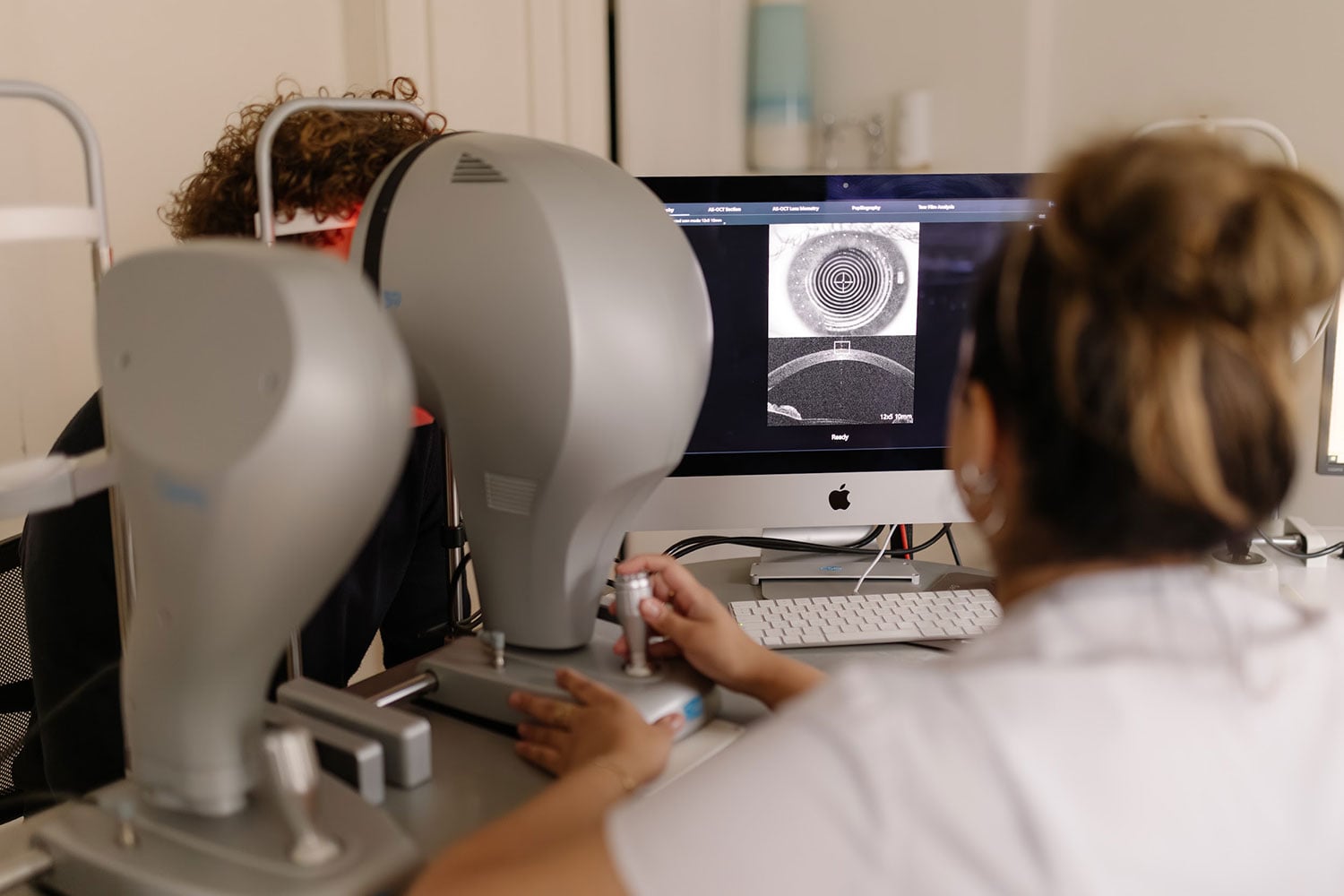
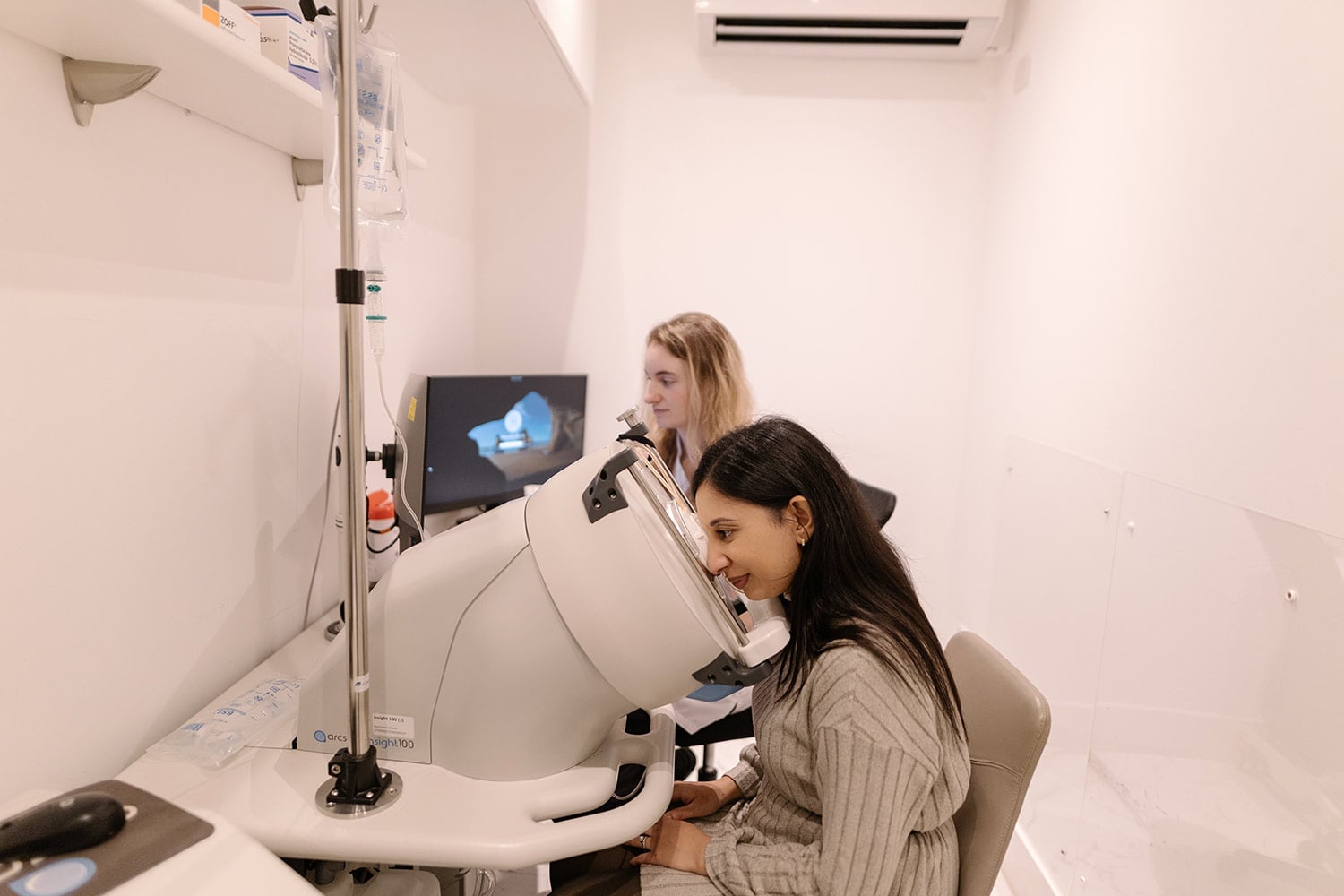
London Vision Clinic uses advanced diagnostic imaging, including the Artemis Insight 100 VHF digital ultrasound scanner, to examine internal eye structures and support lens selection. These measurements help surgeons make decisions based on the individual anatomy of the eye rather than relying on prescription strength alone.
What Results Can Patients With High Myopia Expect?
For patients with very high prescriptions, the goal of treatment is to achieve the best possible improvement in vision while maintaining an appropriate safety profile. Some patients may achieve excellent distance vision without glasses, while others may experience a substantial reduction in prescription but still require correction for particular activities.
London Vision Clinic publishes its clinical outcomes to help patients understand the results achieved across different procedures. Its reported ICL results include 97% of patients seeing within one line of their preoperative best spectacle-corrected visual acuity, based on the treatment group described by the clinic. These figures should not be interpreted as a guarantee for patients with exceptionally high prescriptions. Patients can explore the clinic’s published vision correction results and statistics for further information about treatment outcomes.
Does ICL Surgery Remove the Eye Health Risks of Severe Myopia?
Although ICL surgery can improve how light focuses onto the retina, it does not reverse the underlying anatomical changes associated with high myopia. In some patients, the eyeball is longer than average, increasing the risk of retinal detachment, myopic macular degeneration and other retinal conditions. These risks remain relevant even when a patient achieves excellent vision following surgery. Regular eye examinations and appropriate retinal monitoring are therefore important throughout life. New flashes, a sudden increase in floaters or a dark shadow across the field of vision require urgent medical assessment.
| Potential Risk | What Patients Should Know | Associated With |
|---|---|---|
| Eye Health Risks Associated With Severe Myopia | ||
| Retinal Detachment | The retina can develop a tear or separate from the back of the eye. Severe myopia increases the underlying risk, even after vision correction. | High myopia |
| Myopic Macular Degeneration | Structural changes in highly elongated eyes can damage the macula, affecting detailed central vision. | High myopia |
| Glaucoma | People with high myopia have an increased risk of glaucoma, which can progressively damage the optic nerve. | High myopia |
| Myopic Retinal Changes | Retinal thinning, lattice degeneration and peripheral retinal tears can occur in highly myopic eyes. | High myopia |
| Potential Complications Associated With ICL Surgery | ||
| Cataract Formation | An implanted lens positioned too close to the natural crystalline lens may increase the risk of cataract development. | ICL surgery |
| Raised Eye Pressure | Pressure may increase after surgery because of inflammation, retained surgical material or changes to fluid drainage. | ICL surgery |
| Endothelial Cell Loss | Damage or loss of cells lining the inner cornea may affect its ability to remain clear. Cell health is assessed before and after surgery where appropriate. | ICL surgery |
| Glare and Halos | Some patients notice rings around lights, glare or changes in night vision, particularly during early recovery. | ICL surgery |
| Infection or Inflammation | Infection inside the eye is uncommon but potentially sight-threatening. Inflammation may also require treatment and monitoring. | ICL surgery |
| Lens Repositioning or Removal | An implanted lens may occasionally require repositioning, exchange or removal because of sizing, rotation, pressure or other complications. | ICL surgery |
Important: These are potential risks, not expected outcomes. Their likelihood varies according to the patient’s prescription, eye anatomy, existing conditions and surgical factors. ICL surgery does not remove the underlying risks of pathological myopia, and regular eye examinations remain important after treatment.
How Does London Vision Clinic Assess Patients With Very High Prescriptions?
At London Vision Clinic, treatment planning begins with detailed measurements of the eyes and an assessment of the patient’s visual requirements. This includes prescription analysis, corneal imaging, internal eye measurements and examination of the retina. The results help establish whether laser correction, implantable lens surgery or another approach may be appropriate. Patients with exceptionally high prescriptions may require additional investigations before a recommendation can be made. The surgeon must consider the potential benefits of treatment alongside the patient’s age, ocular health, anatomical measurements and long-term visual expectations.
The clinic’s patient journey explains how initial consultations, advanced diagnostics and personalised treatment planning work together before surgery is considered.
Frequently Asked Questions
Can ICL surgery correct a −15.00D prescription?
Some ICL models can correct prescriptions around −15.00D in appropriately selected patients. However, treatment depends on the available lens power, eye anatomy, prescription stability and ocular health. A specialist assessment is necessary to determine whether surgery is suitable.
Is −20.00D too high for ICL surgery?
Not necessarily. Certain ICL models have treatment ranges extending to −20.00D, but availability and indications vary. The patient’s individual measurements and the amount of astigmatism also influence the correction that can be achieved.
Can I have ICL surgery if laser eye surgery has been ruled out?
Possibly. ICL surgery may be considered when the prescription is too high for safe corneal laser correction or when the cornea is unsuitable for reshaping. However, ICL has its own anatomical and clinical requirements, so being unsuitable for laser surgery does not automatically establish ICL eligibility.
Can ICL and laser surgery be combined?
Yes, selected patients may be considered for bioptics, which combines an implanted lens with laser correction of a residual prescription. This requires careful assessment of both the internal eye anatomy and corneal suitability. It is not a routine solution for every high prescription.
Will I still need glasses after ICL surgery?
Some patients achieve excellent vision without glasses, while others may retain a small prescription or need reading correction as they get older. The expected result depends on the starting prescription, lens selection, eye health and individual treatment plan.
Understanding Your Options for Severe Short-Sightedness
Having a very high prescription does not automatically mean that surgical vision correction is impossible. Advances in implantable lens technology, laser surgery and diagnostic imaging have expanded the treatment possibilities for appropriately selected patients. However, the most suitable approach depends on much more than the number written on a glasses prescription.
At London Vision Clinic, specialist assessment and individualised treatment planning help patients with severe myopia understand which options may be appropriate for their eyes. Whether treatment involves ICL surgery, laser correction or a more complex approach, the priority remains achieving the best possible visual improvement while protecting long-term eye health.