For decades, the familiar choices for changing vision were straightforward: glasses, contact lenses or laser eye surgery. Implantable lens technology has added another possibility, particularly for people whose vision is changing as they get older.
Trifocal lenses are designed to provide useful vision across near, intermediate and far distances. Rather than correcting only one viewing range, they divide incoming light between different focal points. That makes them particularly interesting for a modern lifestyle. We rarely spend an entire day looking at one distance. You might read a message at 30–40cm, work on a laptop at arm’s length, speak to someone across a room and then drive home. So why are people considering implantable trifocal lenses, how do they differ from glasses, and what compromises need to be understood before choosing them?
First: What Exactly Is a Trifocal Lens?
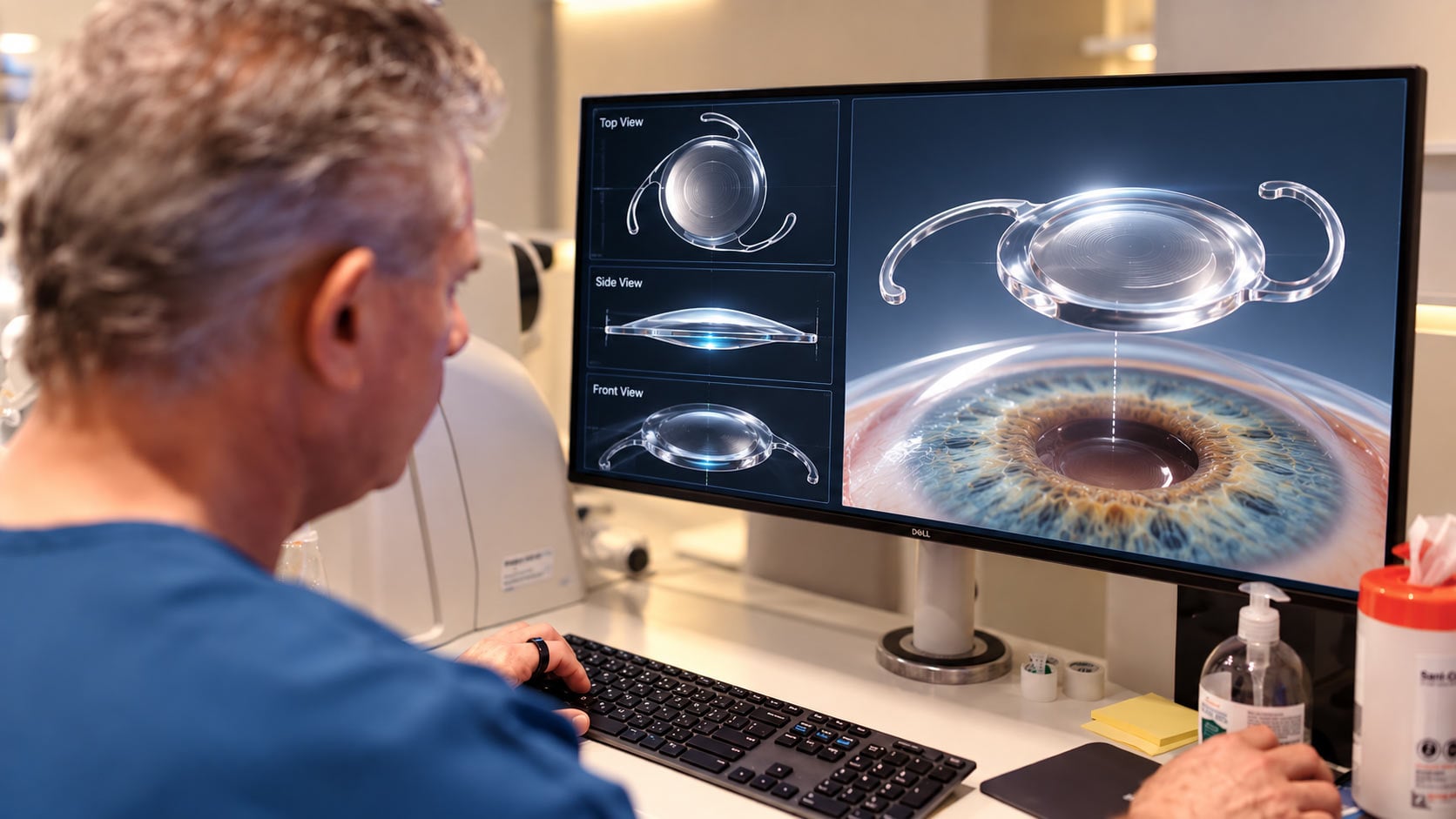
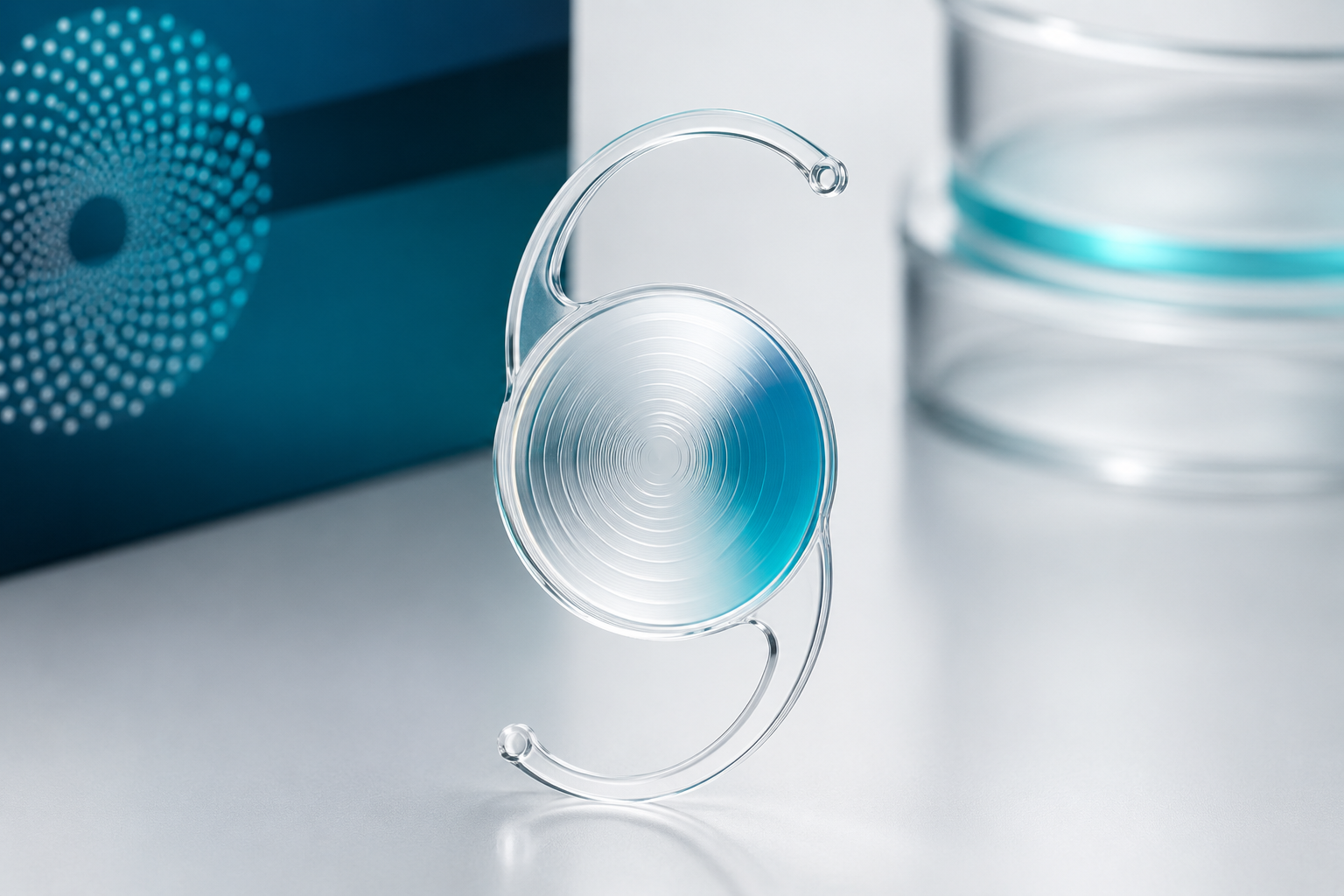
A trifocal intraocular lens, or trifocal IOL, is a small artificial lens placed inside the eye during lens surgery.
Unlike a contact lens, it does not sit on the surface of the eye. The natural lens is removed and the artificial lens takes its place inside the lens capsule. The easiest way to understand the concept is to look at the three principal viewing ranges it is designed to support:
Near
Reading a book, checking a phone, menus and other close tasks.
Intermediate
Computer screens, dashboards, cooking and many everyday working distances.
Distance
Driving, television, outdoor activities and seeing across a room.
A trifocal lens does not make the eye young again. Instead, its optical design provides multiple focal points intended to reduce reliance on spectacles across a broader range of distances.
Are Trifocal Lenses Basically Varifocal Glasses Inside the Eye?
Not quite.
Varifocal glasses provide different optical powers depending on which part of the spectacle lens you look through. Moving your eyes down the lens, for example, accesses the reading zone. An implanted trifocal lens works differently. Its optical design distributes light between different focal points simultaneously, and the visual system learns to use the information it needs. Adaptation therefore matters. Vision after surgery is not simply comparable to putting on a new pair of glasses.
Why Have Implantable Lenses Become More Relevant?
Part of the answer lies in the way our visual lives have changed. A generation ago, the distinction between reading and distance vision was often enough to describe someone’s daily requirements. Modern life has added an enormous amount of intermediate vision.
Think About Your Eyes During a Normal Day
30cm
Phone
40cm
Book
60–80cm
Laptop
1–3m
Room
Distance
Driving
Phones, tablets, laptops, vehicle displays and multiple computer screens mean our focus is constantly moving. For suitable patients, a trifocal lens is designed around that range rather than one fixed distance.
Why Not Simply Have Laser Eye Surgery?
Laser eye surgery and implantable lens surgery solve different optical problems.
Procedures such as LASIK and SMILE reshape the cornea while leaving the natural lens inside the eye. They can be highly effective when the cornea and prescription make someone suitable for treatment. As we get older, however, the natural lens itself increasingly influences vision. Presbyopia develops as the lens loses flexibility, and later in life the lens may also become cloudy as a cataract develops.
For someone whose visual limitations increasingly originate inside the natural lens, changing the lens rather than repeatedly modifying the cornea may become a treatment option worth discussing.
What Happens to Your Natural Lens?
Here is an important distinction that can easily get lost in the terminology.
A trifocal IOL is not placed in front of your natural lens. During lens replacement surgery, the natural lens is removed and replaced by the artificial intraocular lens. The new lens remains inside the eye.
Natural Lens → Trifocal IOL
The principle is quite different from wearing a contact lens:
Contact lens: sits temporarily on the surface of the eye.
Trifocal IOL: replaces the natural lens inside the eye.
Because the natural lens has been removed, it cannot subsequently develop a cataract. However, other age-related eye conditions can still occur and routine eye care remains important.
Do Trifocal Lenses Mean You Will Never Need Glasses Again?
No lens should be presented as a guarantee of never wearing glasses again. Trifocal lenses are designed to reduce spectacle dependence across multiple distances. Many everyday activities may be possible without glasses, but some people can still benefit from spectacles for particular tasks, demanding visual situations or very fine print. That distinction matters when setting expectations before surgery.
The objective is not necessarily to promise perfect vision at every conceivable distance and in every lighting condition. Treatment planning aims to create a useful range of functional vision that suits the individual’s lifestyle and priorities.
The Big Question: Trifocal, EDOF or Monofocal?
There is no universally superior implantable lens. Different designs prioritise different aspects of vision.
| Lens Type | General Aim | Near Vision | Intermediate | Distance |
|---|---|---|---|---|
| Monofocal | One principal focal distance | Usually requires support if targeted for distance | Variable | Strong when targeted for distance |
| EDOF | Extended range of focus | May require reading support for smaller print | Designed to provide a useful range | Designed for good distance vision |
| Trifocal | Multiple focal points | Designed to provide near vision | Designed to provide intermediate vision | Designed to provide distance vision |
The choice is therefore more nuanced than asking which lens is “best”. A person who spends their working day reading and using multiple screens may have different priorities from someone who regularly drives at night. Detailed assessment allows those priorities to become part of lens selection.
What About Halos and Night Vision?
One of the most important conversations around multifocal and trifocal IOLs concerns photic phenomena.
Because trifocal optics distribute light between several focal points, some patients may notice halos, glare or rings around lights, particularly during the early period after surgery and when driving at night. Many people experience a degree of adaptation as the visual system becomes accustomed to the new optical arrangement, but symptoms vary between individuals and may persist for some patients. Anyone who drives extensively at night or has particularly demanding low-light visual requirements should discuss those priorities during their assessment.
A useful way to think about lens choice
Choosing an implantable lens is not simply about obtaining the greatest possible range of vision. It involves finding an appropriate balance between range, visual quality, spectacle independence and your individual tolerance of optical side effects.
Who Might Consider Trifocal Lens Surgery?
Trifocal lenses may be discussed with people experiencing presbyopia or age-related changes to the natural lens, as well as suitable cataract patients who would like a broader range of vision following surgery.
Age alone does not determine suitability. Corneal health, retinal health, optic nerve function, prescription, astigmatism, pupil characteristics, previous eye surgery and visual expectations all need consideration. Some eye conditions may make another lens design more appropriate.
Can You Have Trifocal Lenses After LASIK or Other Laser Eye Surgery?
Previous laser eye surgery does not automatically prevent someone from receiving an intraocular lens later in life. However, LASIK, LASEK, PRK and other corneal procedures alter the shape and optical characteristics of the cornea. Lens calculations therefore require particular care in previously treated eyes. Modern diagnostic measurements and specialist calculation methods can be used when planning lens surgery after refractive treatment. Historical laser records can also be helpful when available.
Are Trifocal Lenses Permanent?
Intraocular lenses are intended to remain inside the eye permanently and do not need routine replacement simply because they reach a particular age. However, the rest of the eye continues to age. The cornea, retina, optic nerve and other structures can still change over time. An artificial lens therefore does not freeze the eye at the age when surgery was performed. Regular eye examinations remain important after lens surgery.
Can You Still Develop Cataracts?
No. A cataract is clouding of the eye’s natural crystalline lens. Once that natural lens has been removed during lens replacement or cataract surgery, it cannot grow back and therefore cannot subsequently develop a cataract.
Some patients later develop posterior capsule opacification (PCO). The thin capsule supporting the artificial lens can become cloudy, sometimes causing symptoms that resemble a cataract. PCO is different from a new cataract and can often be treated using a short laser procedure known as YAG laser capsulotomy when clinically appropriate.
Why Measurement Matters So Much
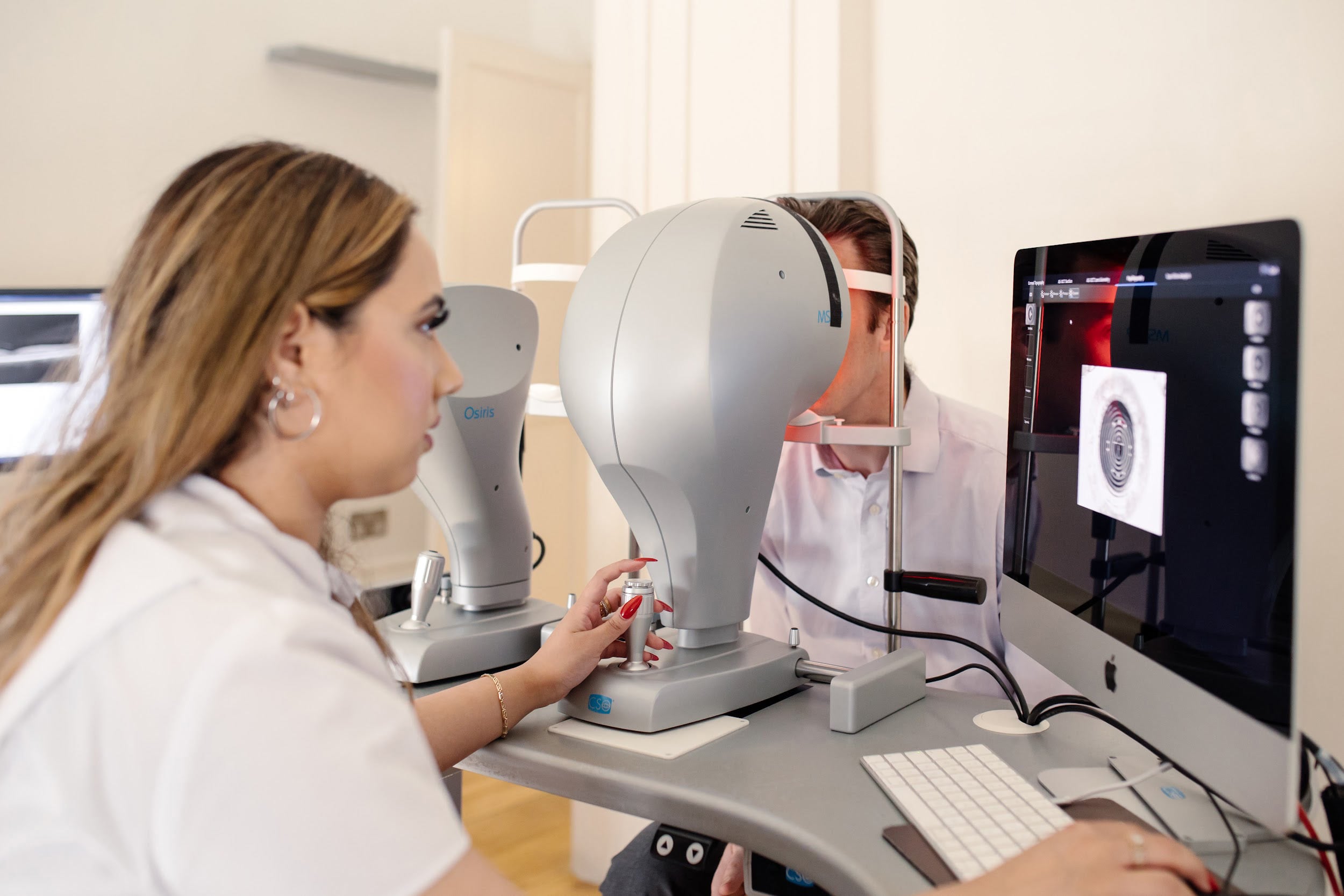
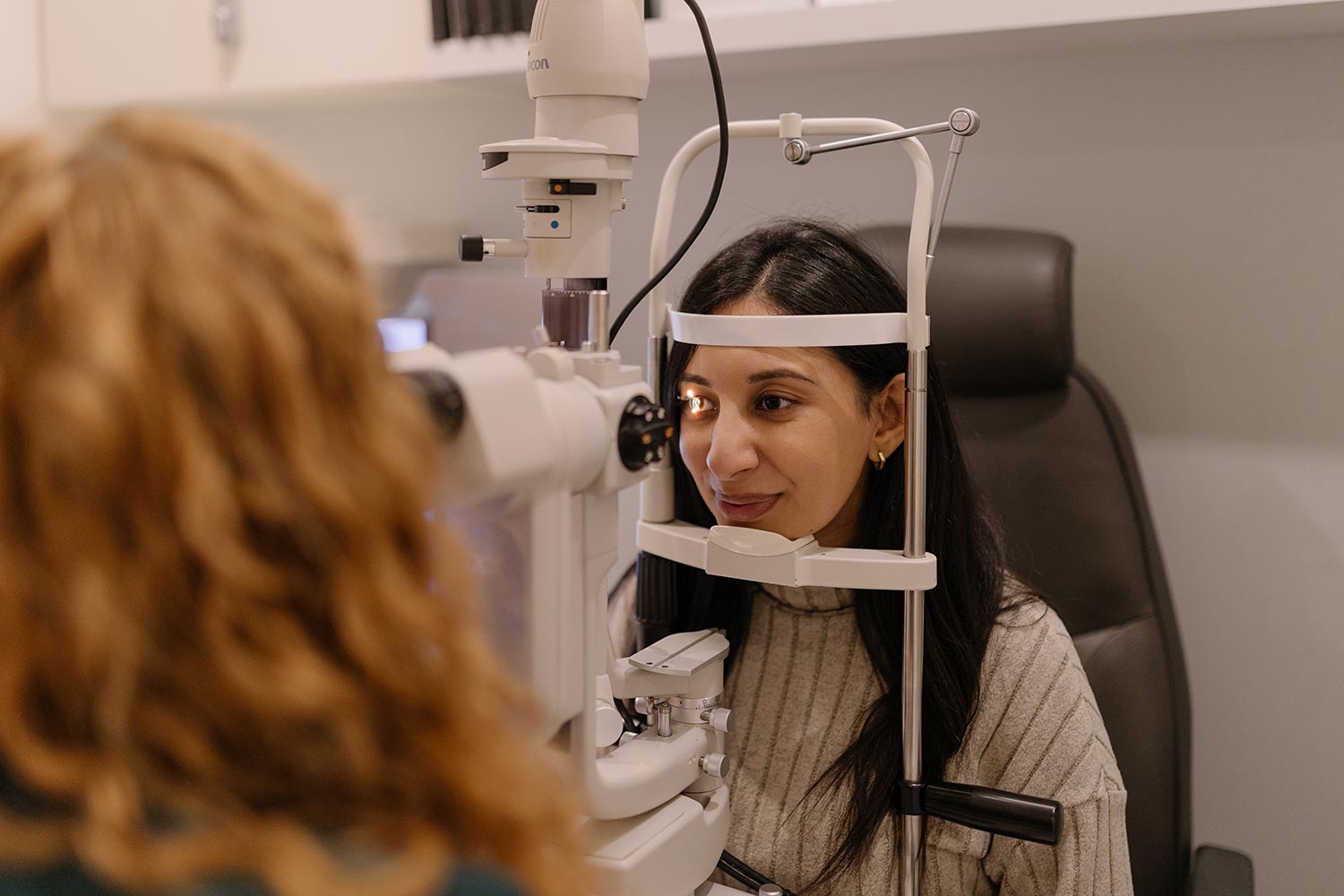
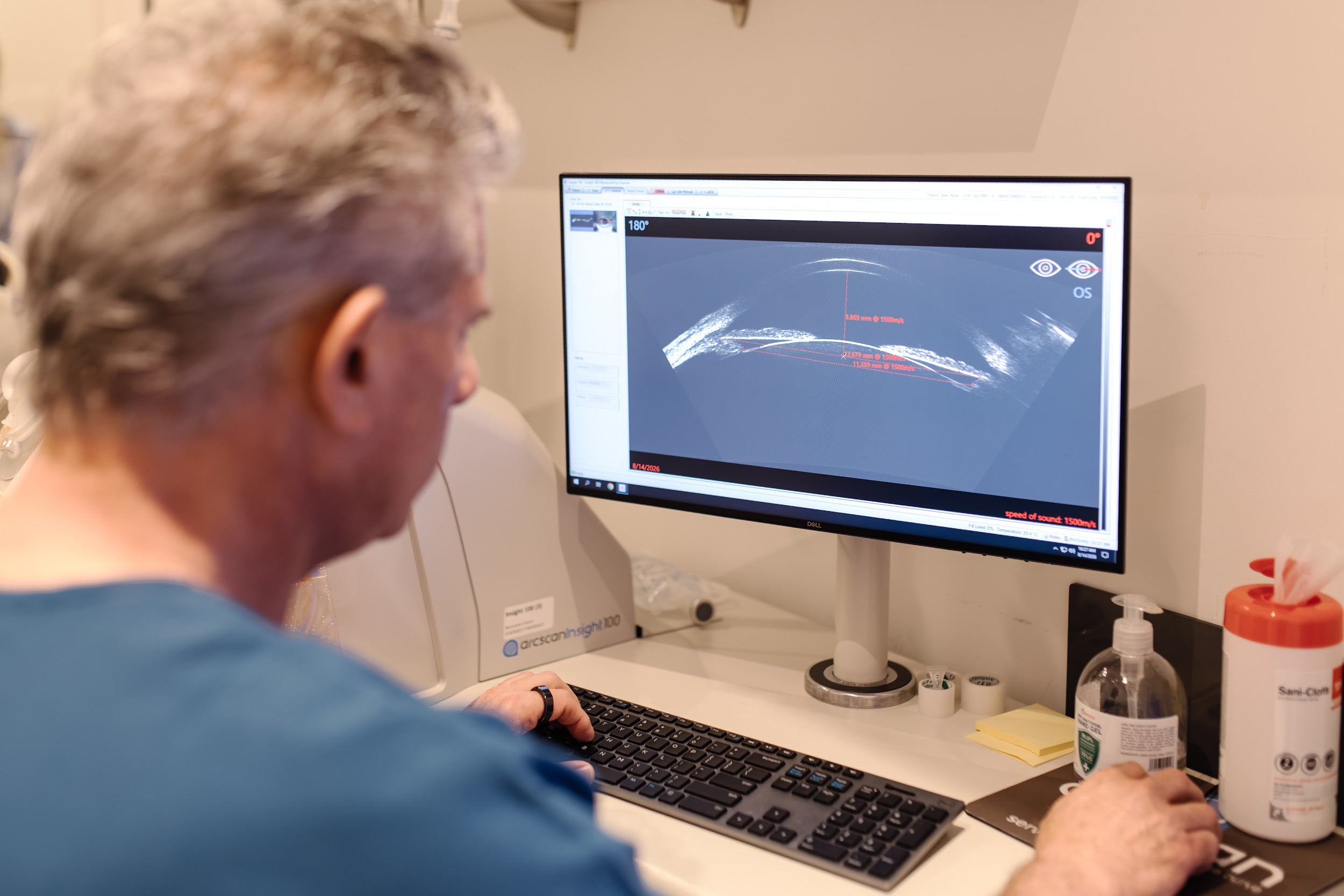
The implantable lens itself is only one part of the result. Before surgery, detailed measurements are used to understand the optical characteristics and health of the eye. Lens power then needs to be calculated for the individual rather than selected as a generic product.
Assessment may include measurements of eye length, corneal curvature and shape, astigmatism, pupil behaviour and the health of structures including the retina and optic nerve. Previous refractive surgery, unusual corneal characteristics or other ocular conditions may require additional investigation.
What Does Trifocal Lens Surgery Involve?
The procedure involves accessing the natural lens through a small incision, removing the lens material and placing the selected intraocular lens inside the existing lens capsule. Both eyes are assessed individually, and the timing of surgery will be discussed as part of the treatment plan. Vision can change quickly following surgery, although healing and adaptation continue beyond the first few days. Follow-up appointments allow the eyes and visual result to be monitored.
So, Why Are People Considering Trifocal Lenses?
The appeal becomes easier to understand when viewed from the patient’s perspective. People are not necessarily searching for a “trifocal lens”. They are searching for answers to everyday frustrations:
Modern implantable lens technology gives suitable patients another way of approaching those questions.
At London Vision Clinic, Trifocal Lens Exchange can be considered alongside other vision correction options following detailed diagnostic assessment. Rather than selecting a lens from age or prescription alone, planning takes into account the health and optical characteristics of the eye alongside how each person actually uses their vision.
Trifocal Lens FAQs
Are trifocal lenses the same as multifocal lenses?
Trifocal lenses belong to the broader family of presbyopia-correcting or multifocal intraocular lenses. A trifocal design specifically aims to provide focal points for near, intermediate and distance vision.
What age is suitable for trifocal lens surgery?
There is no universal cut-off. Lens-based vision correction is generally considered when age-related changes in the natural lens or cataracts make lens surgery relevant. Eye health, prescription and visual requirements are more important than age alone.
Will I see halos around lights after trifocal lens surgery?
Halos, glare and other photic phenomena can occur with trifocal lenses, particularly around lights at night. Their severity and duration vary. Discussing night-driving requirements and other visual priorities before choosing a lens is important.
Can trifocal lenses correct astigmatism?
Astigmatism needs to be measured as part of the preoperative assessment. Toric versions of some intraocular lenses are available to address suitable levels of corneal astigmatism, although the appropriate strategy depends on the individual eye.
Will I need reading glasses after trifocal lenses?
Trifocal lenses are designed to reduce dependence on glasses at near, intermediate and far distances, but complete spectacle independence cannot be guaranteed. Some people may still prefer or require glasses for particular tasks.
How do I know whether trifocal or EDOF lenses are better for me?
The decision depends on more than prescription. Reading requirements, computer use, night driving, ocular health and tolerance of potential optical side effects all matter. Diagnostic assessment and a detailed discussion about visual priorities are therefore central to lens selection.
Choosing a Lens Around Your Life, Not Just Your Prescription
The development of implantable lenses has changed the conversation around vision correction later in life. Instead of asking only whether somebody can see clearly at six metres, modern lens planning can consider the range of distances that make up an ordinary day. For some patients, trifocal technology offers an attractive balance between near, intermediate and distance vision. For others, an EDOF, monofocal or another lens strategy may provide a better match. The important first step is not choosing a lens.
It is understanding your eyes, your visual priorities and the compromises you would be comfortable making.