You had laser eye surgery, enjoyed years of clear vision and barely thought about glasses. Then, somewhere in your forties, restaurant menus started moving further away, phone text became harder to focus on and good lighting suddenly mattered much more.
It is understandable to wonder whether your original laser eye surgery is beginning to wear off.
In most cases, something entirely different is happening.
LASIK, LASEK, PRK and SMILE reshape the cornea at the front of the eye to correct refractive error. Reading vision, however, also relies heavily on the natural lens inside the eye. As that lens becomes less flexible with age, focusing at close distances gradually becomes harder. The process is known as presbyopia, and it eventually affects almost everyone, including people who previously had successful laser vision correction.
Your Laser Eye Surgery Has Not Simply “Worn Off”
One of the easiest ways to understand the change is to think of the eye as having two different focusing components.
The Cornea
The clear surface at the front of the eye. Laser vision correction changes its shape so light can be focused more accurately onto the retina.
The Natural Lens
Located behind the iris, the natural lens changes shape when you switch focus between distant and nearby objects. Its flexibility gradually decreases with age.
Laser eye surgery can correct short-sightedness, long-sightedness and astigmatism by changing corneal curvature. It cannot permanently stop the natural lens from ageing. So, if your distance vision remains good but reading a message on your phone has become increasingly difficult, your original correction may still be performing exactly as intended.
What Actually Happens to Near Vision in Your 40s?
When we are younger, the natural lens is highly flexible. Tiny muscles inside the eye alter its shape, allowing focus to move rapidly from a road sign in the distance to a phone held close to your face.
That focusing ability is called accommodation.
From around the early-to-mid forties, accommodation becomes progressively weaker. People often compensate without noticing at first by increasing the reading distance, enlarging text or seeking brighter lighting.
The Typical Presbyopia Journey
Early 40s
Small print may feel less comfortable, particularly in poor light.
Mid 40s
Phones and menus may naturally be held further away.
Late 40s–50s
Reading glasses may become increasingly useful for close work.
Later Years
Near focusing ability continues to decline as the natural lens changes.
The timing varies considerably. Occupation, prescription, visual demands, lighting and individual eye characteristics can all influence when someone first becomes aware of presbyopia.
Why Can Presbyopia Feel More Noticeable After LASIK?
Someone who previously lived with myopia may remember being able to remove their glasses and read extremely close to their face. After successful laser correction for short-sightedness, that built-in near-focus advantage may no longer exist. Distance vision can be excellent, yet once presbyopia develops the person may suddenly require reading glasses. It can feel as though something has been lost when, optically, the eye has simply moved from one stage of life to another.
Distance Is Clear but Reading Is Blurred: What Does That Tell Us?
The pattern of your vision can provide useful clues, although only a full examination can establish the cause.
| What You Notice | One Possible Explanation |
|---|---|
| Distance clear, reading blurred | Typical presbyopic change |
| Reading clearer when held further away | Reduced accommodation |
| Vision becomes worse in dim light | Presbyopia may become more noticeable under challenging conditions |
| Distance and near vision have both changed | A broader eye examination is needed to establish the cause |
| Increasing glare, haze or night-driving difficulty | The natural lens and other structures of the eye should also be assessed |
Age-related vision changes should not automatically be attributed to presbyopia. A comprehensive examination allows the cornea, prescription, tear film, retina and natural lens to be assessed together.
Can You Have Further Vision Correction After LASIK or SMILE?
Potentially, yes. Previous laser eye surgery does not automatically prevent further vision correction later in life.
The important question is not simply whether another procedure can be performed. It is which approach best matches the eye you have now. Depending on age, corneal characteristics, current prescription, lens condition and visual priorities, possible strategies may include glasses or contact lenses, further corneal treatment in selected cases, a blended-vision approach, or lens-based vision correction. For patients approaching an age where the natural lens itself is becoming a significant part of the optical problem, repeatedly changing the cornea may not always represent the most appropriate long-term strategy.
A Previously Lasered Eye Needs Different Planning
Previous LASIK, LASEK, PRK or SMILE Pro becomes particularly important if lens surgery is being considered later in life.
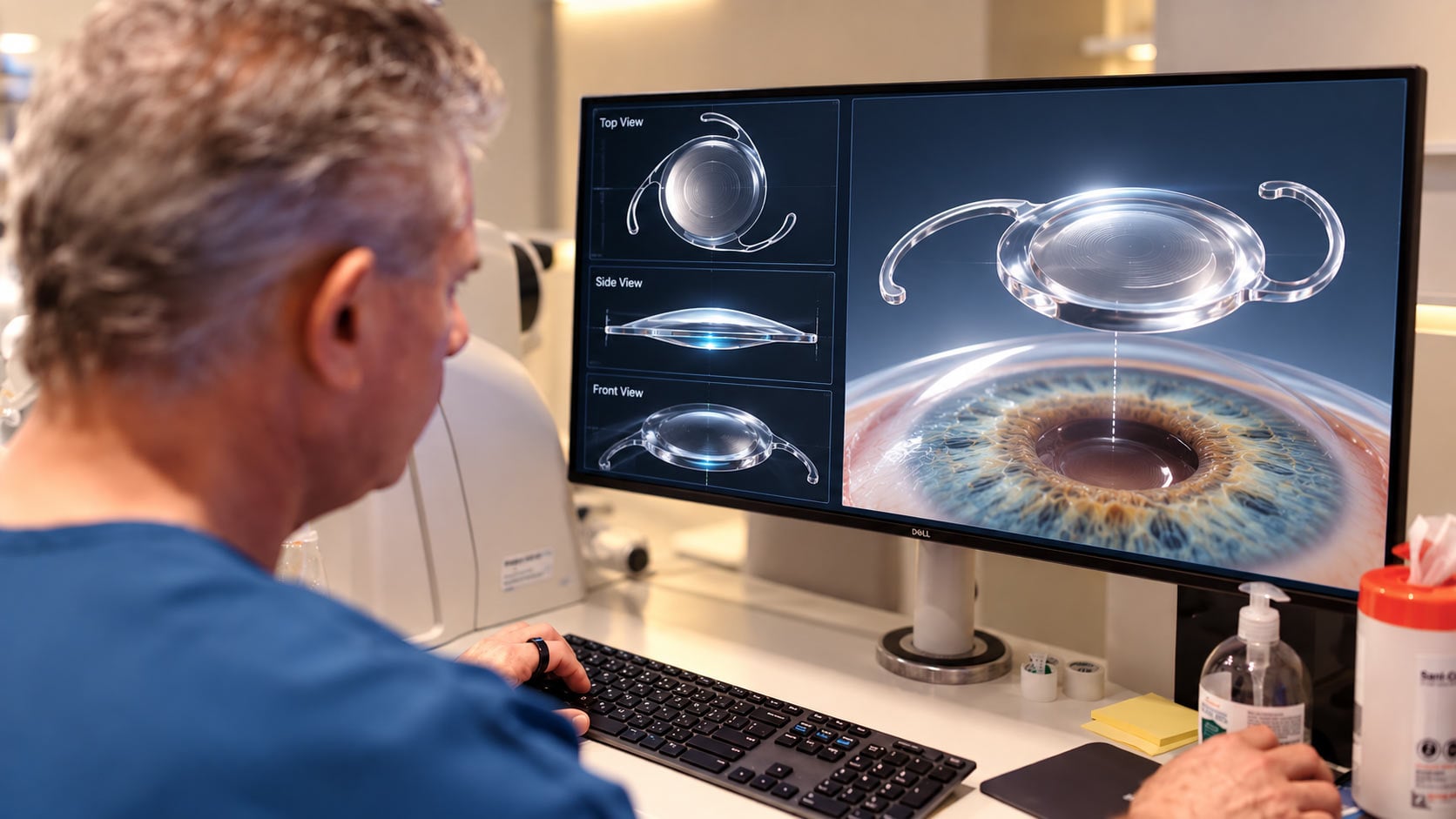
Modern lens surgery relies on detailed measurements to calculate the optical power required inside the eye. Previous corneal laser treatment alters the relationship between the front and back surfaces of the cornea, meaning calculations designed for an untreated eye may be less reliable when used without appropriate adjustment. Planning therefore requires careful assessment of the previous corneal correction alongside modern biometry, corneal topography or tomography and formulae designed to account for eyes that have undergone refractive surgery.
Why old laser records can still be useful
If you still have information from your original LASIK, PRK or other refractive treatment, bring it to your consultation. Historical prescription and treatment data can sometimes provide additional information when planning future lens surgery.
Do not worry if those records disappeared years ago. Modern diagnostic techniques allow post-refractive eyes to be assessed even when historical information is unavailable.
Could PRESBYOND Be an Option After Previous Laser Eye Surgery?
Some suitable patients may be candidates for PRESBYOND Laser Blended Vision, which aims to extend the functional range of vision by creating individually planned focus profiles between the two eyes.
Previous laser surgery does not automatically rule someone in or out. Corneal thickness and shape, residual prescription, ocular health, age and previous treatment all need to be examined before further corneal surgery can be considered. For other patients, particularly where the natural lens has begun to change significantly, a lens-based approach may be more appropriate.
The Question Has Changed Since Your First Laser Treatment
When you originally considered laser eye surgery, the main question may have been relatively straightforward:
“How can my distance prescription be corrected?”
Twenty years later, visual priorities are often much broader.
You may spend hours moving between a laptop, phone and meetings. You may drive extensively at night. Reading without glasses may matter more than it once did. Alternatively, exceptionally crisp distance vision may remain the overriding priority. Modern presbyopia assessment therefore considers how you use your vision, rather than looking only at the prescription printed on an eye test.
What Should Be Checked Before Considering Treatment?
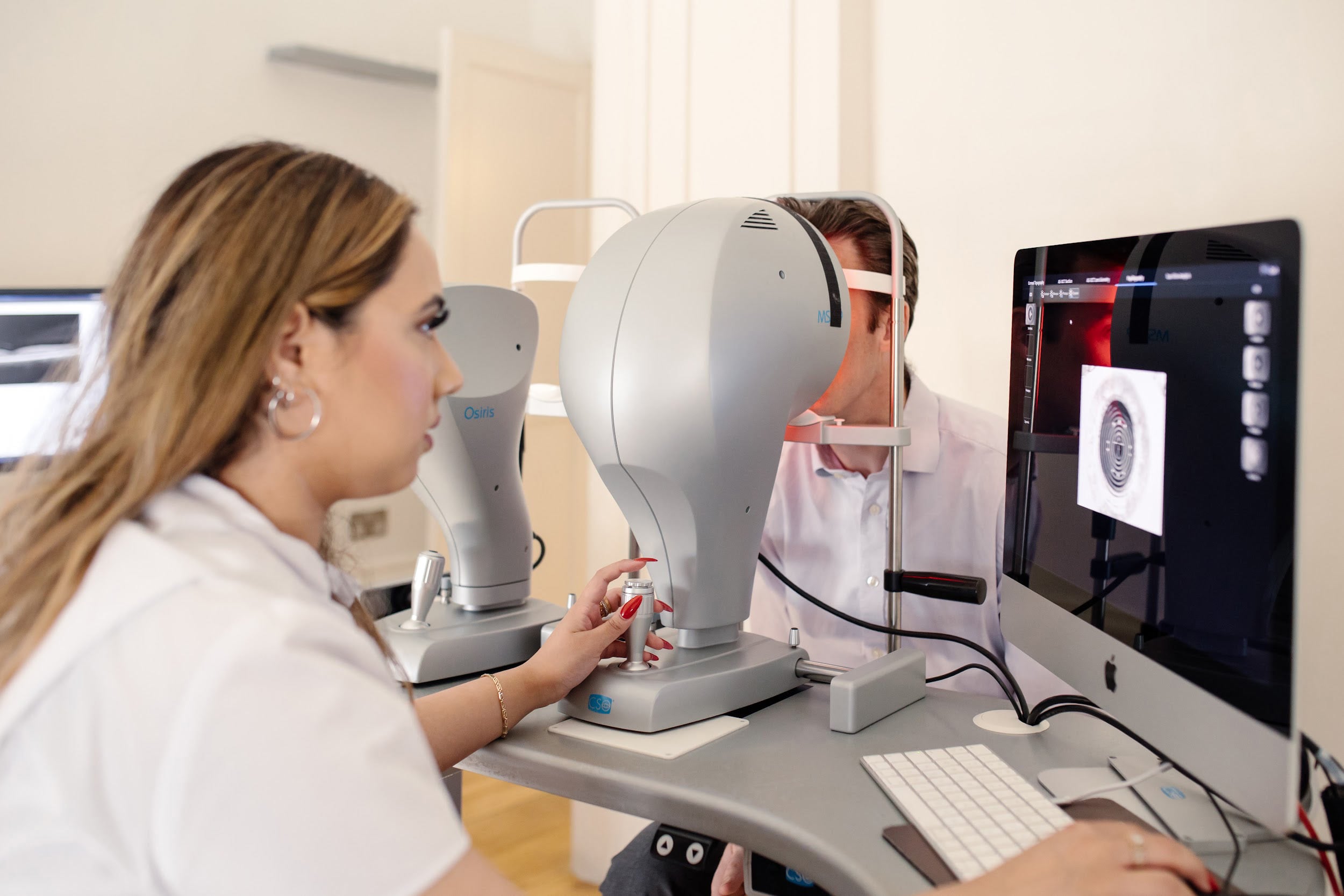
At London Vision Clinic, assessment of an eye that has previously undergone laser vision correction may include detailed analysis of the cornea, current refractive error, visual quality, ocular surface and natural lens.
The aim is to establish where the visual change originates before discussing whether treatment is appropriate. That distinction matters. Reading difficulty caused predominantly by presbyopia requires a different strategy from blurred vision caused by residual refractive error, dry eye, corneal irregularity or changes within the natural lens.
Reading Glasses After LASIK: Frequently Asked Questions
Does needing reading glasses mean my LASIK has failed?
No. If your distance correction remains stable, needing help with near vision in your forties or fifties is commonly associated with presbyopia. LASIK changes corneal shape, whereas presbyopia develops because the natural lens gradually loses focusing flexibility.
At what age will I need reading glasses after laser eye surgery?
There is no single age. Presbyopic symptoms commonly begin during the forties and gradually progress. Your previous prescription, visual demands and individual eye characteristics can influence when you first notice a change.
Can I have laser eye surgery again for reading vision?
Some previously treated patients may be suitable for further corneal laser treatment, including approaches designed to extend the range of vision. Suitability depends on factors including corneal thickness and shape, prescription, age, ocular health and the original procedure.
Can I have lens surgery if I previously had LASIK, LASEK, PRK or SMILE?
Previous refractive surgery does not automatically prevent lens surgery. However, calculating lens power in a previously treated eye requires additional consideration because corneal laser surgery changes measurements used in conventional intraocular lens calculations.
From Laser Vision Correction to Presbyopia Care
Needing reading glasses years after laser eye surgery does not necessarily mean that your earlier treatment has stopped working. More often, your eyes have entered a new stage in their natural ageing process. The key is establishing what has changed and where that change originates.
For someone who has previously undergone LASIK, LASEK, PRK or SMILE, that assessment deserves particular care. Your cornea has a treatment history, your natural lens is older and your visual requirements may be very different from those you had when you first chose laser eye surgery.
A detailed consultation at London Vision Clinic can assess each part of the optical system and determine whether glasses, further laser treatment, a presbyopia strategy or lens-based correction should be considered.