Modern vision correction is not simply about seeing clearly in the distance. For many people, the real challenge is being able to move comfortably between distance, intermediate and near vision throughout the day.
Few professions test this more than aviation.
Commercial and military pilots need exceptional visual performance across multiple distances. They must see clearly through the windscreen, read cockpit instruments, check screens, view overhead panels and move between different focal distances quickly and comfortably. That is why London Vision Clinic’s published research into PRESBYOND Laser Blended Vision LASIK in commercial and military pilots is so important. It shows how advanced laser vision correction can support continuous, high-quality vision in one of the most visually demanding working environments.
Why Pilots Need Exceptional Vision
Aircraft cockpits are visually complex environments. Pilots need clear distance vision for taxiing, take-off and landing, but they also need sharp intermediate and near vision to read screens, instruments, navigation systems, checklists and overhead panels. This constant shifting between distances can become more difficult with presbyopia, the age-related loss of near focusing ability that usually begins in the 40s.
For pilots, this is more than an inconvenience. Vision needs to remain clear, comfortable and reliable in demanding conditions, often for long periods of time.
The Problem With Glasses and Contact Lenses
Many presbyopic pilots traditionally rely on progressive, bifocal or trifocal glasses. These can help with near vision, but they may also restrict the field of view and create areas of distortion. Contact lenses can remove the frame restriction, but they may become uncomfortable in low-humidity cockpit environments. Multifocal contact lenses can also reduce contrast sensitivity, which is especially important in aviation. In other words, pilots need more than basic reading vision. They need a solution that supports clear, continuous and high-quality vision across all working distances.
Why PRESBYOND Was Studied
PRESBYOND Laser Blended Vision LASIK is designed to treat presbyopia by creating a wider range of focus between the two eyes.
Rather than creating separate fixed focal points, PRESBYOND uses a carefully controlled laser profile to create what is known as a blend zone. This allows the eyes to work together across distance, intermediate and near vision while maintaining binocular visual function. This makes PRESBYOND particularly interesting for people who need practical, real-world vision across many distances, especially those who depend on visual performance for work.
What the Study Looked At
The study analysed 23 commercial and military pilots who underwent PRESBYOND Laser Blended Vision LASIK at London Vision Clinic. These pilots required Class 1 aeromedical certification, meaning they needed to meet strict visual standards to continue flying professionally.
The research assessed vision at distance, intermediate and near, as well as contrast sensitivity, straylight, objective scatter and functional performance in cockpit-related tasks.
The Results
The outcomes were extremely encouraging.
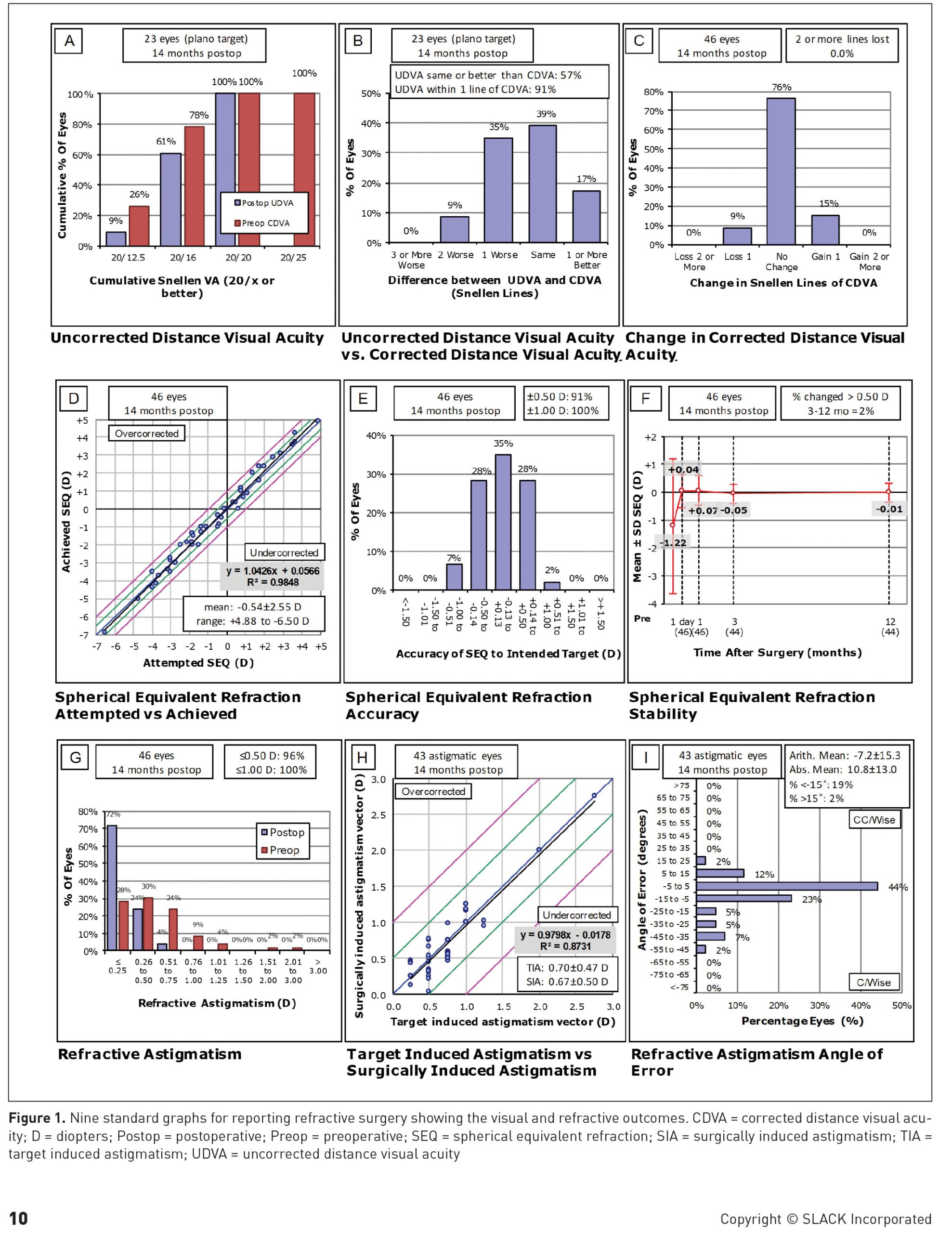
- 100% of pilots achieved 20/20 or better binocular distance vision.
- 100% achieved J2 or better binocular near vision.
- 93% of eyes were within ±0.50 dioptres of the intended target.
- No pilot lost two or more lines of best corrected vision.
- All pilots achieved Class 1 medical certification and resumed flying.
- All pilots reported improved functionality compared with their previous vision correction method.
For patients, these results are important because they demonstrate that PRESBYOND can deliver strong visual performance across a wide range of real-world visual tasks.
Vision Across Every Distance
One of the most important findings was that pilots achieved excellent binocular vision at distance, intermediate and near.
This matters because everyday life also requires constant switching between visual distances. Reading a phone, working at a screen, driving, shopping, cooking, reading menus and recognising faces all require the eyes to move between different focal ranges. For pilots, those demands are intensified inside the cockpit. The fact that PRESBYOND performed well in this environment provides a powerful demonstration of how effective blended vision can be when carefully planned and performed.
Quality of Vision Matters
Good vision is not only about reading small letters on an eye chart.
Quality of vision also includes contrast sensitivity, glare, comfort and how naturally the eyes work together. In this study, contrast sensitivity improved significantly after treatment at several testing levels. Straylight and objective scatter did not significantly worsen, suggesting that the procedure maintained a high level of optical quality.
What Pilots Reported After Surgery
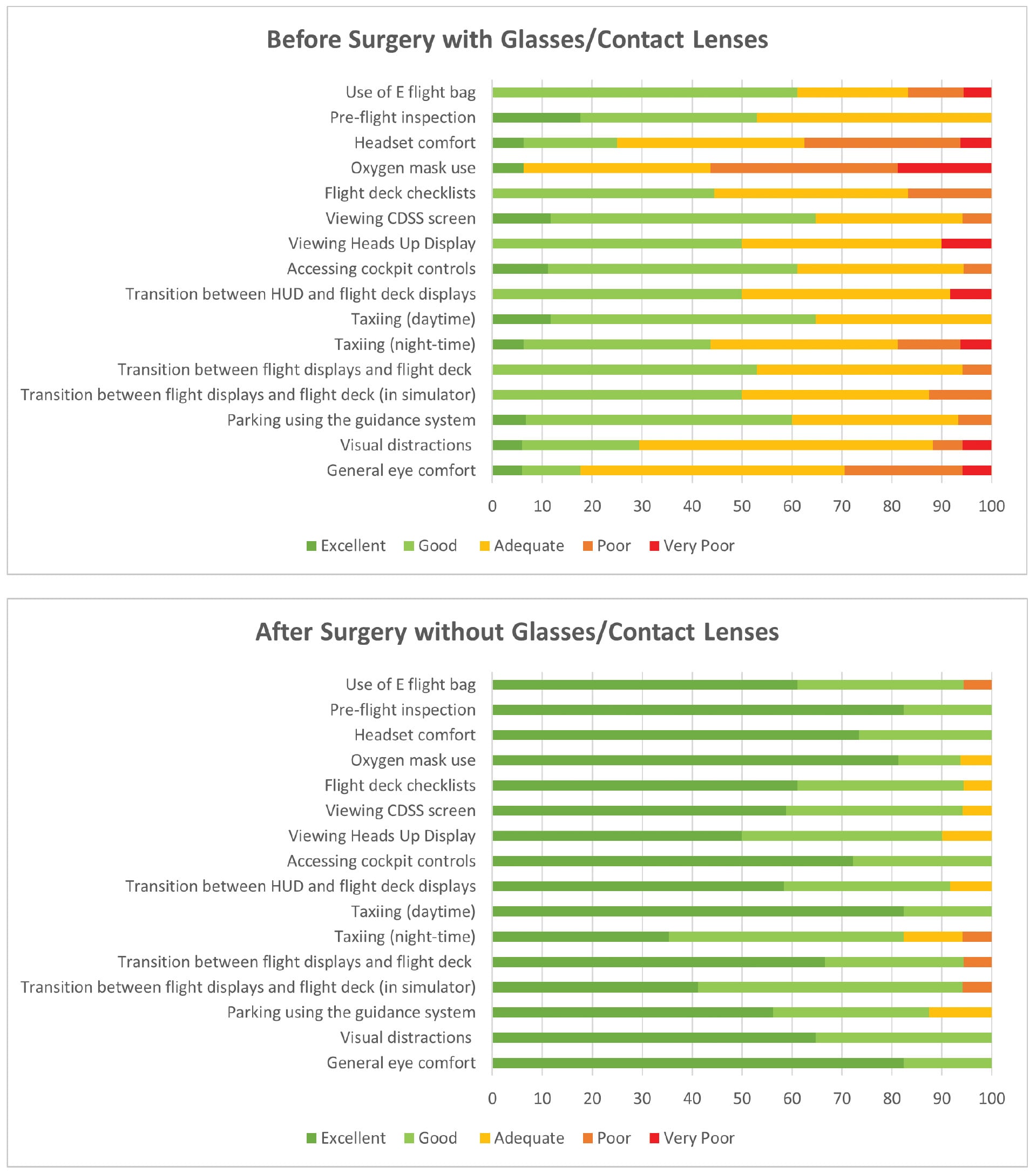
The study also asked pilots about practical cockpit tasks before and after surgery. The results showed a broad improvement in functional performance after treatment. Pilots reported better ability to complete tasks such as reading flight deck paperwork, viewing cockpit displays, accessing controls, using electronic flight bags and transitioning between different visual demands.
Overall, 83% of pilots reported they could complete 100% of functional activities without needing glasses, regardless of any formal spectacle limitation.
Why This Matters for Everyday Patients
Most patients are not flying aircraft, but many experience similar visual demands in daily life. Modern work and lifestyle require clear vision across multiple distances. We look at phones, laptops, dashboards, books, screens, roads, faces and fine detail throughout the day.
The same principle applies: the goal is not simply to improve reading vision, but to create comfortable, natural and functional vision across the distances that matter most to each patient.
PRESBYOND Is Not Standard Monovision
Traditional monovision corrects one eye for distance and the other for near vision. While this can work for some patients, it may create a larger difference between the two eyes and can reduce depth perception or intermediate visual quality. PRESBYOND is different. It uses a lower level of difference between the eyes combined with a controlled increase in depth of focus. This creates a smoother blend between distance and near vision, helping both eyes continue to work together more naturally.
The Importance of Careful Planning
PRESBYOND is a highly personalised treatment. Success depends on detailed diagnostic assessment, careful patient selection and precise treatment planning.
At London Vision Clinic, every treatment is planned using advanced measurements, surgeon expertise and decades of research into laser vision correction outcomes. This is particularly important for patients who rely heavily on their vision for work, driving, sport, hobbies or active lifestyles.
What This Research Shows
This study demonstrates that PRESBYOND Laser Blended Vision LASIK can provide clear, continuous vision across distance, intermediate and near tasks in a group of patients with exceptionally high visual demands. For London Vision Clinic patients, it reinforces an important message: advanced laser vision correction is not just about technology. It is about using that technology with precision, experience and evidence-based planning to deliver vision that works in the real world.
Reference
The original peer-reviewed publication is available in the Journal of Refractive Surgery:
Reinstein DZ, Ivory E, Chorley A, Archer TJ, Vida RS, Gupta R, Lewis T, Carp GI, Fonseca A, Parbhoo M. PRESBYOND Laser Blended Vision LASIK in Commercial and Military Pilots Requiring Class 1 Medical Certification. Journal of Refractive Surgery. 2023;39(1):6-14.