Do You Have Astigmatism? Modern Laser Eye Surgery Could Help
Astigmatism is one of the most common refractive errors affecting vision today. While glasses and contact lenses have traditionally been used to manage it, modern laser eye surgery can now offer many patients a long-term solution with greater visual freedom.
At London Vision Clinic, astigmatism correction is treated routinely using advanced diagnostic imaging, personalised treatment planning and world-class laser technology. In fact, many patients are surprised to learn that even higher or more complex astigmatism prescriptions can often be successfully treated.
Why Astigmatism Can Feel So Frustrating
Astigmatism can affect vision at all distances, making reading, driving, screen work and even recognising details feel more difficult than they should. Many patients describe constant squinting, headaches or tired eyes before treatment.
About Astigmatism
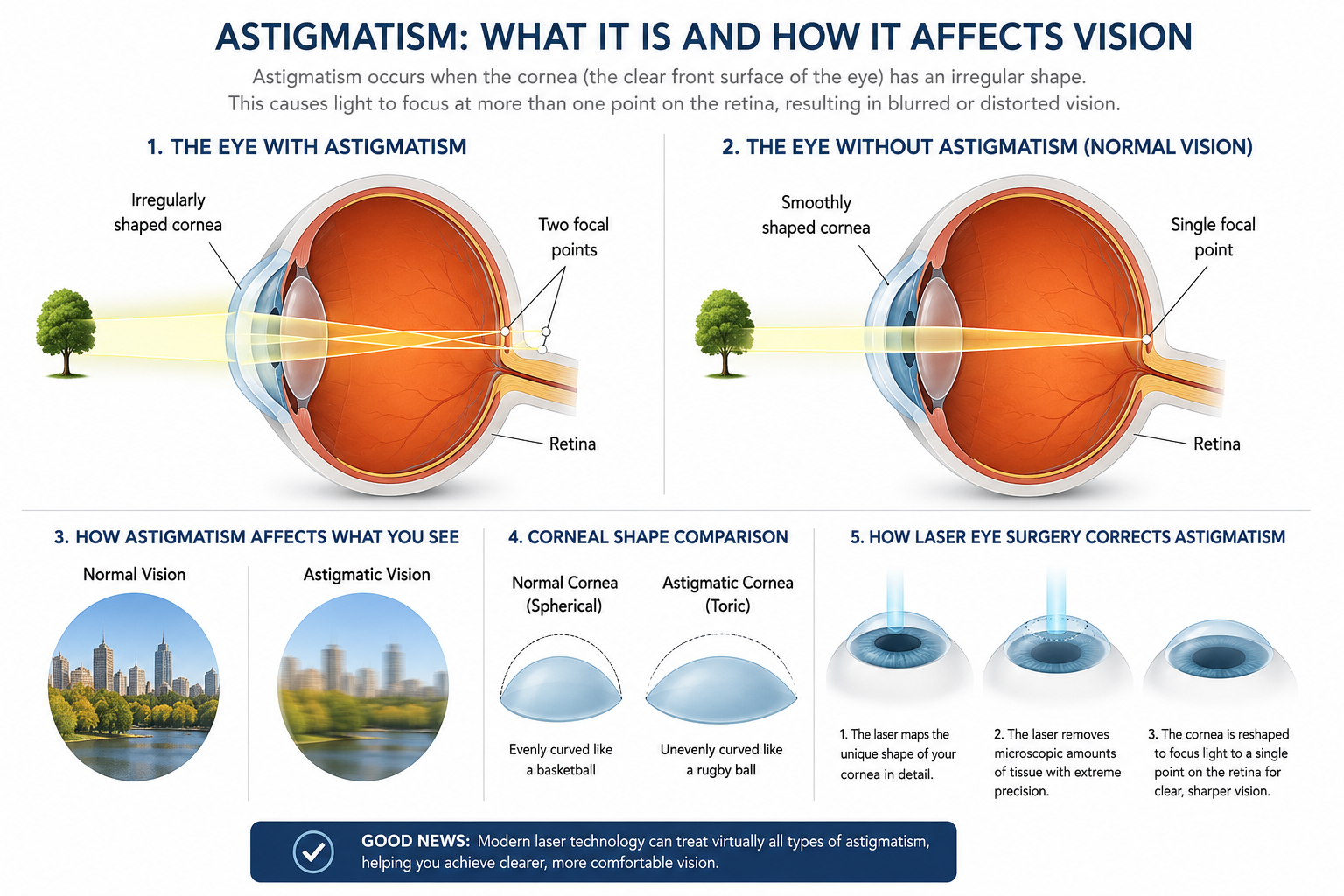
The cornea is the transparent front surface of the eye that helps focus incoming light onto the retina. In a healthy eye, the cornea is usually rounded evenly, allowing light to focus clearly.
With astigmatism, however, the cornea has a more irregular shape. Rather than being evenly curved like a football, it becomes shaped more like a rugby ball. This means light entering the eye is focused unevenly, leading to blurred or distorted vision.
Instead of focusing light to a single sharp point, astigmatism causes light to focus at multiple points. This can create symptoms including:
- blurred or stretched vision
- difficulty reading small print
- eye strain and headaches
- squinting to focus clearly
- difficulty seeing comfortably at both near and distance
- visual fatigue after screens or driving
Mild Astigmatism
Often causes subtle blur, headaches or difficulty focusing for long periods.
Moderate Astigmatism
Can affect both near and distance vision with more noticeable distortion.
Higher Astigmatism
May cause significant blur, glare, eye fatigue and difficulty driving at night.
Treating Astigmatism with Laser Eye Surgery
Laser eye surgery was originally developed to treat myopia (short-sightedness) and later adapted for hyperopia (long-sightedness). Even today, some people still believe astigmatism cannot be corrected with laser treatment, but modern technology has changed this dramatically.
Astigmatism correction is more technically demanding because the cornea needs reshaping across multiple planes and angles. Every tiny distortion in the corneal surface must be mapped and corrected precisely in order to improve visual clarity.
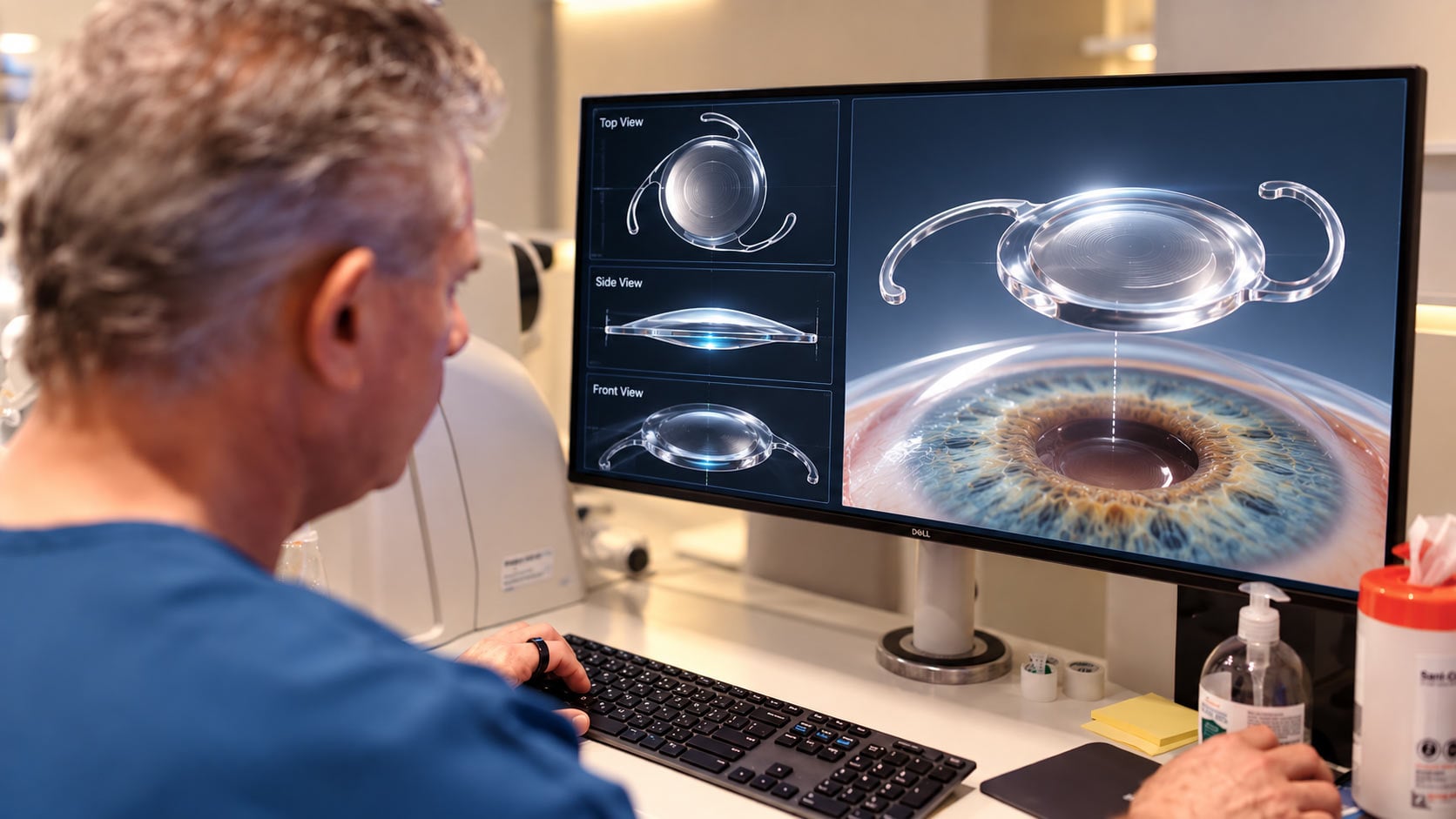
Modern laser platforms allow surgeons to analyse the eye in extraordinary detail before treatment begins. During surgery, carefully programmed laser pulses reshape the cornea to help focus light more accurately onto the retina.
Advanced Astigmatism Mapping
At London Vision Clinic, astigmatism treatment planning involves advanced corneal mapping and personalised laser programming designed specifically around the shape of your eyes. This level of precision is especially important when treating more complex astigmatism prescriptions.
Many patients who were previously told they were unsuitable elsewhere are surprised to discover they may still have treatment options available.
When treating astigmatism, the surgeon carefully accounts for every directional irregularity in the cornea. This requires highly specialised diagnostics and surgical planning, but in experienced hands, excellent results are often achievable.
Today, virtually all astigmatism prescriptions may be treatable with modern laser eye surgery technology and specialist expertise.
At London Vision Clinic, astigmatism correction procedures are carried out routinely for patients with a wide range of prescriptions and lifestyles.
Laser Eye Surgery and Vision Correction by Age
Different stages of life can bring different changes to your vision. While younger patients often seek freedom from glasses or contact lenses for work, sport or lifestyle reasons, older patients may begin experiencing reading difficulties, presbyopia or age-related lens changes.
Modern vision correction now offers a wide range of treatments designed around both age and visual needs. The table below provides a general guide to the most common treatment pathways based on different age groups, prescriptions and lifestyle goals.
What Patients Say After Astigmatism Treatment
“Having worn contact lenses for over 30 years, being free of all the aggravation is fantastic. My vision now is so much better than with lenses — it is incredible.”
— Tony M., Company Director
“The procedure was quick and painless. The team made the whole experience feel calm and reassuring from start to finish.”
— Carlos D., Computer Programmer
“Professor Dan Reinstein was so reassuring throughout the process. The results genuinely exceeded my expectations.”
— Caroline K., Researcher
“The consultation was incredibly thorough and completely put my fears at rest. The surgery itself was fast, methodical and far more comfortable than I expected.”
— Grainne M., Lawyer
Isabella Finds a Solution for Her Astigmatism
In the video below, Isabella shares her experience searching for a laser eye surgery provider and explains why she ultimately chose London Vision Clinic for her astigmatism treatment journey.
Thinking About Astigmatism Treatment?
Modern laser eye surgery can now help many patients with astigmatism achieve clearer, more comfortable vision with reduced dependence on glasses or contact lenses.
If you have astigmatism and would like to explore your treatment options, get in touch with one of our friendly clinic coordinators or Book a Consultation today.