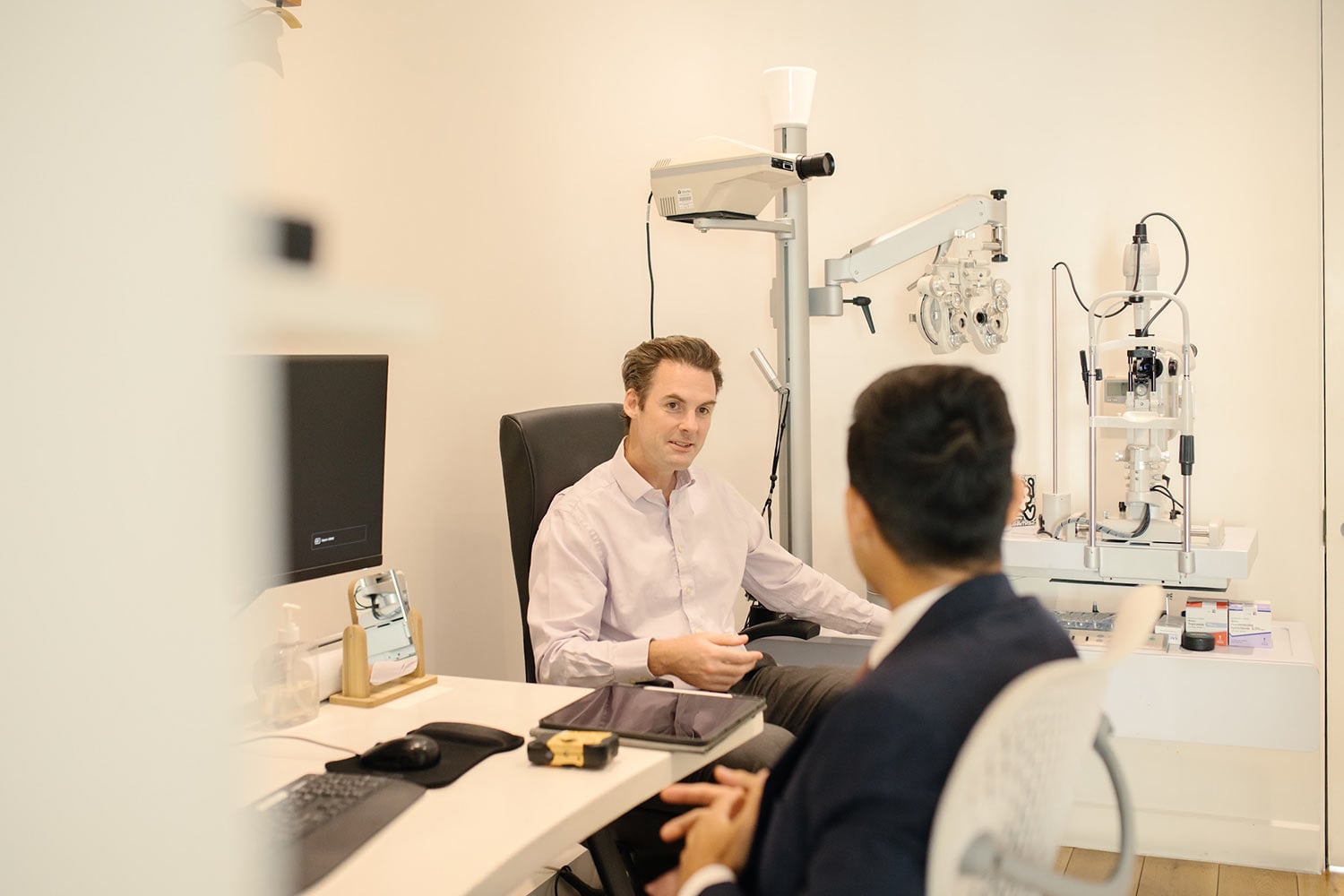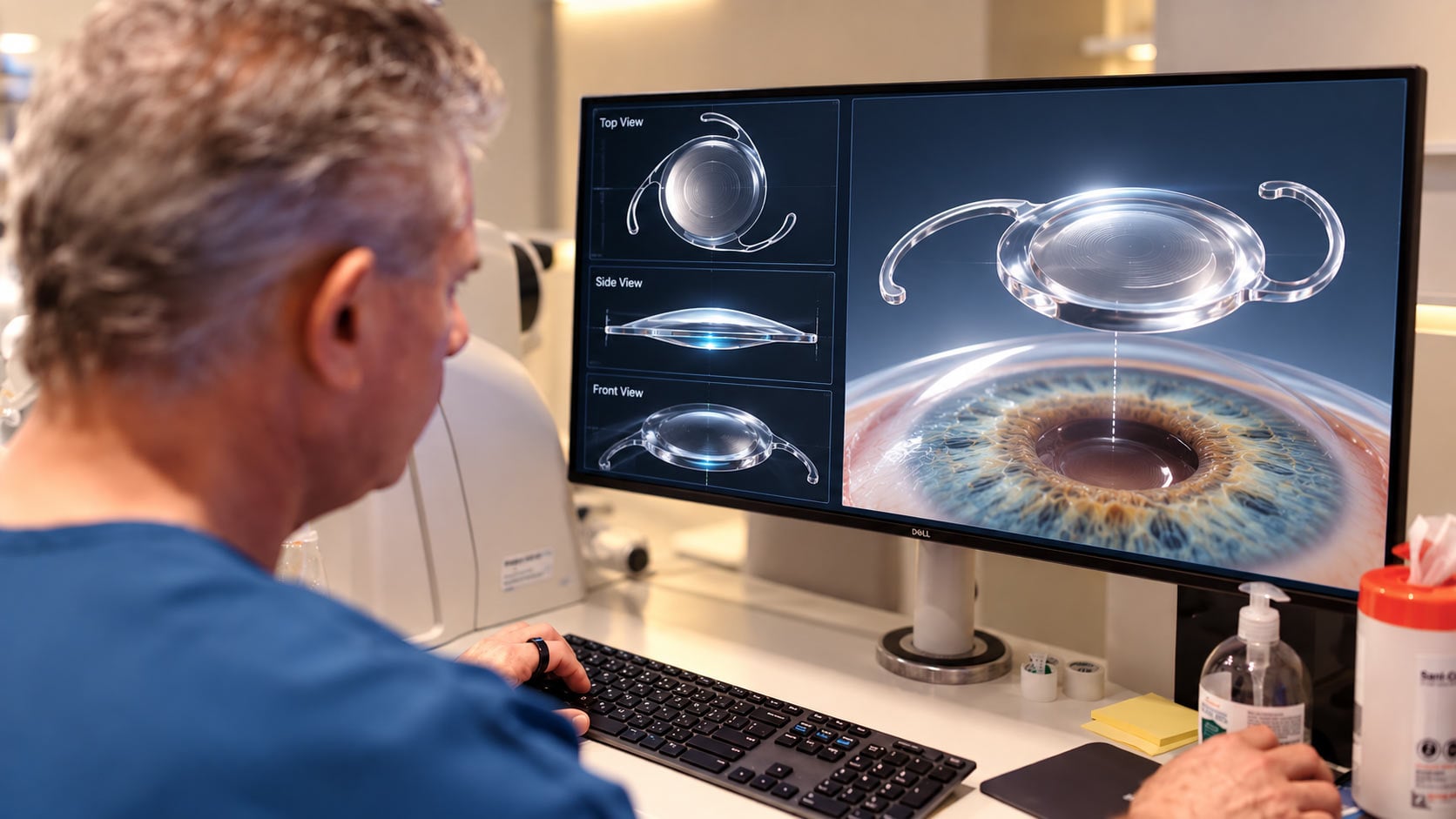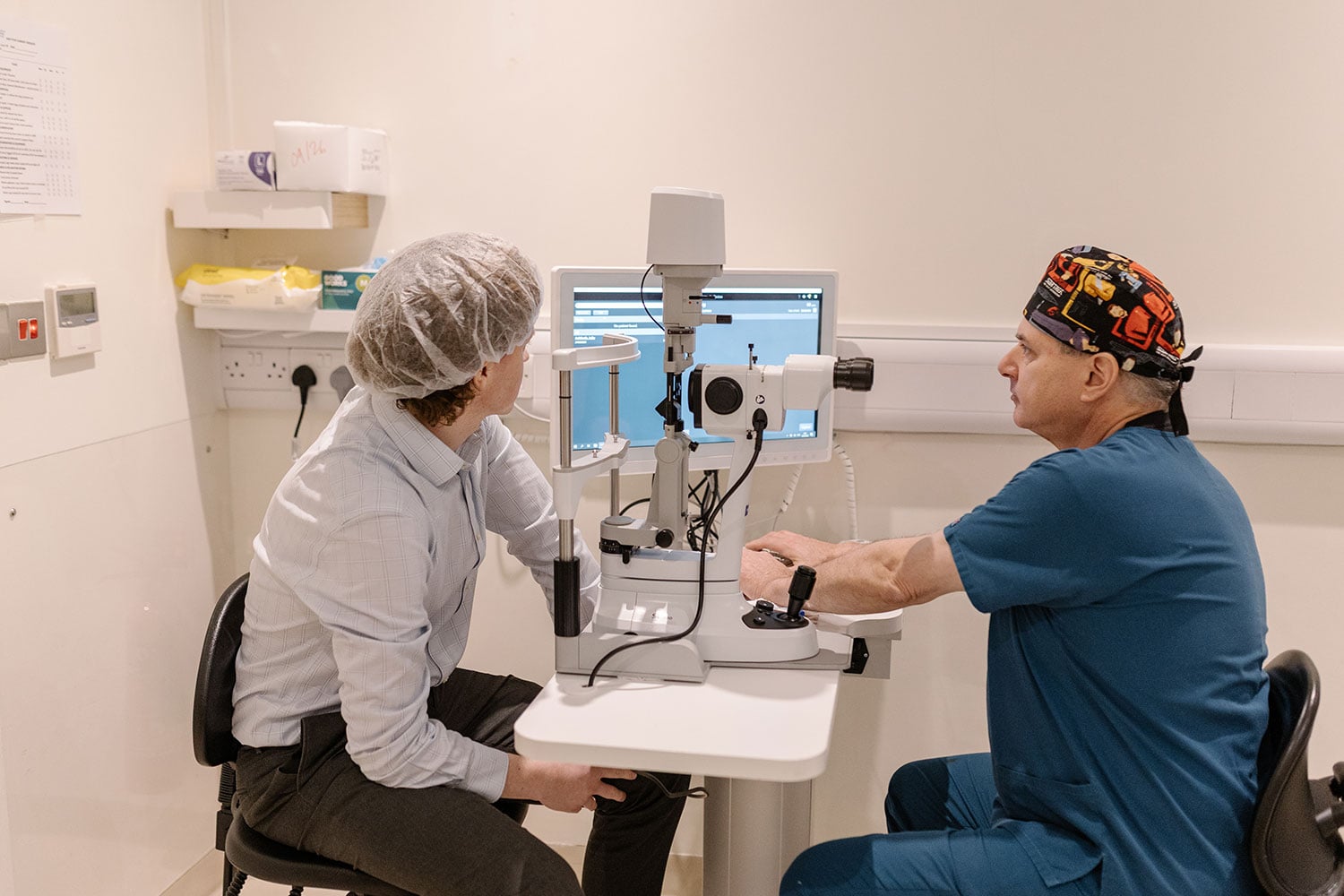
At London Vision Clinic, every treatment is individually planned using decades of research, advanced diagnostic testing and continuous analysis of the outcomes from more than 60,000 vision correction procedures. This allows us to personalise not only which treatment is most appropriate for each patient, but exactly how that treatment is optimised for each eye.
Every Eye Is Different
No two eyes are identical. Even if two patients have exactly the same glasses prescription, their corneas, optical systems, healing responses, pupil sizes and visual requirements may be completely different. One patient may spend their day working on multiple computer screens, another may be a commercial pilot, while another may be an elite athlete.
Our aim is to recommend the procedure that best suits each patient’s eyes, lifestyle and visual goals, and then optimise every aspect of that treatment for each individual eye.
How We Personalise Every Vision Correction Procedure
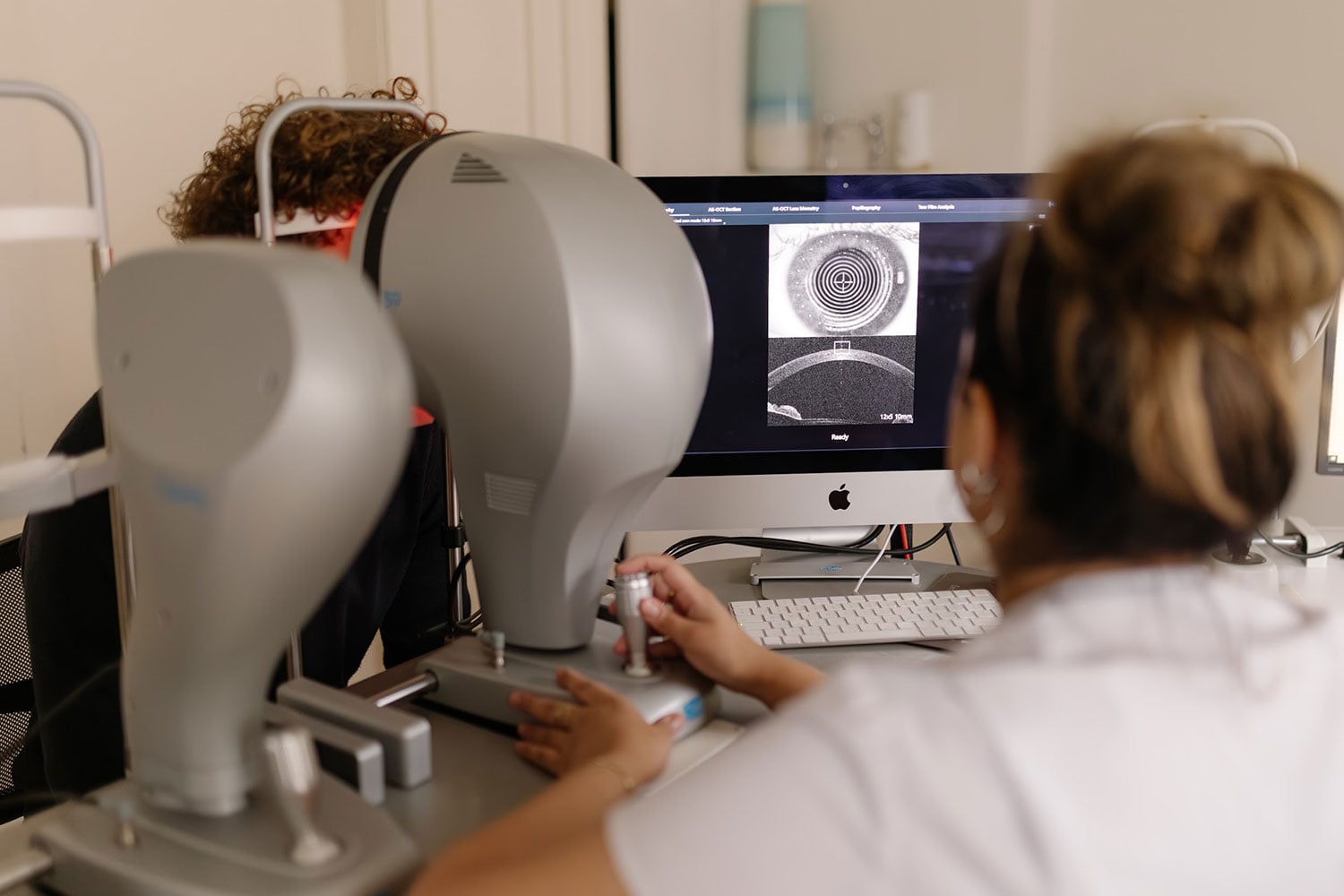
Every eye is unique, which means every treatment should be too. Before recommending LASIK, SMILE, PRESBYOND or lens-based surgery, we analyse thousands of measurements to build a treatment plan specifically for your eyes. Here’s what makes personalised vision correction different at London Vision Clinic.
| What We Analyse | Why It Matters |
|---|---|
| Corneal Shape & Thickness | Determines which procedures are safest and how treatment should be customised. |
| Prescription & Eye Optics | Allows surgeons to optimise visual accuracy and reduce refractive error. |
| Higher-Order Aberrations | Improves visual quality by reducing glare, halos and optical imperfections where appropriate. |
| Pupil Size & Night Vision | Helps optimise vision in low-light conditions and improve night-time visual performance. |
| Lifestyle & Visual Goals | Reading, driving, sport and work all influence the most suitable treatment strategy. |
| 60,000+ Clinical Outcomes | Every treatment benefits from decades of research, long-term patient data and continually refined surgical nomograms. |
Research Is Not Something We Read. It Is Something We Do.
Unlike most clinics, London Vision Clinic has a dedicated research team focused on continually improving the outcomes of refractive surgery.
Since 2002, clinical outcomes from over 60,000 treatments have contributed to one of the world’s largest continuously analysed refractive surgery databases. Rather than simply recording results, we study them in extraordinary detail. This is where modern data analysis becomes incredibly powerful.
Instead of asking simple questions such as “How well did LASIK work?”, we analyse complex relationships between a patient’s age, prescription, corneal thickness and shape, epithelial thickness profile, pupil size, higher-order aberrations, optical zone size, treatment centration, healing characteristics and long-term refractive stability.
By analysing thousands of similar patients simultaneously, we develop sophisticated multivariate treatment algorithms, known as nomograms, that continually refine how we perform surgery.
These nomograms are unique to London Vision Clinic. They allow us to make small but meaningful adjustments to treatment planning for each individual eye, helping to optimise accuracy and visual quality.
Learning From Long-Term Results
One of the greatest strengths of our research database is the depth of long-term clinical information it contains.
Over many years, we have collected extensive postoperative data, including a large body of 12-month follow-up results. Combined with our comprehensive early postoperative measurements, this has given us a detailed understanding of not only how patients see immediately after surgery, but how their vision continues to evolve as the eye heals.
This long-term information allows us to identify subtle trends that would be impossible to detect from short-term results alone. Those insights are continually fed back into our nomograms, enabling us to further refine the accuracy and predictability of future treatments.
In other words, our research is never static. Every new insight helps us improve the care we provide for future patients.
Choosing the Right Technology for Each Eye
Personalisation also means selecting the most appropriate treatment option. Not all eyes have the same optical characteristics. While many patients achieve excellent outcomes with standard laser treatments, others benefit from more advanced customised approaches.
Where appropriate, we can perform wavefront-guided treatments, designed to reduce higher-order optical aberrations, or topography-guided treatments, which are tailored to the unique shape of the cornea and can be particularly valuable in eyes with subtle irregularities.
Rather than being limited to a single treatment approach, we have access to multiple technologies and treatment options, and choose the one that best matches the optical characteristics of each individual eye.
Decades of Experience Refining SMILE
Our involvement with SMILE extends far beyond simply offering the procedure. London Vision Clinic has played an important role in the clinical development of SMILE from its earliest stages. Our surgeons have contributed to research, helped develop treatment protocols and trained refractive surgeons from around the world.
Through this work, we have developed a detailed understanding of how treatment parameters influence visual outcomes. Factors such as laser energy, spot spacing and other surgical settings all affect how the cornea responds during treatment and healing. By refining these parameters over many years, we have been able to optimise visual quality, recovery and predictability.
The same philosophy of continual refinement applies across all of our laser vision correction procedures. Our research has enabled us to safely extend the range of patients who can benefit from both LASIK and SMILE, allowing many people who may previously have been considered unsuitable elsewhere to undergo treatment.
Bringing It All Together
Modern vision correction begins with understanding the eye in extraordinary detail. Advanced diagnostic technology provides an extraordinary amount of information about the unique characteristics of each eye. But having the world’s most advanced diagnostic technology is one thing. Knowing how to interpret the vast amount of information it provides, and how to use that knowledge to optimise treatment for each individual eye, is what truly makes the difference.
That expertise comes from decades of scientific research, analysing long-term clinical outcomes and continually refining our understanding of what delivers the best possible results. The knowledge gained is translated into sophisticated treatment planning tools and continually evolving nomograms, allowing us to personalise not only which treatment is right for each patient, but exactly how that treatment is optimised for each eye.
It is this combination of advanced diagnostics, rigorous research and decades of clinical experience that enables us to deliver truly personalised vision correction.
The best outcomes do not come from technology alone. They come from understanding how to use it.