Do nearby words appear blurred after reading for a while? Do screens leave your eyes feeling tired, or have you started holding things further away to see them clearly? These can all be signs of hyperopia, commonly known as long-sightedness.
Hyperopia is a common refractive error that can affect people of all ages. Some people experience obvious blurred vision, while others can compensate for the condition for many years without realising how hard their eyes are working.
As this natural focusing ability becomes less effective with age, previously hidden long-sightedness may become more noticeable. Reading, computer work and other close-range activities can begin to feel increasingly uncomfortable.
Hyperopia is not simply “good distance vision”
Mild hyperopia may initially affect close vision most noticeably. Higher levels can blur vision at every distance, particularly when the eyes can no longer compensate through their natural focusing system.
What is hyperopia?
Hyperopia is an optical focusing error. It usually occurs because the eye is slightly shorter from front to back than required, because the cornea has insufficient focusing power, or through a combination of optical factors.
In an eye without a refractive error, incoming light is brought to a clear point of focus on the retina. The retina is the light-sensitive layer at the back of the eye that converts light into signals the brain can interpret.
In an eye with hyperopia, light would naturally come into focus at a point behind the retina when the eye’s focusing system is relaxed. The eye may try to compensate by changing the shape of its natural lens, a process known as accommodation.
How does long-sightedness affect the focus of light?
Following the path of light
Light enters the eye
Light first passes through the clear cornea at the front of the eye.
The eye tries to focus
The cornea and natural lens work together to direct the light towards the retina.
The focal point falls behind
Without correction, the light would reach its clearest focus behind rather than directly on the retina.
Vision becomes strained or blurred
Close work is often affected first, although distance vision can also become blurred.
What are the symptoms of hyperopia?
The symptoms depend on the strength of the prescription, the person’s age and how effectively the natural lens can compensate. Possible signs include:
- Blurred or uncomfortable near vision
- Difficulty reading small print
- Holding books, menus or mobile devices further away
- Tired or aching eyes after close work
- Headaches following reading or computer use
- Difficulty moving focus between different distances
- Blurred distance vision, particularly with stronger prescriptions
- Eye strain that becomes more noticeable towards the end of the day
Younger people with mild hyperopia may still see clearly because the natural lens can work harder to bring images into focus. This does not necessarily mean that the refractive error is absent. The additional focusing effort may still cause fatigue, headaches or difficulty concentrating on close tasks.
Why can hyperopia become more noticeable with age?
The natural lens inside a younger eye is flexible. It can change shape to provide additional focusing power, helping compensate for some or all of a hyperopic prescription.
This flexibility gradually reduces as we get older. Consequently, someone who previously managed without glasses may begin to notice that close work is more difficult. With a stronger hyperopic prescription, distance vision may also deteriorate.
This does not necessarily mean that hyperopia has suddenly appeared. It may mean that the eye can no longer conceal the existing refractive error as effectively as it once did.
Are hyperopia and presbyopia the same condition?
No. Although both conditions can cause problems with near vision, they have different underlying causes.
Hyperopia
A refractive error related to the optical power and dimensions of the eye. It can be present from childhood and may affect near or distance vision.
Presbyopia
An age-related reduction in the natural lens’s ability to change focus. It eventually affects people who are long-sighted, short-sighted or neither.
A person can have hyperopia and presbyopia at the same time. This is one reason why a full assessment is needed before recommending treatment, particularly for patients in their forties and beyond.
Does hyperopia affect children?
Many babies and young children have a small degree of hyperopia because their eyes are still developing. Mild long-sightedness may reduce naturally as the eye grows and often causes no obvious difficulty.
More significant hyperopia can require additional focusing effort. In some children, this can contribute to eye strain, a turned eye or reduced visual development in one eye.
Laser Eye Surgery is not used to correct routine childhood hyperopia. Children with suspected vision problems should receive a professional eye examination so that glasses or other appropriate treatment can be provided where necessary.
How is hyperopia diagnosed?
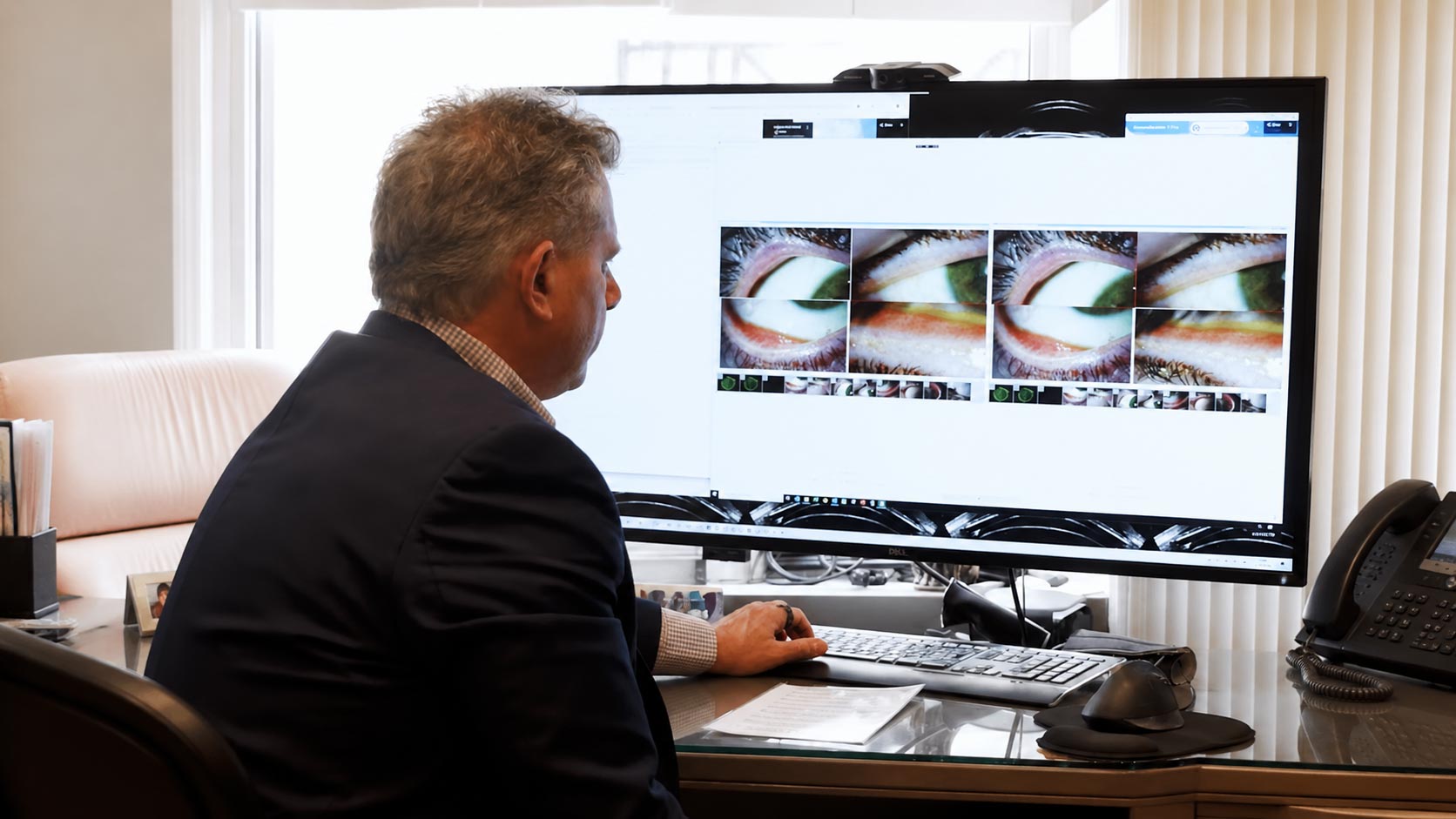
A standard glasses prescription is an important part of the assessment, but it is not the only measurement required when considering corrective surgery.
The clinical team will need to understand:
- The complete hyperopic prescription in each eye
- Whether astigmatism is also present
- How much focusing effort is concealing the prescription
- The shape, thickness and regularity of the cornea
- The health of the eye’s surface and tear film
- The condition of the natural lens and retina
- Whether the prescription has remained stable
- The patient’s age, lifestyle and visual priorities
Special drops may sometimes be used to temporarily relax the eye’s focusing system. This can help reveal the full amount of hyperopia rather than only the portion visible while the eye is actively compensating.
How can long-sightedness be corrected?
Glasses
Glasses use plus-powered lenses to bring the focal point forwards onto the retina. They provide a simple and non-surgical way to correct long-sightedness and can be updated if the prescription changes.
Contact lenses
Contact lenses can provide effective correction without frames, although they require careful handling and regular replacement. Some people also experience dryness, irritation or difficulty wearing them for extended periods.
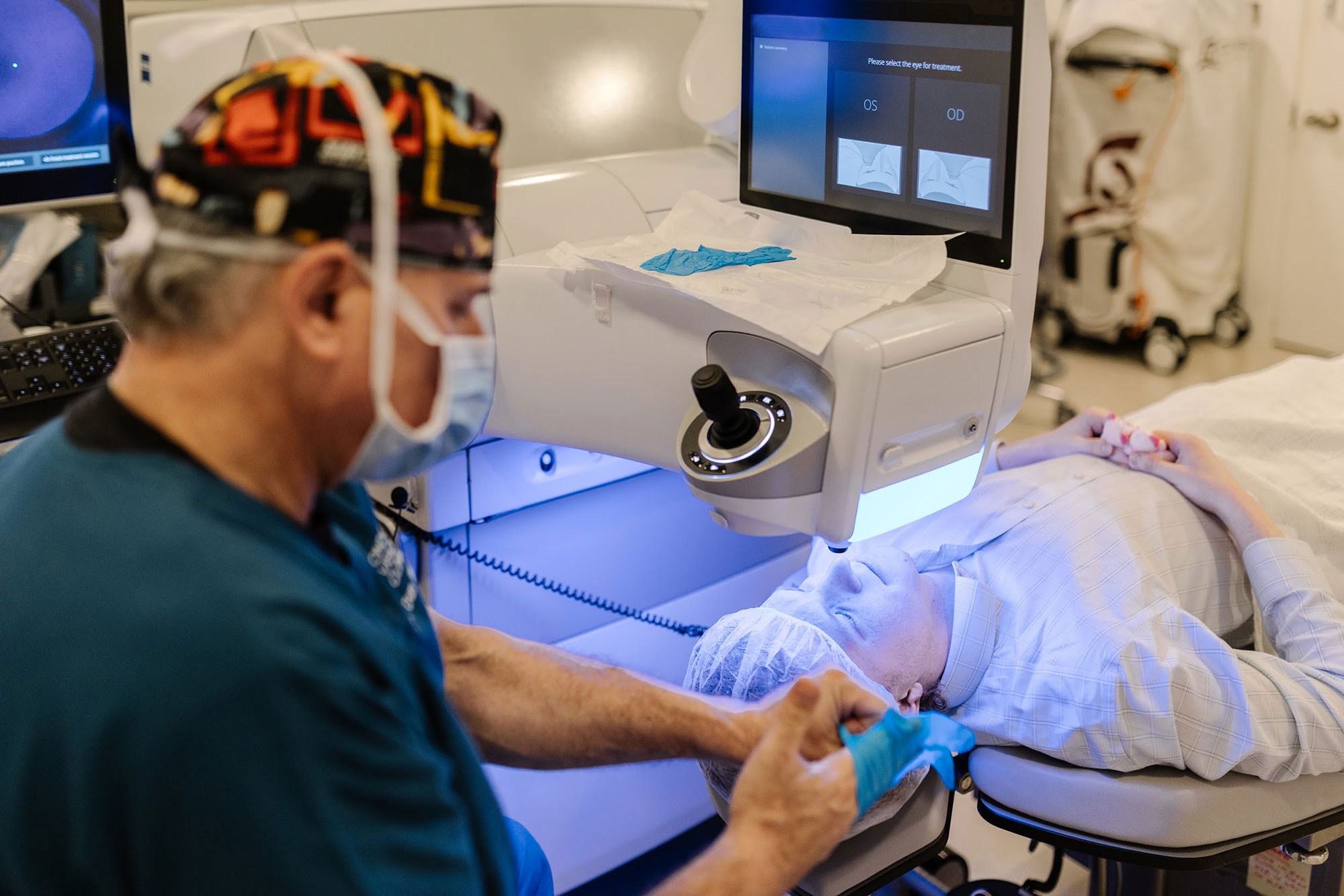
LASIK Laser Eye Surgery
LASIK can be used to treat suitable hyperopic prescriptions by reshaping the cornea beneath a precisely created corneal flap.
For hyperopia, the laser typically reshapes the peripheral cornea to increase the relative curvature and focusing power of its central area. This helps bring the focal point forwards towards the retina.
PRK or LASEK surface treatment
PRK and LASEK also use an excimer laser to alter the curvature of the cornea, but they reach the treatment area through the corneal surface rather than through a LASIK flap.
A surface procedure may be considered when the patient’s corneal measurements, eye health or lifestyle make it more appropriate than LASIK. Visual recovery is usually more gradual because the surface epithelium needs time to heal.
PRESBYOND® Laser Blended Vision
Patients who have both hyperopia and age-related presbyopia may require a treatment plan that addresses vision across more than one distance.
PRESBYOND® Laser Blended Vision creates a controlled difference between the eyes, together with a personalised blend zone. The brain can combine the visual information from both eyes to provide a functional range of near, intermediate and distance vision.
Lens-based treatment
For some patients, particularly those with significant age-related lens changes or prescriptions that fall outside the preferred range for corneal laser treatment, an implantable lens procedure may be considered.
The available lens-based treatment options depend on the patient’s age, internal eye measurements, natural lens function and desired range of vision.
Can everyone with hyperopia have Laser Eye Surgery?
No single prescription figure can determine suitability on its own. Two people with the same glasses prescription may receive different recommendations because their corneal structure, natural lens, eye health and visual requirements differ.
Important considerations include:
- Prescription strength and stability
- Corneal thickness, curvature and regularity
- The amount of latent hyperopia concealed by accommodation
- Dry eye or other ocular surface conditions
- The presence of presbyopia or early lens changes
- General health and medications
- Work, driving and lifestyle requirements
- Expectations regarding near and distance vision
London Vision Clinic uses detailed diagnostic testing to determine whether a patient is suitable for laser correction and which technique offers the most appropriate balance of safety and visual benefit. You can learn more about the clinic’s suitability process.
“My prescription was very unusual, as I was very long-sighted and also had significant astigmatism. When I was told I was eligible for surgery at London Vision Clinic, I was delighted. The procedure could not have gone more smoothly and being free from glasses and contact lenses has changed my life.”
Christie, London Vision Clinic patient
What results can hyperopic patients expect?
The aim of treatment is to reduce reliance on glasses or contact lenses while preserving the best quality of vision that can safely be achieved.
The likely result depends on the starting prescription, age, corneal measurements, presence of astigmatism and individual healing response. Higher hyperopic corrections can be more complex to plan and may behave differently from treatments for short-sightedness.
For this reason, results should be discussed in relation to patients with comparable prescriptions rather than relying on a single headline percentage. London Vision Clinic publishes its latest results and treatment statistics so patients can review the clinic’s outcomes before making a decision.
Can hyperopia return after treatment?
Laser Eye Surgery changes the shape of the cornea, but it cannot prevent every natural change that may occur inside the eye over time.
Some patients may experience a degree of prescription change as they age. Presbyopia and changes within the natural lens can also affect near vision, even when the original corneal correction remains stable.
This possibility is considered during treatment planning. The surgeon will take account of the patient’s age, prescription history and expected visual needs when recommending the most appropriate approach.
Could your long-sightedness be treated?
A comprehensive assessment can reveal the full extent of your hyperopia and identify which vision correction options may be appropriate for your eyes.
Contact one of our clinic coordinators or book a consultation to begin your vision correction journey.