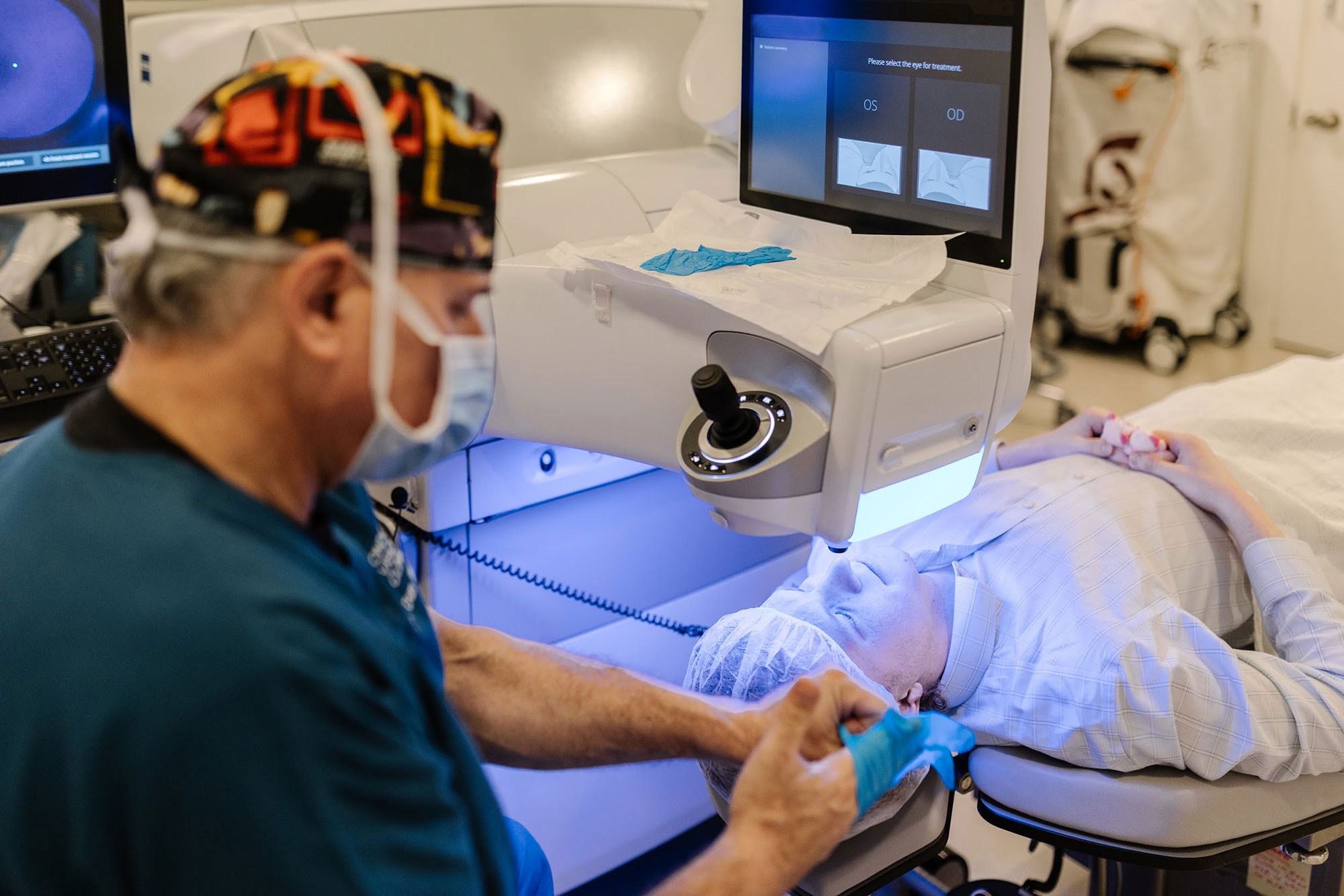
Laser eye surgery is a form of refractive surgery designed to correct the way the eye focuses light. By precisely reshaping the cornea, treatment can reduce a person’s dependence on glasses or contact lenses and provide clearer unaided vision.
The technology has developed considerably since the earliest procedures were introduced. Modern patients may now be considered for LASIK, SMILE Pro, PRK/LASEK or, when age-related reading vision is involved, PRESBYOND® Laser Blended Vision.
Although these procedures use different surgical techniques, they share the same objective: changing the focusing power of the cornea so light reaches the retina more accurately.
Laser eye surgery does not place a lens inside the eye. It changes the shape of the eye’s natural front surface to improve focus.
How Does Laser Eye Surgery Work?
The cornea is the transparent, curved surface at the front of the eye. Together with the natural lens, it helps focus incoming light onto the retina, where light is converted into the signals used by the brain to form an image.
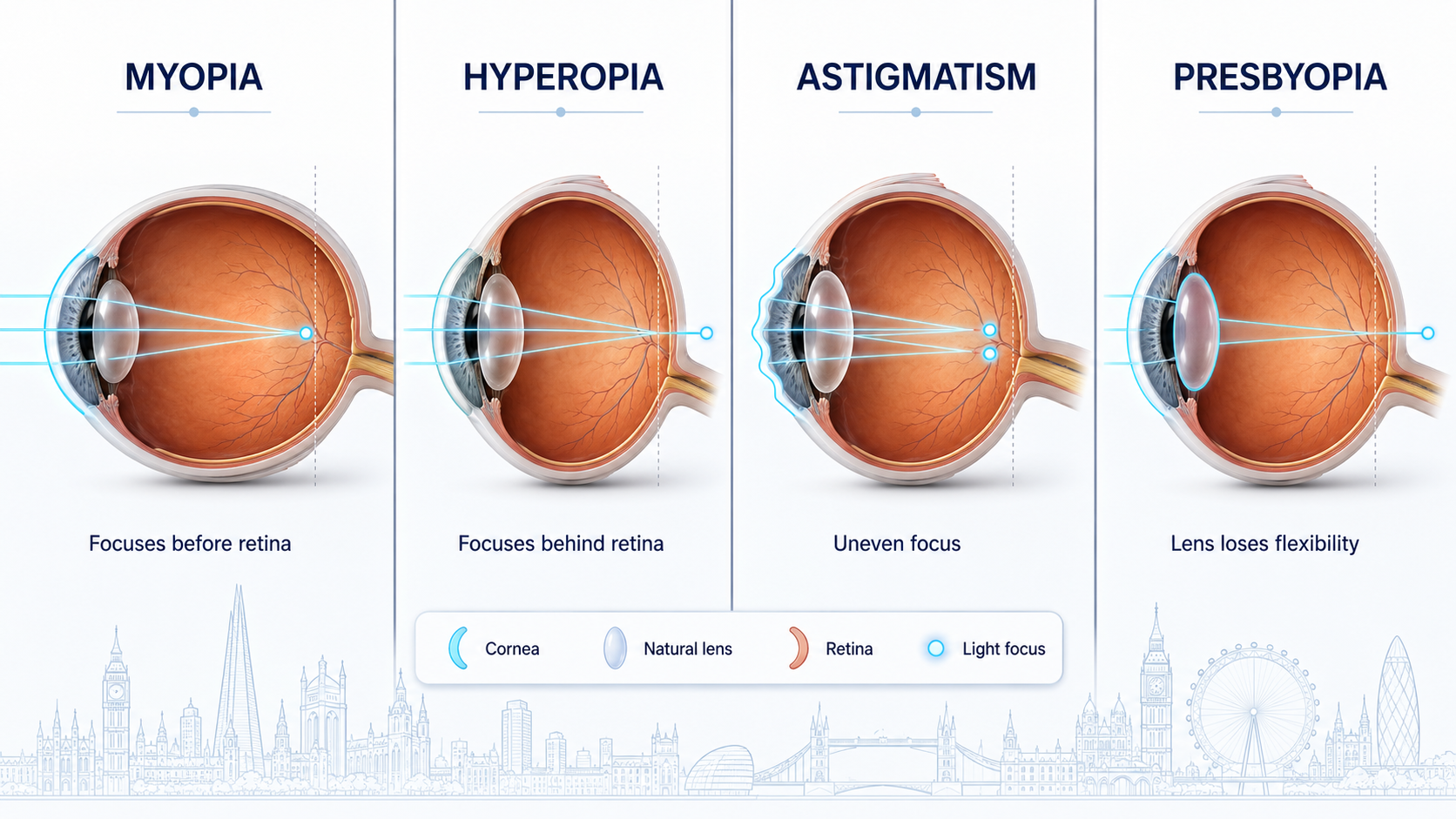
If the focusing power of the eye does not match its length and shape, light may fall in front of, behind or unevenly across the retina. This creates a refractive error and causes vision to appear blurred or distorted.
The amount and pattern of corneal reshaping are calculated from detailed measurements taken during screening. This is why laser vision correction should never be viewed as a standard procedure applied in exactly the same way to every patient.
Our main laser eye surgery treatment guide provides a further comparison of the available procedures.
Which Vision Problems Can Laser Eye Surgery Correct?
Myopia
In myopia or short-sightedness, light is focused in front of the retina rather than directly on it. Distant objects appear blurred, while near vision is usually clearer.
Laser treatment reduces the focusing power of the cornea so that light is directed further back towards the retina.
Hyperopia
In hyperopia or long-sightedness, the eye does not have enough focusing power for its length. Light would naturally come to a focus behind the retina.
The cornea is reshaped to increase its focusing power, bringing the focal point forwards towards the retina.
Astigmatism
Astigmatism occurs when the focusing system of the eye has unequal curvature in different directions. Instead of light meeting at one clear focal point, it is spread across more than one plane.
Laser treatment can reshape the cornea asymmetrically to create a more balanced optical surface. Astigmatism may be corrected on its own or alongside myopia or hyperopia.
Presbyopia
Presbyopia develops as the natural crystalline lens becomes less flexible with age. This gradually reduces the ability to focus on close objects and commonly leads to a need for reading glasses.
Laser treatment cannot restore the youthful flexibility of the natural lens. However, a personalised blended-vision correction can extend the useful range of focus across both eyes.
The Main Types of Laser Eye Surgery
Modern laser vision correction can be divided into three principal surgical approaches: flap-based treatment, keyhole lenticule extraction and surface treatment. PRESBYOND adds a specialised optical profile for patients with presbyopia.
LASIK
During LASIK, a femtosecond laser creates a thin flap within the cornea. The flap is lifted, allowing an excimer laser to reshape the underlying tissue. It is then returned to its original position, where it begins healing naturally.
LASIK is known for rapid visual recovery and relatively little early discomfort. Suitability depends on factors including corneal structure, prescription and eye health.
SMILE Pro
During SMILE Pro, a femtosecond laser creates a precisely shaped disc of tissue, known as a lenticule, within the cornea. The surgeon removes this through a small keyhole incision.
No corneal flap is created. This can make SMILE Pro particularly useful for selected patients with myopia, astigmatism, active lifestyles or certain corneal and ocular-surface considerations.
PRK/LASEK
PRK and LASEK reshape the tissue beneath the corneal epithelium without creating a flap.
With PRK, the epithelium is removed and naturally regenerates. With LASEK, the surface cells are loosened, traditionally using a dilute alcohol solution, before the laser correction is performed.
A protective contact lens is placed over the eye while the surface heals. Recovery is slower than LASIK or SMILE Pro, but surface treatment can be an excellent option for appropriately selected patients.
PRESBYOND
PRESBYOND® Laser Blended Vision is a personalised laser correction for presbyopia. It is not a separate method of accessing the cornea in the same way as LASIK, SMILE Pro or PRK.
The treatment creates a controlled difference between the eyes together with a blend zone that extends the range of focus. The brain combines the visual information to support near, intermediate and distance vision.
How Is the Right Procedure Selected?
Patients do not need to choose a procedure before attending their consultation. The recommendation should follow the clinical assessment rather than begin with a preferred treatment name.
Your surgeon will consider:
- The type, strength and stability of your prescription
- The thickness, shape and structural regularity of your corneas
- Your tear film and any existing dry-eye symptoms
- Your age and the condition of your natural crystalline lenses
- Your pupil size and visual quality in lower light
- Your occupation, hobbies and participation in contact sports
- Your near, intermediate and distance vision requirements
- Your expectations and tolerance of the proposed correction
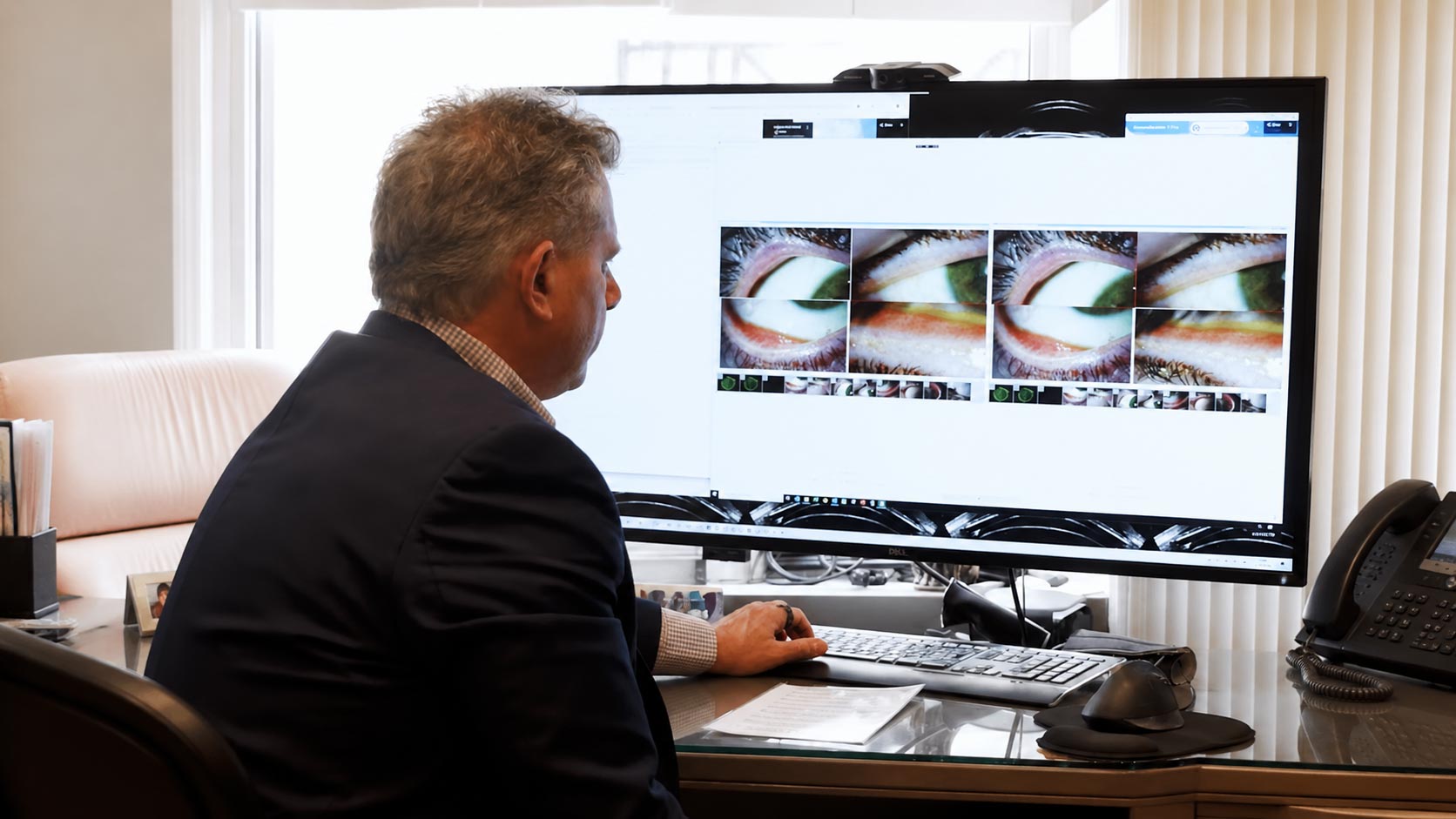
Detailed diagnostic imaging provides the information needed to make this decision. London Vision Clinic uses specialist systems to assess the cornea, focusing system and wider health of the eye. More information is available on our laser eye surgery technology page.
What Laser Eye Surgery Can and Cannot Do
What It Can Do
- Correct a wide range of refractive errors
- Reduce dependence on glasses and contact lenses
- Provide long-lasting corneal vision correction
- Improve unaided vision for everyday activities
- Offer different procedures for different types of eye
What It Cannot Guarantee
- Perfect vision for every patient
- Freedom from glasses for every possible task
- Prevention of future age-related eye conditions
- Restoration of vision that was never achievable with glasses
- An identical recovery or result for every person
The goal is to achieve the best safe visual outcome for the individual patient. This may be better than, similar to or occasionally less than the vision they previously achieved with glasses or contact lenses.
What Results Can You Expect?
Laser eye surgery has an established record of effectiveness when patients are carefully selected and treatment is properly planned. However, percentages should always be interpreted in relation to the starting prescription and type of procedure.
A patient with a relatively low prescription should not automatically compare their expected outcome with someone undergoing treatment for a much higher or more complex refractive error.
The terms 20/20 and 6/6 refer to a standard level of distance visual acuity. They do not represent perfect vision and do not measure every aspect of visual quality, including contrast, night vision, reading vision or comfort.
London Vision Clinic publishes detailed vision correction results and statistics to help patients consider outcomes relevant to prescriptions similar to their own.
Does Laser Eye Surgery Hurt?
Anaesthetic eye drops are used to numb the surface before treatment. Most patients describe pressure, movement, brightness or unusual sensations rather than pain during the procedure.
Comfort during recovery varies by treatment:
- LASIK: Early irritation, watering or grittiness can occur, but recovery is generally rapid.
- SMILE Pro: Early discomfort is usually limited, although the eyes may feel watery or gritty.
- PRK/LASEK: The regenerating surface means discomfort and light sensitivity are more noticeable during the first few days.
Individual experiences vary, and no surgical treatment should be described as completely sensation-free.
How Long Does Recovery Take?
Recovery is a gradual process rather than a single moment. Many patients notice clearer vision soon after LASIK or SMILE Pro, while surface procedures generally require more time before useful vision develops.
Vision can fluctuate as the cornea and tear film settle. Temporary dryness, glare, halos and light sensitivity may also occur. Although patients commonly return to many everyday activities relatively quickly, complete healing and stabilisation can continue for several months.
Your surgeon will provide instructions based on the exact procedure performed and the way your eyes are healing.
What Are the Risks and Side Effects?
Modern laser eye surgery has a strong safety profile, but no surgical procedure is entirely without risk.
Possible side effects and complications include:
- Temporary or persistent dry-eye symptoms
- Glare, halos or starbursts around lights
- Fluctuating vision during recovery
- Under-correction, over-correction or regression
- Inflammation or infection
- Problems relating to healing or the corneal surface
- Flap-related complications following LASIK
- The possible need for additional treatment
The likelihood and relevance of each risk depend on the patient, their eyes and the selected procedure. Comprehensive screening helps identify individual risk factors before surgery and allows the treatment plan to be adjusted accordingly.
Who Is Suitable for Laser Eye Surgery?
Suitability depends on much more than age or prescription strength. In general, patients must have healthy eyes, a sufficiently stable prescription and corneas capable of supporting the proposed treatment.
Medical conditions, medication, pregnancy, breastfeeding, dry eye, early cataracts and other eye conditions may affect the recommendation or mean that treatment should be delayed.
Patients with thinner corneas or higher prescriptions are not automatically unsuitable. They may be considered for a different laser technique or, where corneal treatment is not advisable, a lens-based alternative.
The only reliable way to determine this is through a comprehensive laser eye surgery suitability assessment.
What Happens After Laser Eye Surgery?
After the procedure, you will be given medicated and lubricating eye drops together with instructions explaining how and when to use them.
Depending on the procedure, you may also be given protective night shields or a therapeutic contact lens. A bandage contact lens is commonly used following PRK or LASEK while the epithelial surface regenerates.
Follow-up appointments allow the clinical team to assess healing, monitor vision and adjust the eye-drop routine where necessary. Recovery advice may include temporary restrictions on rubbing the eyes, swimming, eye makeup, strenuous exercise and certain environments.
London Vision Clinic explains this stage in greater detail in its guide to vision correction aftercare.
Is Laser Eye Surgery Right for You?
For suitable patients, laser eye surgery can provide meaningful freedom from glasses and contact lenses. However, the decision should be based on accurate measurements, realistic expectations and a clear understanding of the benefits and risks.
The most appropriate procedure is not necessarily the newest or most widely advertised. It is the one that offers the best balance of safety, visual quality and long-term suitability for your individual eyes.
To discuss your vision correction options, contact one of our Patient Care Coordinators. Alternatively, book a consultation at London Vision Clinic.