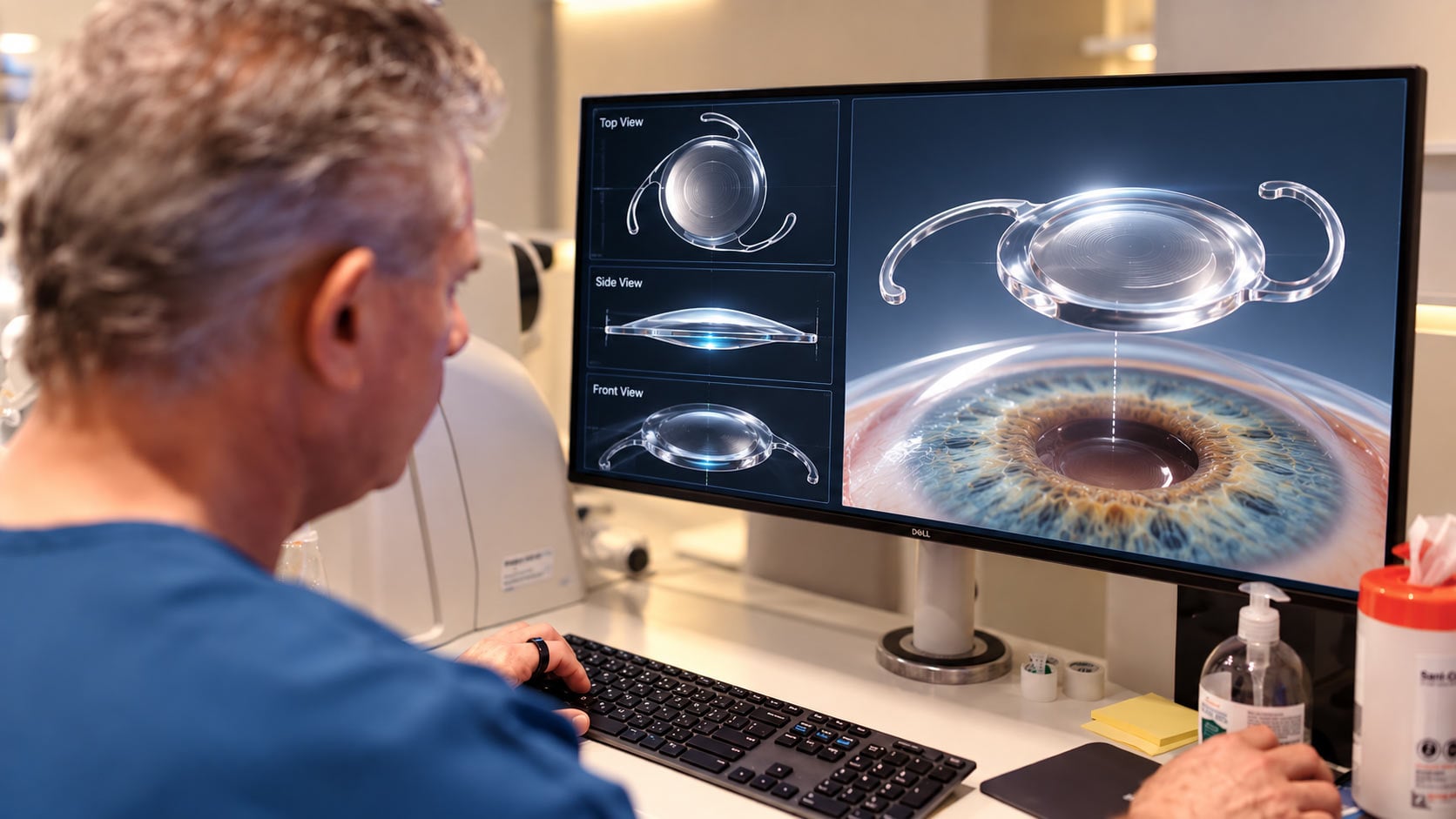
At London Vision Clinic, detailed diagnostic testing forms the foundation of every treatment we perform. Whether a patient is considering LASIK laser eye surgery, another form of laser vision correction or Implantable Collamer Lens surgery, the safest and most effective treatment plan begins with an accurate understanding of the eye.
Our comprehensive assessment process supports every stage of the patient journey, from pre-operative planning through to post-operative care. The time taken to complete your consultation reflects our commitment to achieving the safest and most predictable visual outcome possible.
For patients undergoing ICL surgery, this includes collecting precise measurements of the structures inside the eye to help determine the most appropriate lens size.
Why is accurate ICL sizing so important?
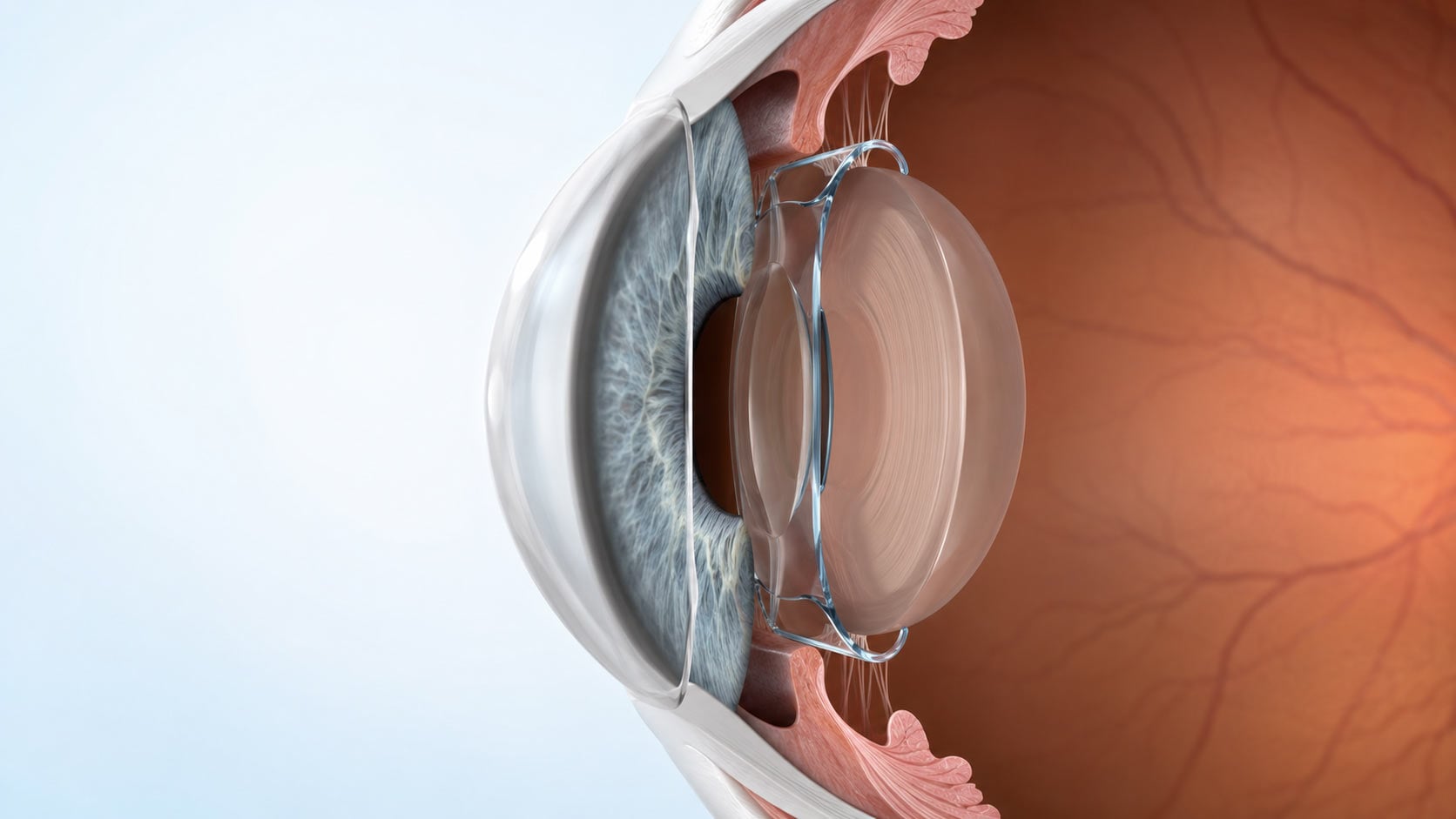
An Implantable Collamer Lens is positioned behind the iris and in front of the eye’s natural crystalline lens. Selecting the correct lens size helps the ICL sit securely within the eye while maintaining an appropriate amount of space between the implanted lens and the natural lens. This space is known as the ICL vault.
If the vault is too low or too high, it can affect the relationship between the ICL and the surrounding structures of the eye. Careful sizing is therefore an important part of reducing the risk of complications and avoiding the need for a subsequent ICL exchange.
Many conventional sizing methods use measurements taken from the front surface of the eye, including the visible white-to-white diameter of the cornea, to estimate the dimensions behind the iris. However, external measurements do not always correspond precisely with the eye’s internal anatomy.
At London Vision Clinic, we use advanced ultrasound imaging to examine and measure the internal space in which the ICL will sit.
How is ICL sizing performed at London Vision Clinic?
It may seem logical that measuring the inside of the eye would provide more useful information for ICL sizing. However, not every eye clinic has access to technology capable of accurately imaging the structures behind the iris.
At London Vision Clinic, our surgeons use the Artemis Insight 100 VHF digital ultrasound scanner. This advanced diagnostic system allows us to examine the anatomy behind the iris and directly measure the area where the ICL will be positioned.
The technology behind the Artemis Insight was developed through pioneering research led by London Vision Clinic founder Professor Dan Reinstein and his colleagues. It provides detailed imaging of structures that cannot be assessed as accurately through conventional surface measurements alone.
What is the difference between external and internal ICL measurements?
External sizing methods generally use measurements such as the horizontal corneal diameter and the depth of the front chamber of the eye. These figures are then used within a sizing formula to estimate the most appropriate ICL.
Very high-frequency ultrasound provides additional information about the internal dimensions and anatomy of the eye, including the area behind the iris. This allows the surgeon to develop a more personalised surgical plan rather than relying solely on estimates derived from the outside of the eye.
No measurement method can remove every surgical risk or predict the final ICL position with absolute certainty. However, combining detailed internal imaging with comprehensive diagnostic testing gives the surgeon more anatomical information on which to base the lens selection.
How can ICL sizing influence safety?
ICL surgery has an established safety profile when patients are carefully selected and treatment is properly planned. Nevertheless, lens sizing remains an important consideration because it can influence the post-operative vault and the way the ICL interacts with the natural structures of the eye.
An unsuitable vault may increase the risk of problems such as pressure changes within the eye, narrowing of the drainage angle, contact with surrounding structures or the need to exchange the implanted lens. Modern ICL design, careful patient selection, accurate sizing and thorough follow-up care all contribute to reducing these risks.
Patients researching ICL surgery should therefore ask how their eyes will be measured, how the lens size will be selected and what post-operative monitoring is included in their care.
Professor Reinstein explains the available ICL sizing methods
ICL surgery can be an excellent option for people with higher prescriptions or for those whose eyes are not ideally suited to corneal laser procedures. Other patients may be better suited to LASIK, SMILE Pro or PRK/LASEK. Your consultation allows our clinical team to compare the available options and recommend the treatment most appropriate for your prescription, eye anatomy and long-term visual needs.
To learn more about correcting your vision, contact our friendly clinic coordinators or book a consultation at London Vision Clinic today.