Implantable Collamer Lens surgery, often known as ICL surgery, can be an excellent option for patients with higher prescriptions or those who may not be suitable for laser eye surgery.
Unlike laser vision correction, ICL surgery does not reshape the cornea. Instead, a specially designed lens is placed inside the eye, behind the iris and in front of the natural crystalline lens. For patients, the result can be life-changing. But behind every successful ICL procedure is one very important question:
How do we choose the right lens size for each individual eye?
Why ICL Lens Sizing Matters
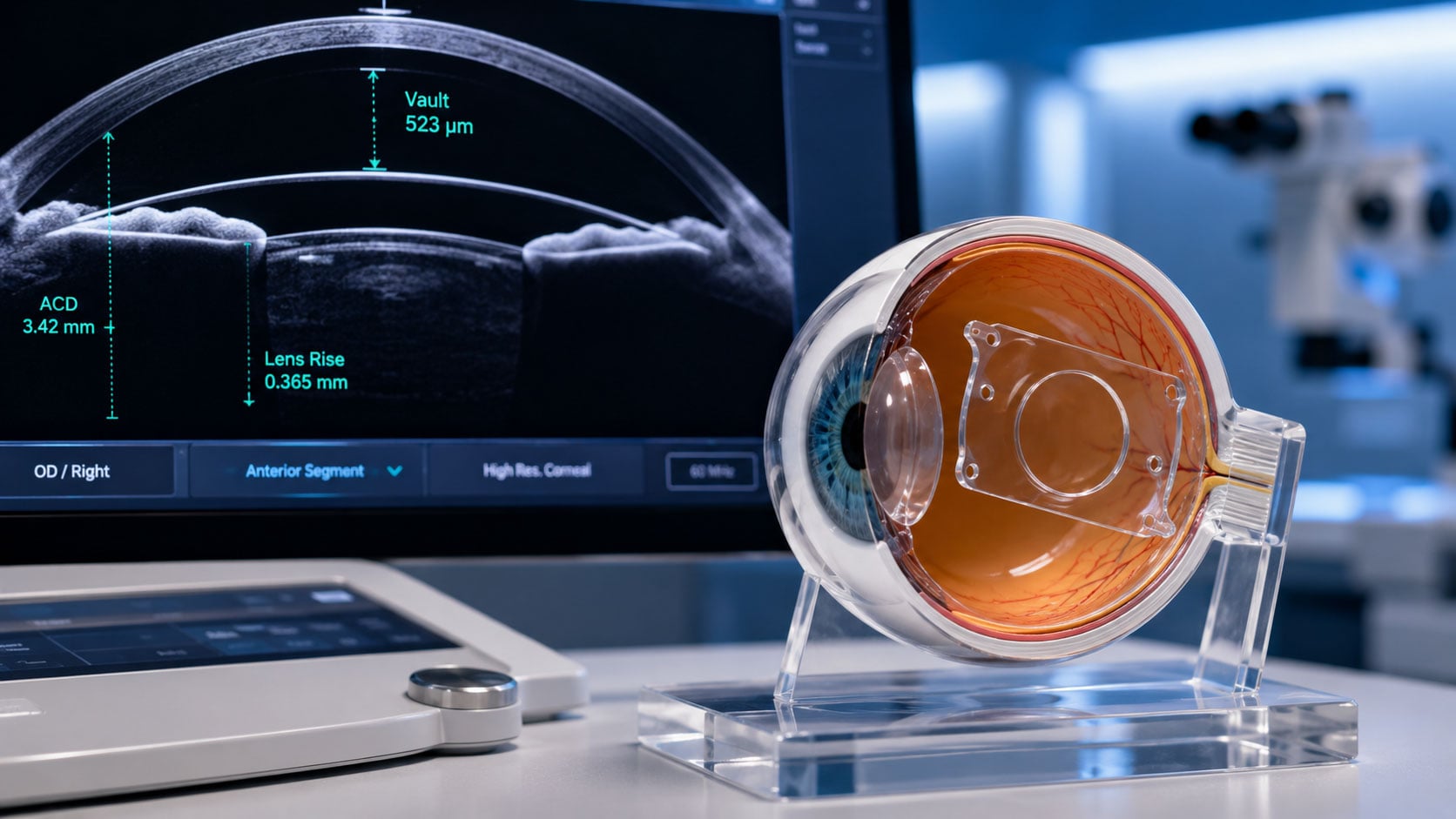
The most important safety factor in ICL surgery is the size of the lens. This determines the space between the ICL and the natural lens inside the eye, known as the vault.
If the vault is too low, the ICL may sit too close to the natural lens. If it is too high, it may create pressure-related issues inside the eye. The aim is to achieve a safe, stable and predictable vault that suits the unique anatomy of each patient. This is why accurate lens sizing is so important.
Every Eye Is Different
Two patients may have similar glasses prescriptions, but the internal anatomy of their eyes can be very different. Traditional ICL sizing methods often relied on external measurements such as white-to-white distance, which measures the visible width of the cornea. While useful, this does not directly measure the internal space where the ICL actually sits.
At London Vision Clinic, our research has shown that more detailed internal measurements can provide a clearer understanding of how the lens will behave inside the eye.
Moving Beyond Traditional Measurements
Historically, many sizing methods used measurements such as sulcus-to-sulcus diameter or white-to-white distance to estimate the correct ICL size. However, these measurements do not always fully explain how the lens will rest once implanted.
In our published research, London Vision Clinic investigated whether more advanced imaging could improve the prediction of postoperative vault and help surgeons choose the most appropriate lens size with greater confidence.
Advanced Ultrasound Imaging
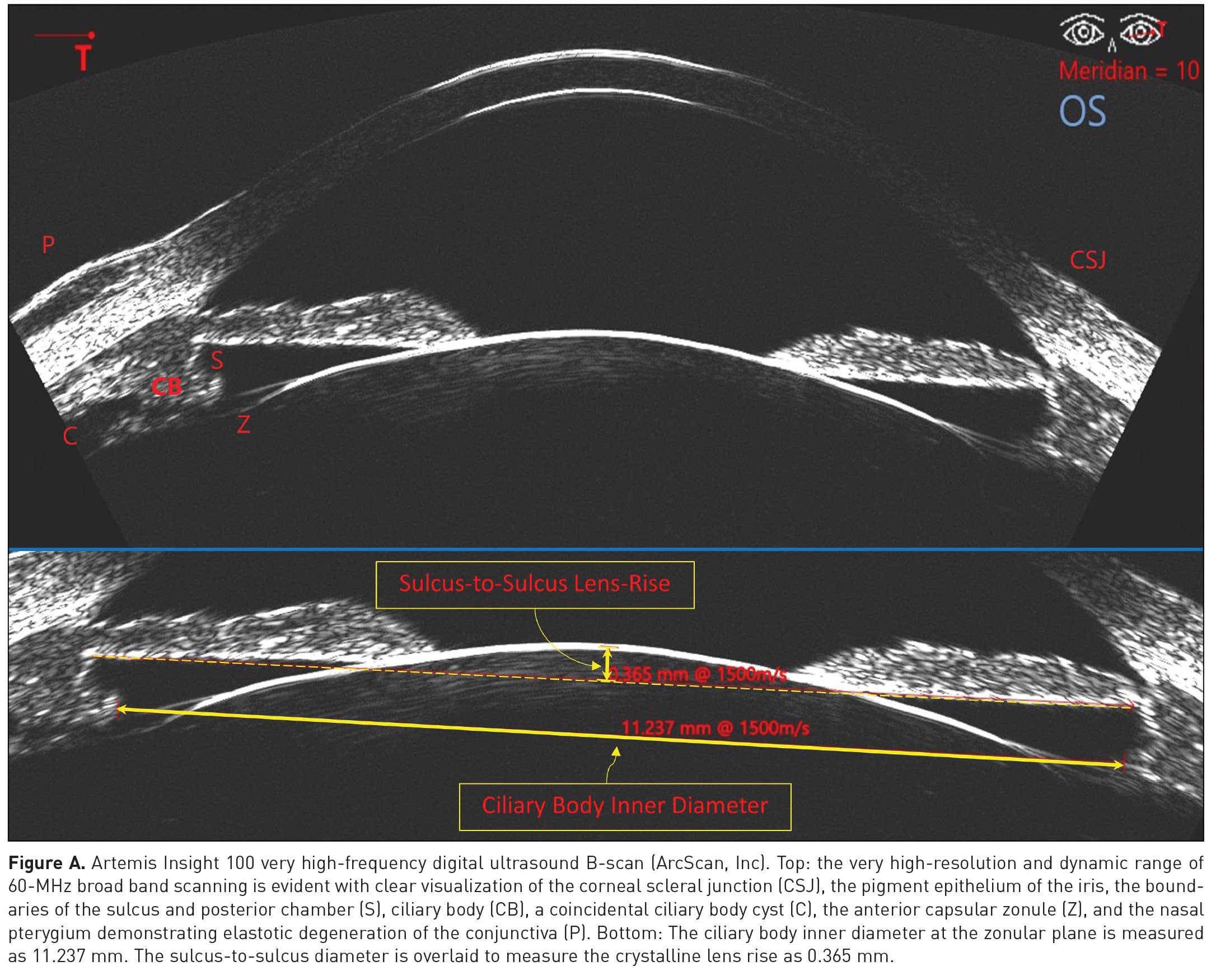
The study used the Artemis Insight 100 very high-frequency digital ultrasound robotic scanner to assess detailed structures inside the eye. This technology allows surgeons to visualise anatomy that cannot be fully assessed from the surface alone, including the posterior chamber, ciliary body, sulcus, crystalline lens position and other internal structures relevant to ICL sizing. By analysing these internal measurements, our research team was able to identify which factors most strongly influence the final position of the ICL after surgery.
What the Research Found
The study identified several important factors that help predict ICL vault more accurately.
- ICL lens size
- ICL lens power
- Ciliary body inner diameter
- Crystalline lens rise from the sulcus plane
- Scotopic pupil diameter
One of the most important findings was that ciliary body inner diameter was more strongly related to postoperative vault than traditional sulcus-to-sulcus measurements.
The research also found that scotopic pupil size, the size of the pupil in low-light conditions, was a significant predictor of vault. This had not previously been included in published ICL sizing formulas.
The Reinstein ICL Sizing Formula
Using these findings, the London Vision Clinic team developed a new model for predicting postoperative vault, known as the Reinstein ICL sizing formula. This formula combines multiple anatomical and optical measurements to help predict how the ICL will sit inside the eye after surgery.
Rather than relying on a single measurement, the formula takes a more personalised approach, considering the internal anatomy of each patient’s eye in greater detail.
Improving Predictability
The research showed a significant improvement in vault predictability using the new model.
Using the Reinstein formula, achieved vault was within:
- ±100 microns of target in 61% of eyes
- ±200 microns of target in 86% of eyes
- ±300 microns of target in 96% of eyes
This improvement is important because better predictability can help reduce the chance of sizing-related issues and support long-term stability after ICL surgery.
Why This Matters for Patient Safety
ICL surgery is highly effective, but precision matters.
The goal is not simply to implant a lens. The goal is to select the lens that best suits the patient’s unique eye anatomy and long-term visual needs. By improving vault prediction, surgeons can reduce the likelihood of choosing a lens that is too small or too large, helping to improve safety, comfort and confidence in the result.
Research That Changes Clinical Practice
This research is a good example of London Vision Clinic’s approach to innovation. We do not simply adopt technology. We study it, measure it, refine it and use the findings to improve patient care. By analysing real clinical outcomes and identifying which measurements truly matter, our team has helped advance the way ICL surgery is planned.
What This Means for Patients
For patients considering ICL surgery, this research reinforces an important message: the quality of the planning is just as important as the procedure itself.
Advanced diagnostics allow the surgeon to understand the eye in far greater detail before surgery. Research-led formulas then help translate those measurements into a more personalised treatment plan. This is especially important for patients with higher prescriptions, where ICL surgery may offer excellent visual quality without removing tissue from the cornea.
Experience Makes the Difference
Technology alone does not deliver the outcome.
The greatest value comes from knowing which measurements matter, how to interpret them and how to use that information to select the safest and most appropriate treatment for each eye. At London Vision Clinic, our ICL planning is supported by advanced imaging, published research and decades of clinical experience in refractive surgery.
A More Personalised Future for ICL Surgery
The future of vision correction is increasingly personalised. Our research shows how detailed imaging and data analysis can improve the precision of ICL lens sizing, helping surgeons better predict how the lens will sit inside the eye. For patients, that means a more tailored approach, improved safety and greater confidence in the long-term stability of their treatment.
ICL surgery is not simply about placing a lens inside the eye. It is about understanding the eye in extraordinary detail and using that knowledge to plan the safest and most effective treatment possible.
Reference
The original peer-reviewed publication is available in the Journal of Refractive Surgery:
Reinstein DZ, Archer TJ, Vida RS, Piparia V, Potter JG. New Sizing Parameters and Model for Predicting Postoperative Vault for the Implantable Collamer Lens Posterior Chamber Phakic Intraocular Lens. Journal of Refractive Surgery. 2022;38(5):272-279.