Despite Laser Eye Surgery having been performed for more than 30 years, many people are understandably intrigued, and sometimes a little apprehensive, about the idea of lasers being used on their eyes. After all, it is natural to have an aversion to lasers, right? But the lasers used in modern Laser Eye Surgery are a far cry from those seen threatening James Bond or flying around in Star Wars films.
So, what kind of lasers are used in Laser Eye Surgery?
The lasers used to correct refractive errors have been developed to deliver extremely precise treatment to the cornea. Different types of laser perform different jobs, from creating a LASIK flap or performing SMILE Pro to reshaping the cornea itself. Let’s take a closer look at some of the world-class laser technology used at London Vision Clinic.
World-Class Laser Technology
Advanced technology has always played an important role at London Vision Clinic. Our surgeons don’t simply train with specialist technology; they have also contributed to its research, development and clinical evaluation. Two of the key laser platforms currently used at London Vision Clinic are the ZEISS MEL 90 excimer laser and the latest-generation ZEISS VISUMAX 800 femtosecond laser.
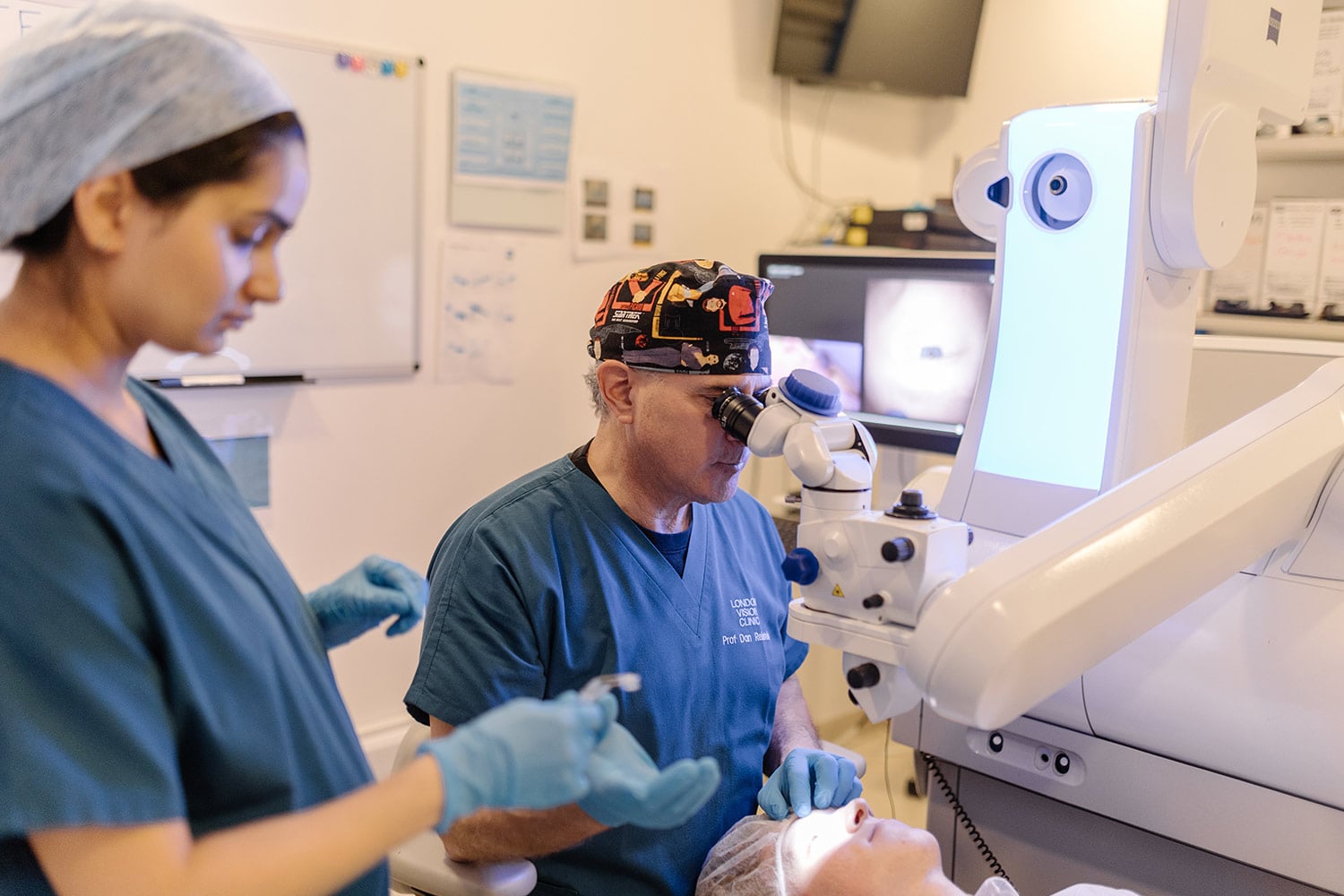
Although both are lasers, they work in very different ways and perform different stages and types of Laser Eye Surgery.
How LVC’s Laser Technology Works
FEMTOSECOND LASER
Used for procedures including SMILE Pro and for creating the corneal flap during LASIK.
EXCIMER LASER
Used to precisely reshape corneal tissue during treatments including LASIK and surface laser procedures.
The ZEISS VISUMAX 800 Femtosecond Laser
Femtosecond laser technology has transformed the way several forms of Laser Eye Surgery are performed. During LASIK, the femtosecond laser creates the precise corneal flap required to access the tissue that will subsequently be reshaped with the excimer laser.
The technology also enables SMILE Pro, where the procedure works differently. Rather than creating a LASIK flap, the femtosecond laser creates a tiny, precisely shaped piece of tissue called a lenticule within the cornea. The surgeon removes the lenticule through a small incision, changing the shape and focusing power of the cornea.
London Vision Clinic now uses the latest-generation ZEISS VISUMAX 800 platform for SMILE Pro. One of the major developments is speed. The VISUMAX 800 can complete the laser stage of SMILE Pro in less than 10 seconds, compared with around 30 seconds with the previous generation. The system also incorporates advanced alignment technology, including CentraLign® and OcuLign®, designed to help surgeons position and align treatment accurately, including compensation for rotational eye movements when treating astigmatism.
London Vision Clinic has also published clinical research evaluating refractive and visual outcomes with the VISUMAX 800 platform.
The ZEISS MEL 90 Excimer Laser
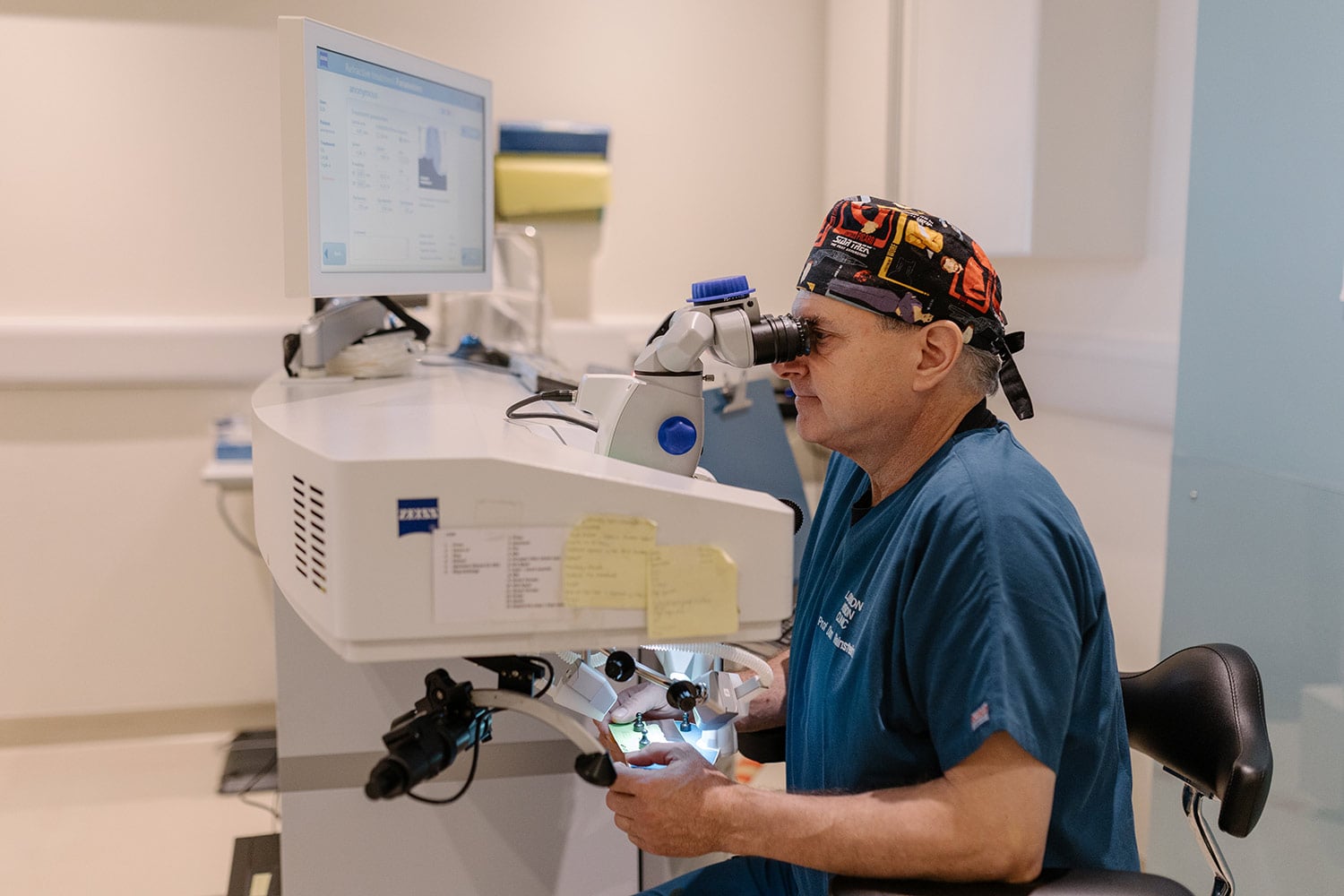
The excimer laser performs a different job. During procedures such as LASIK, it reshapes the cornea by removing microscopic amounts of tissue according to the patient’s planned correction. The MEL 90 uses a 193 nm ultraviolet excimer laser. Rather than cutting or burning the cornea, the laser energy is absorbed by corneal tissue and breaks molecular bonds in a process known as photoablation. That allows extremely small amounts of tissue to be removed in a carefully controlled pattern, altering the curvature of the cornea and therefore how light is focused.
And don’t worry, as Professor Reinstein demonstrates in the supporting video below, the excimer laser isn’t a hot laser in the way many people imagine.
In the video above, Professor Dan Reinstein explains the nature of the excimer laser used during Laser Eye Surgery and demonstrates why it is very different from the powerful, heat-producing lasers many patients initially imagine.
How Precise Is the MEL 90 Laser?
The MEL 90 has a laser beam dimension of approximately 0.7 mm. Rather than treating the entire cornea with one large beam, the system delivers a precisely controlled scanning pattern across the treatment area. The platform also incorporates active eye tracking, helping the laser account for eye position while treatment is being delivered.
Another important feature is its closed-loop energy stabilisation system, designed to maintain consistent laser energy throughout treatment.
London Vision Clinic Has Helped Develop the Technology
One of the things that makes the technology story at London Vision Clinic particularly interesting is that the clinic has not simply adopted developments created elsewhere. Professor Dan Reinstein has worked extensively with Carl Zeiss Meditec and contributed to the development and clinical evaluation of refractive surgery technology, including the MEL 80, MEL 90 and VisuMax platforms. That relationship between engineering, clinical research and everyday surgical experience has helped shape technology now used in refractive surgery internationally.
London Vision Clinic’s research also includes published clinical studies evaluating outcomes with the MEL 90 and, more recently, the VISUMAX 800.
Does Better Technology Automatically Mean Better Laser Eye Surgery?
Technology matters enormously, but it is only one part of successful refractive surgery. The same laser platform can be used differently depending on the patient’s eyes, treatment plan, diagnostic measurements and the experience of the surgical team.
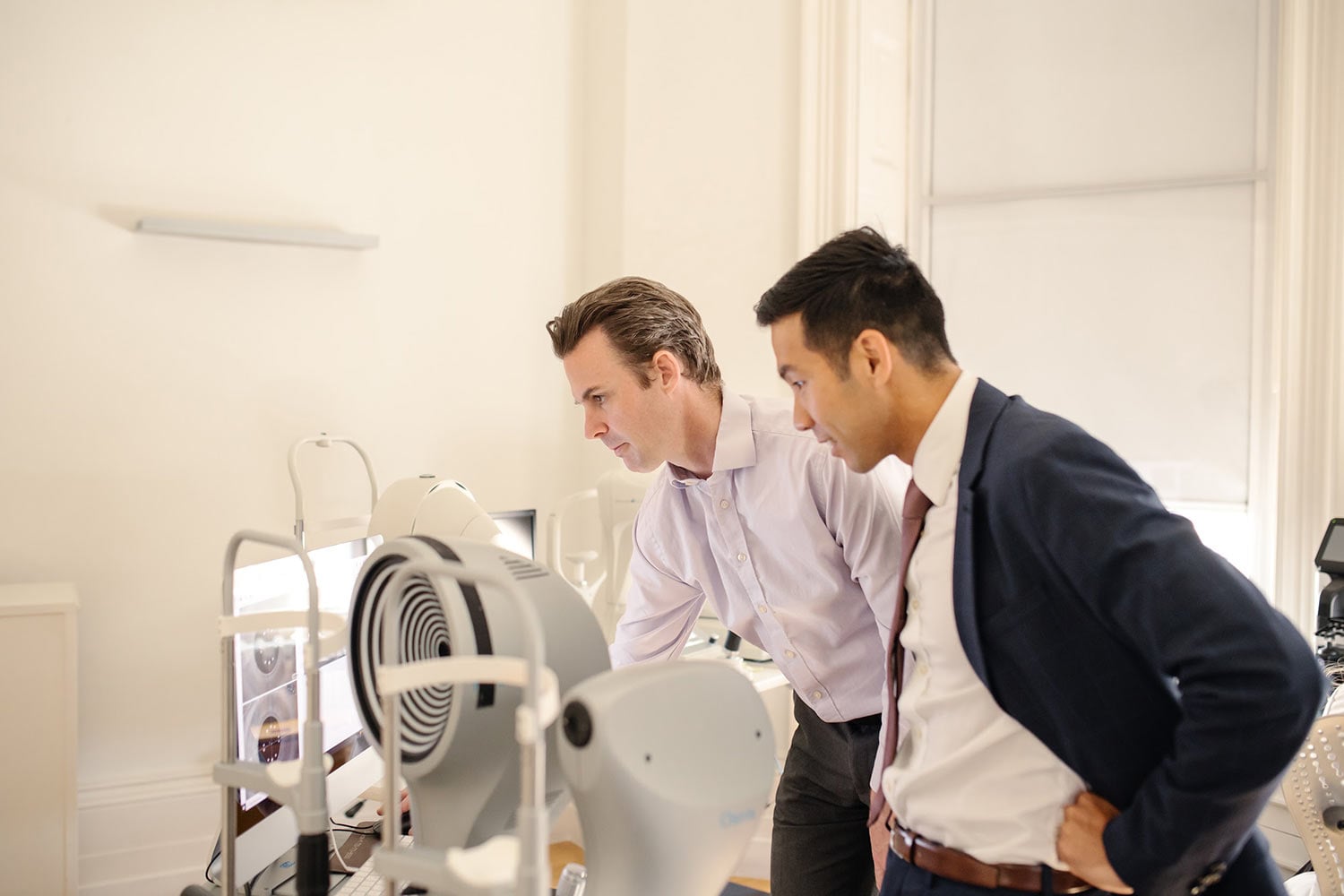
Before treatment, detailed diagnostic technology is used to understand characteristics including corneal shape and thickness, optical aberrations, prescription and other aspects of ocular health. Those measurements help determine not only how an eye should be treated, but whether Laser Eye Surgery is appropriate in the first place.
The laser provides the precision.
The treatment plan determines where that precision is applied.
Laser Eye Surgery Technology Explained Further…
Modern Laser Eye Surgery combines highly specialised laser systems with detailed diagnostics, personalised treatment planning and surgical experience.
At London Vision Clinic, the ZEISS MEL 90 excimer laser and ZEISS VISUMAX 800 femtosecond laser perform different but complementary roles across treatments including LASIK, surface laser procedures and SMILE Pro.
A high-quality laser is extremely important when performing Laser Eye Surgery, but the technology cannot assess your eyes, choose the appropriate treatment or design the surgical plan by itself.
That is why the experience of the surgeon and clinical team remains just as important as the equipment being used.
To learn more about the technology used at our Harley Street clinic, you can explore our Laser Eye Surgery technology or speak with one of our clinic coordinators about arranging a consultation.