The Technology Behind Personalised Vision Correction
Endothelial Cell Count
Using a specular microscope, we examine the density and structure of the endothelial cells located on the inner surface of the cornea. These cells play a vital role in maintaining corneal clarity and are particularly important when assessing suitability for Implantable Collamer Lenses (ICL) and other forms of lens surgery.
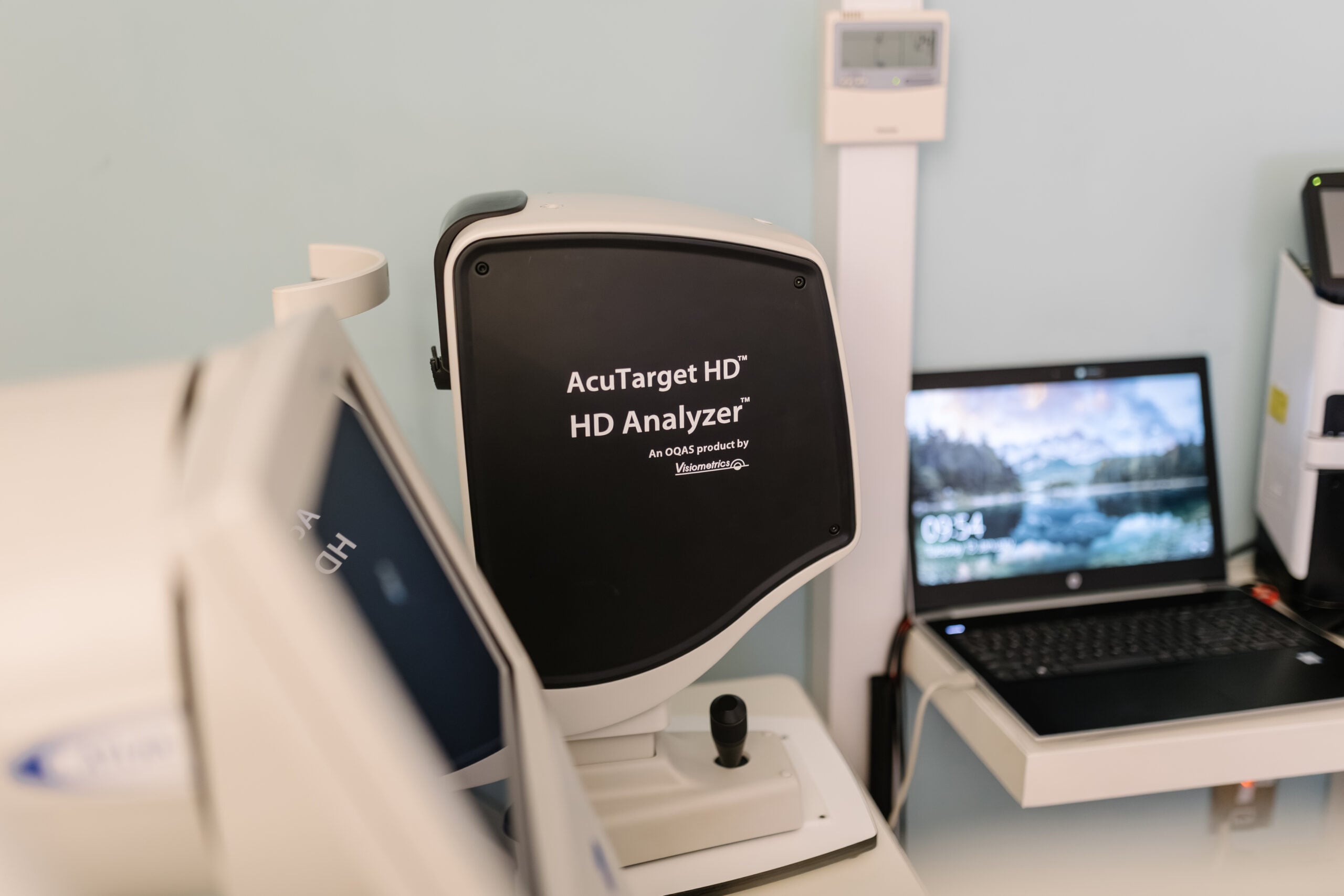
HD Analyser – Optical Quality
The HD Analyser measures how effectively light passes through the eye and focuses on the retina. By assessing light scatter and optical quality, this technology can help identify early cataract formation, supporting decisions about whether Cataract Surgery or another form of vision correction may be more appropriate.
Optical Coherence Tomography (OCT)
OCT uses light to produce detailed cross-sectional images of the retina at the back of the eye. This non-invasive imaging technology helps identify underlying retinal conditions, including macular pucker, macular degeneration and retinal swelling, allowing our clinical team to better understand potential visual outcomes.
Looking Beyond Your Prescription
A successful vision correction treatment begins with understanding the entire eye, not just your prescription. By combining advanced diagnostic technology, clinical expertise and pioneering research, we can build a detailed picture of your individual eye health and recommend a treatment pathway tailored to your needs.
Every Measurement Matters
The more we understand about your eyes before surgery, the better informed our treatment decisions can be. Personalised screening is fundamental to patient safety, treatment suitability and visual outcomes.