Understanding the risks of Laser Eye Surgery is an important part of making an informed decision. It is natural to feel protective of your eyesight and to want clear, honest information before considering an elective procedure.
Modern Laser Eye Surgery is widely performed and has a strong safety record in appropriately selected patients. However, no surgical procedure is completely free from risk.
What Are the Risks of Laser Eye Surgery? Side Effects, Complications and Safety
The key is to distinguish between expected temporary effects, less common complications that may require treatment and rare events that could permanently affect vision. These are not the same thing, although they are often grouped together in alarming online stories.
Risk is personal, not a single universal number
Your prescription, corneal structure, eye-surface health, chosen procedure and individual healing response all influence your risk profile. This is why comprehensive screening is as important as the surgery itself.
Video: What are the risks of Laser Eye Surgery?
In this video, Dr Glenn Carp explains the difference between common short-term side effects and less frequent complications. He also discusses how detailed screening, modern technology and careful patient selection help reduce risk in clinical practice.
The purpose is not to claim that treatment is risk-free. It is to replace uncertainty with a clear and balanced understanding of what may occur, how problems are managed and when a patient should seek advice.
Side effect or complication: what is the difference?
A side effect is an anticipated consequence of treatment that many patients experience to some degree during recovery. A complication is an unexpected problem that may require additional medication, monitoring or surgery.
Expected during early healing
Dryness, variable vision, glare, halos, starbursts, light sensitivity and mild discomfort. These effects commonly improve as the eye heals.
Less common and may need treatment
A remaining prescription, persistent dryness, inflammation, corneal haze or a procedure-specific healing problem. Medication or further treatment may be recommended.
Rare but potentially serious
Significant infection, abnormal corneal weakening, scarring or permanent loss of best-corrected vision. These outcomes are uncommon but must form part of informed consent.
What are the common side effects of Laser Eye Surgery?
Dry or uncomfortable eyes
Temporary dryness is one of the most common effects of Laser Eye Surgery. Patients may experience grittiness, burning, watering or intermittent blur as the tear film and corneal surface recover.
Lubricating eye drops are commonly used to support comfort during healing. Symptoms usually improve over the following weeks or months, although they can persist for longer in a small number of patients.
Existing dry eye, poor tear-film stability, eyelid inflammation and prolonged contact lens wear may affect the likelihood or severity of symptoms. These factors should be assessed before treatment.
Glare, halos and starbursts
Light may scatter differently while the cornea heals, producing halos, starbursts, glare or ghost images around light sources. These effects are often more noticeable at night, particularly around car headlights.
Night driving may be more difficult during the early recovery period. Modern treatment planning has reduced the incidence and severity of lasting night-vision problems, but persistent symptoms remain possible.
Fluctuating or blurred vision
Vision does not always remain perfectly consistent throughout the initial healing period. It can vary between mornings and evenings or become temporarily blurred when the eyes are dry.
Recovery speed also differs between procedures. LASIK typically provides faster initial vision, while PRK and LASEK require the corneal surface to regenerate and can take longer to stabilise.
Light sensitivity and redness
Temporary light sensitivity can occur after any form of Laser Eye Surgery. Some patients also develop red patches on the white of the eye, particularly following LASIK.
These patches are called subconjunctival haemorrhages. Although they can look dramatic, they do not normally affect vision or eye health and gradually disappear.
What complications can occur?
Under-correction, over-correction or prescription change
The eye may heal slightly differently from the predicted treatment response. This can leave a small amount of short-sightedness, long-sightedness or astigmatism.
Some patients can function comfortably without further treatment. Others may benefit from glasses for specific activities or an enhancement procedure once the prescription has stabilised.
Infection
Infection after Laser Eye Surgery is uncommon, but it can affect the cornea and must be treated promptly. Prescribed antibiotic drops, careful hygiene and attendance at follow-up appointments all help reduce this risk.
Increasing pain, redness, light sensitivity or deteriorating vision should always be reported to the clinical team without delay.
Inflammation
A controlled inflammatory response is a normal part of healing, but excessive or unusual inflammation may require additional treatment. Steroid or other medicated eye drops may be adjusted according to the eye’s response.
Corneal haze
Corneal haze is an abnormal healing response that can occur after surface treatments such as PRK or LASEK. Modern treatment protocols have reduced this risk, and many cases can be managed successfully, but significant haze can affect visual quality.
Corneal ectasia
Corneal ectasia is a rare complication in which the cornea progressively weakens and changes shape. It can cause increasing short-sightedness, irregular astigmatism and reduced visual quality.
The risk is reduced by identifying unsuitable or borderline corneal characteristics before surgery. If ectasia develops, treatments such as specialist contact lenses or corneal cross-linking may be considered. More advanced cases can require further intervention.
Loss of best-corrected vision
Safety is not measured only by whether a patient needs glasses after surgery. Clinicians also assess whether the patient can still achieve the same quality of vision with glasses that they achieved before treatment.
If someone could previously read the 20/16 line on an eye chart with glasses but could only reach 20/25 afterwards, this would represent a reduction in best-corrected visual acuity.
Permanent serious loss of vision is rare. Current guidance from the Royal College of Ophthalmologists states that fewer than 1 in 5,000 patients require a corneal transplant to restore vision after Laser Eye Surgery. Even when transplantation is necessary, useful vision can normally be restored, although glasses or contact lenses may still be required.
Could further surgery be required?
Yes. The Royal College of Ophthalmologists advises that up to 1 in 10 patients may require some form of additional surgery to achieve the best result.
This figure should not be mistaken for a serious-complication rate. It includes a wide range of further procedures, such as:
- A laser enhancement to refine a remaining prescription
- Repositioning or smoothing a LASIK flap
- Treating epithelial cells beneath a flap
- Managing an unusual healing response
- Repeating a procedure when the original treatment could not be completed
The likelihood of additional treatment varies with prescription, procedure, age and individual healing response. Your surgeon should explain the risks most relevant to your eyes before you consent to surgery.
Do LASIK, SMILE Pro and PRK/LASEK have the same risks?
The procedures share some possible effects, including dryness, fluctuating vision and night-vision disturbances. However, their surgical approaches produce different risk and recovery profiles.
LASIK
LASIK usually offers rapid recovery but introduces considerations associated with creating and healing a corneal flap.
SMILE Pro
SMILE Pro avoids a large flap but can still involve inflammation, residual prescription and other healing-related complications.
Surface treatment
PRK and LASEK avoid a flap but involve longer epithelial healing, greater early discomfort and a procedure-specific risk of corneal haze.
No procedure is automatically the safest for every patient. The safest treatment is the one best matched to the patient’s prescription, corneal anatomy, eye health and lifestyle.
Why do risks differ between patients?
Factors that may influence risk include:
- A high or unstable prescription
- A thin, irregular or structurally vulnerable cornea
- Existing dry eye or eyelid inflammation
- Previous eye surgery or injury
- Corneal conditions such as keratoconus
- Diabetes, autoimmune conditions or medications that affect healing
- Pregnancy or breastfeeding
- Large pupils or demanding night-vision requirements
- Contact sports and occupations with a greater possibility of eye impact
This is why the experiences of friends or online reviewers cannot predict an individual patient’s outcome. Your personal risk can only be estimated after a comprehensive suitability assessment.
How does London Vision Clinic reduce risk?
Detailed screening
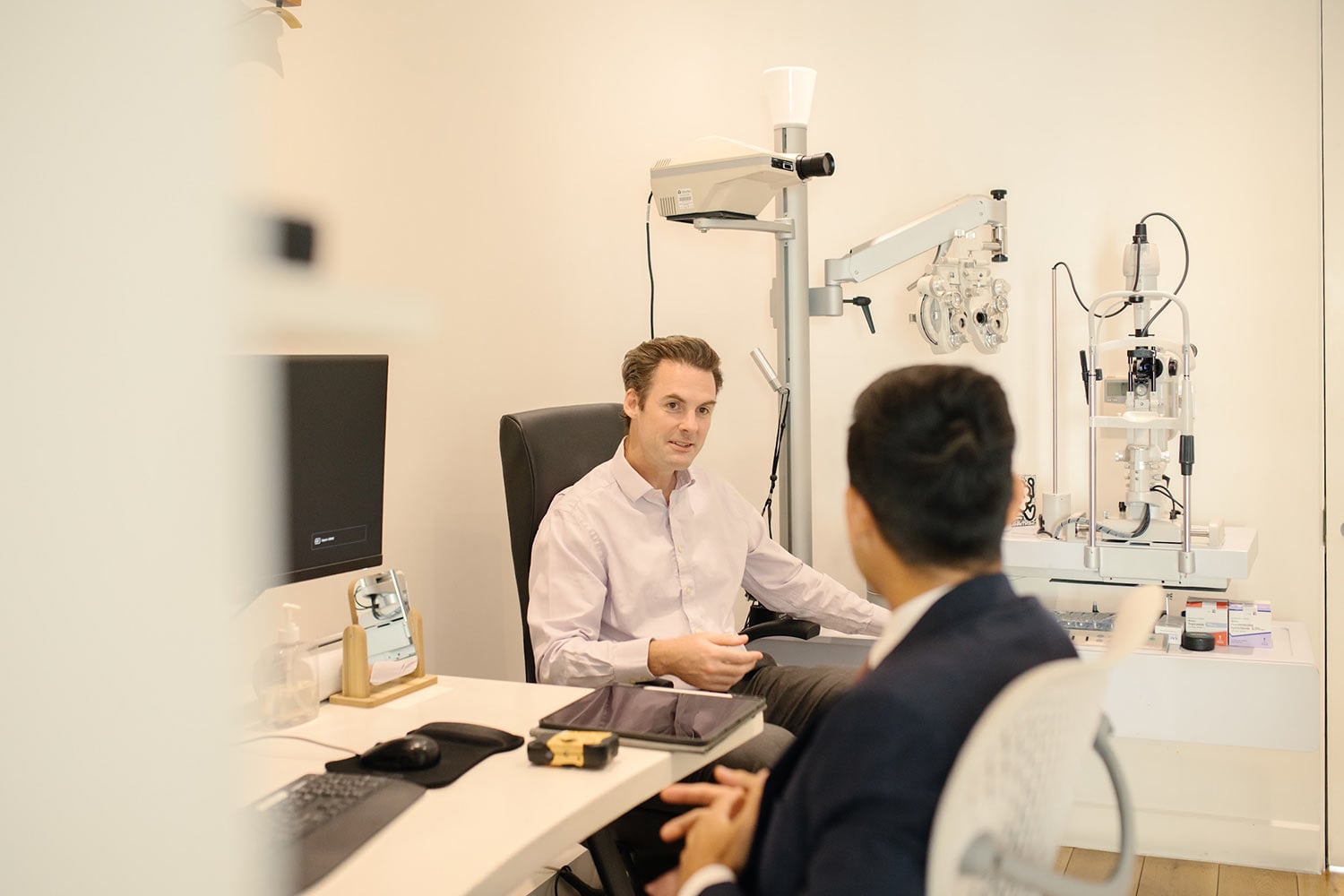
The consultation examines more than visual prescription. Corneal thickness, curvature, epithelial distribution, optical quality, tear-film stability and the health of the internal eye can all influence treatment planning.
Choosing the appropriate procedure
A patient should not be directed towards a particular technique simply because it is popular. The surgeon must determine whether LASIK, SMILE Pro, surface treatment or a non-laser alternative offers the most appropriate balance of benefits and risks.
Advanced diagnostic and treatment technology
Detailed imaging and optical measurements help identify characteristics that may increase risk. Modern laser and diagnostic technology also supports accurate treatment delivery and personalised planning.
Structured aftercare
Recovery does not end when the patient leaves the operating room. Post-operative reviews allow the clinical team to monitor healing, manage side effects and identify complications at an early stage.
London Vision Clinic provides ongoing aftercare and clinical support throughout the recovery period and beyond.
How can patients help reduce the risks?
- Provide a complete and accurate medical history
- Tell the clinical team about every medication and supplement you use
- Follow contact lens removal instructions before your assessment
- Use antibiotic, anti-inflammatory and lubricating drops as prescribed
- Avoid rubbing or pressing on the eyes
- Follow the restrictions concerning water, make-up, exercise and contact sports
- Attend every scheduled review, even if the eyes feel comfortable
- Contact the clinic promptly if symptoms worsen unexpectedly
When should you contact your surgeon urgently?
Do not wait for your next routine appointment if you experience:
- Increasing or severe eye pain
- Vision that is becoming worse rather than improving
- Increasing redness
- Marked light sensitivity
- Discharge from the eye
- An eye injury followed by pain, watering or blurred vision
- Any symptom that causes significant concern
Some post-operative problems require treatment before the patient is aware that anything is wrong. Follow-up appointments remain essential even when recovery appears to be progressing normally.
Is Laser Eye Surgery safe?
For appropriately selected patients treated by an experienced clinical team, Laser Eye Surgery has a well-established safety profile. Most patients experience temporary effects rather than serious complications, and many problems that do occur can be managed with medication or additional treatment.
That does not make the risk zero. A responsible clinic should explain the potential benefits, limitations, alternatives and complications without relying on reassurance alone.
You should also be given information that relates specifically to your prescription and eye health, together with enough time to decide whether the expected benefits justify the risks for you.
London Vision Clinic publishes its results and clinical outcomes to help patients evaluate treatment using meaningful evidence rather than general promises.
Understand your personal risks before deciding
A comprehensive assessment can determine whether Laser Eye Surgery is appropriate and explain the risks and likely benefits for your individual eyes.
Speak to one of our clinic coordinators or book a consultation at our Harley Street clinic.