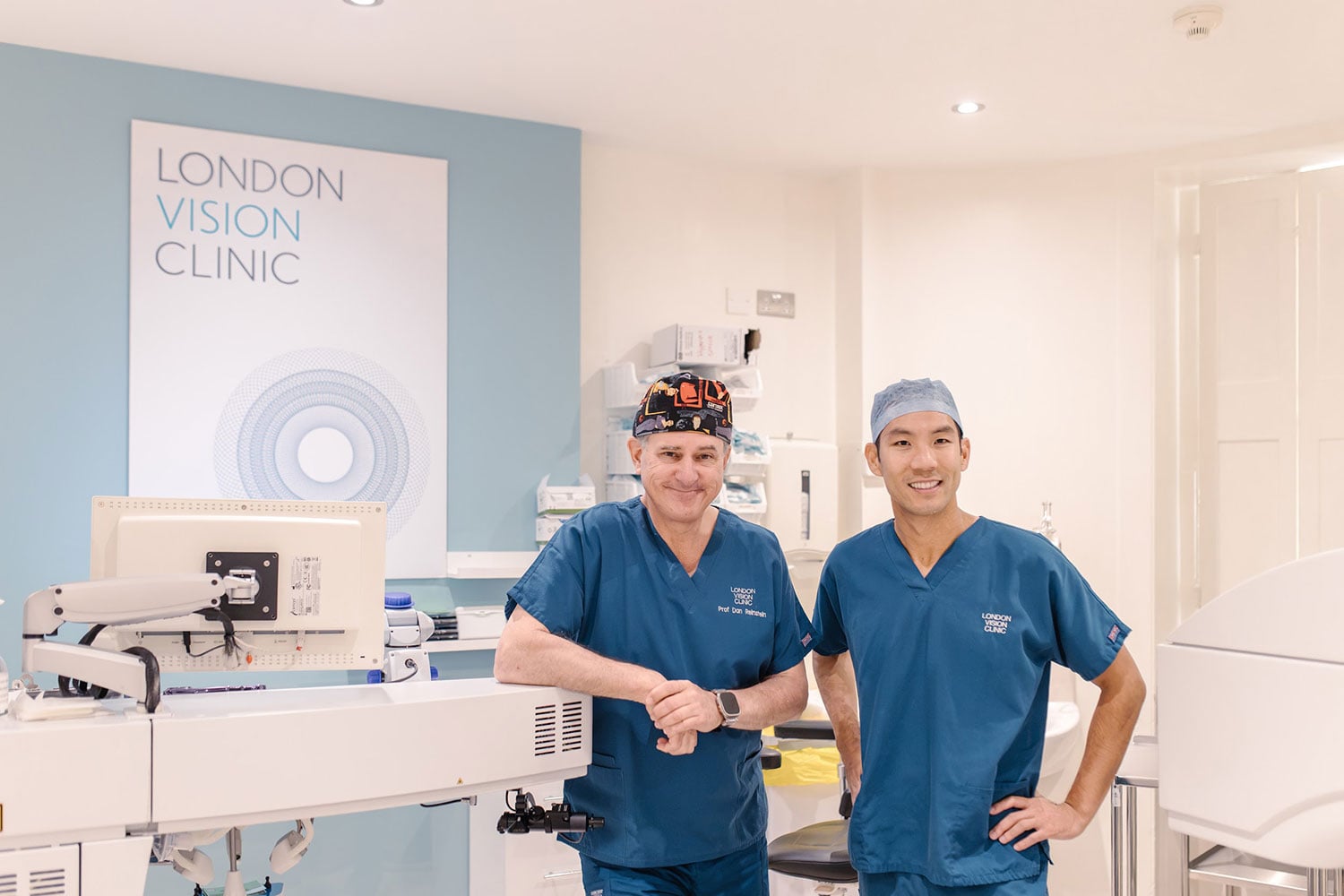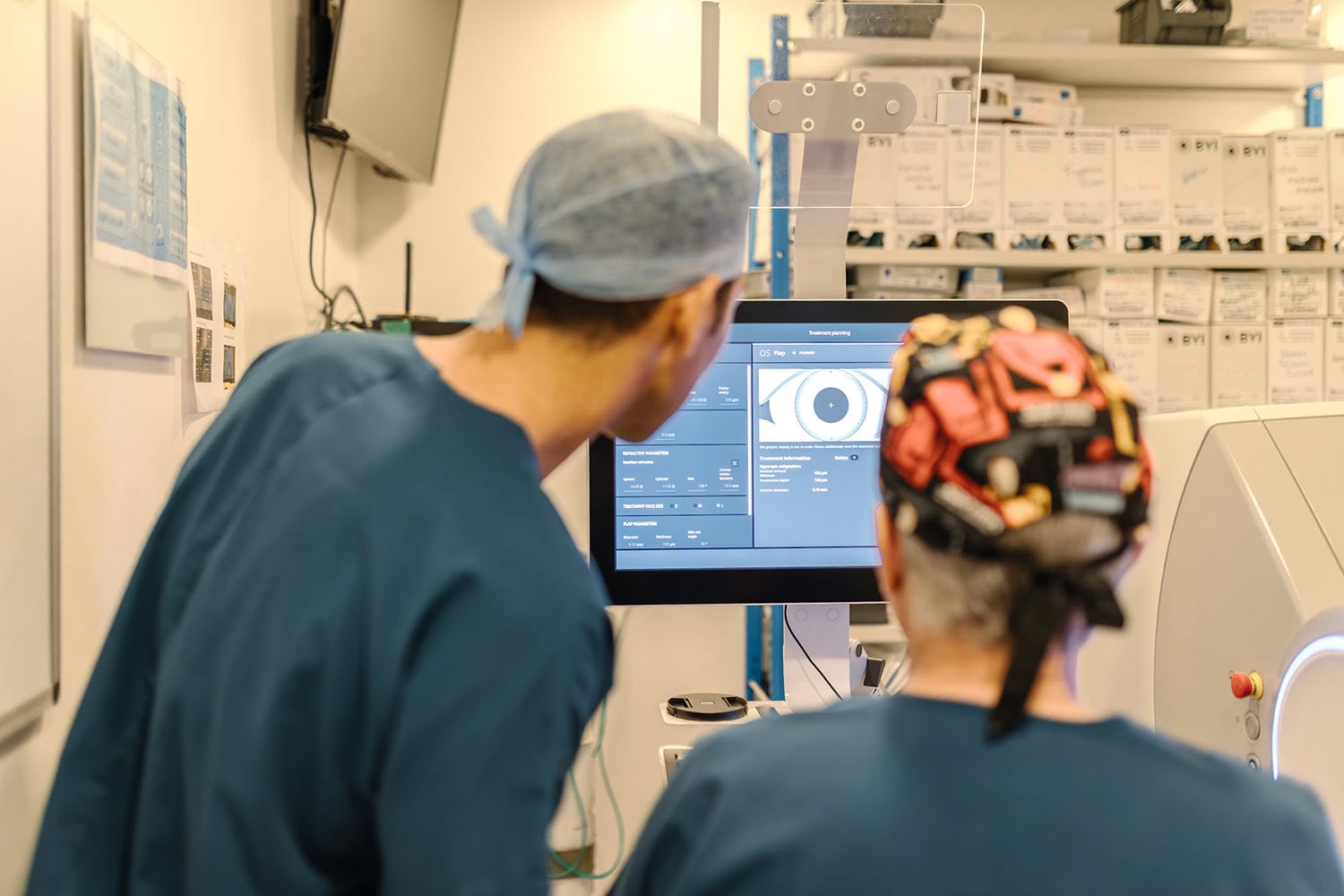
Being told you’re unsuitable for laser eye surgery can be disappointing, particularly when you’ve spent years relying on glasses or contact lenses. For some patients, the reason comes down to something they’ve probably never considered before: the thickness of their corneas. Because laser vision correction involves reshaping the clear front surface of the eye, there must be enough healthy corneal tissue to perform the procedure safely. Having thin corneas doesn’t automatically mean laser eye surgery is impossible, but it does mean a more detailed assessment is essential. At London Vision Clinic, understanding the structure and health of the cornea is an important part of determining which treatments, if any, may be suitable.
Why Does Corneal Thickness Matter for Laser Eye Surgery?
The cornea is the transparent, dome-shaped surface at the front of the eye that helps focus incoming light onto the retina. Laser eye surgery corrects refractive errors such as short-sightedness, long-sightedness and astigmatism by changing its curvature. Procedures such as LASIK and PRK achieve this by removing carefully calculated amounts of corneal tissue, while SMILE removes a small lenticule from within the cornea. The amount of tissue involved depends on several factors, including the patient’s prescription, corneal shape and the treatment being considered. Understanding the suitability differences between LASIK, LASEK/PRK and other laser procedures can help patients appreciate why one approach may be recommended over another.
In LASIK, a thin flap is created before the underlying cornea is reshaped. Surgeons must consider both the thickness of this flap and the amount of tissue removed, ensuring that sufficient structural tissue remains. Removing too much tissue, or treating a cornea that is already structurally vulnerable, can increase the risk of complications such as post-operative corneal ectasia, a condition in which the cornea progressively weakens and changes shape. This is why a simple measurement of corneal thickness cannot, on its own, determine whether someone is suitable for surgery.
Watch Mr Glenn Carp Explain Why Thin Corneas Can Affect Suitability
In this video, Mr Glenn Carp of London Vision Clinic explains why patients with thinner corneas may not have sufficient tissue for the reshaping required to correct their prescription. His explanation highlights one of the fundamental principles of laser vision correction: the aim is not simply to improve eyesight, but to achieve the intended correction while preserving the health and structural integrity of the cornea. For patients who have previously been advised against surgery, understanding this distinction is an important starting point.
How Do Surgeons Assess Thin Corneas?
Corneal thickness is measured in microns, with the average central cornea measuring approximately 540 to 550 microns, although healthy corneas naturally vary in thickness. A measurement below the average doesn’t necessarily indicate disease, just as a thicker cornea doesn’t automatically make someone suitable for surgery. What matters is how that measurement relates to the overall structure of the eye, the prescription being corrected and the amount of tissue that would remain after treatment. This is why comprehensive pre-operative screening plays such an important role in identifying suitable candidates.
Modern diagnostic examinations allow surgeons to investigate the cornea in considerably greater detail than a single thickness measurement. Corneal tomography examines its three-dimensional shape and thickness distribution, while epithelial thickness mapping helps reveal variations in the thin outer layer of the cornea. These measurements can be particularly valuable when investigating subtle abnormalities associated with keratoconus, where the cornea becomes progressively thinner and more irregular. By combining several forms of imaging, surgeons can build a more complete picture of corneal health before recommending treatment.
Why Advanced Corneal Mapping Can Make a Difference
One of the challenges in refractive surgery is that the surface of the cornea doesn’t always reveal everything happening beneath it. The epithelium, the thin outermost layer, can change its thickness to compensate for irregularities in the underlying corneal tissue. This means that some early structural changes may be less obvious when examining corneal shape alone. Understanding how the epithelium and underlying stroma interact has therefore become an important area of research in identifying patients who may be at greater risk of complications. Patients interested in the assessment process can also explore the diagnostic tests used before laser eye surgery.
London Vision Clinic has contributed to this field through research involving very high-frequency ultrasound and epithelial thickness mapping. A 2015 study involving Professor Dan Reinstein and colleagues investigated how epithelial thickness analysis could help detect keratoconus in eyes that appeared normal using conventional topographic assessments. Further research published in 2017 explored the combined use of corneal tomography and epithelial thickness mapping in diagnosing keratoconus. These studies illustrate why examining different layers and characteristics of the cornea can provide information that may not be apparent from a conventional eye examination alone.
For patients with thin corneas, this additional information can help clinicians distinguish between a naturally thin but otherwise healthy cornea and one showing signs of structural weakness. It doesn’t mean advanced technology can make every patient suitable for surgery, but it can support a more informed and individual assessment. You can explore these and other peer-reviewed studies in our scientific publications and research library.
Could PRK or LASEK Be an Alternative to LASIK?
When LASIK isn’t considered appropriate because of corneal thickness, a surface laser procedure such as PRK or LASEK may sometimes be an alternative. Unlike LASIK, these treatments do not involve creating a corneal flap. Instead, the surface epithelium is removed or displaced so that the laser can reshape the underlying tissue. Avoiding flap creation may preserve more of the cornea’s structural tissue, which can make surface treatment worth considering in carefully selected patients.
However, PRK and LASEK still remove corneal tissue, so they are not automatically safe for everyone with thin corneas. The prescription, corneal shape, remaining tissue thickness and any signs of ectasia risk must all be assessed before treatment is recommended. Recovery is also different from LASIK, with greater discomfort during the early healing period and a more gradual improvement in vision for many patients. Your surgeon will explain whether surface laser treatment is appropriate and how its potential benefits and limitations compare with other procedures.
What If Laser Eye Surgery Isn’t Suitable?
Sometimes the safest recommendation is not to proceed with corneal laser surgery at all. This can be disappointing, but it doesn’t necessarily mean that surgical vision correction is completely out of reach. For some patients, Implantable Collamer Lens (ICL) surgery may provide an alternative because it corrects vision using a lens placed inside the eye rather than removing corneal tissue. Suitability depends on factors such as age, prescription, anterior chamber anatomy and overall eye health, and the procedure carries its own risks and considerations.
For patients with age-related changes to the natural lens, lens replacement surgery may also be discussed where clinically appropriate. The important point is that different procedures address different visual needs, and no single treatment is suitable for everyone. At London Vision Clinic, the purpose of a comprehensive consultation is to establish which options offer an appropriate balance of visual benefit and safety for your individual eyes.
Can You Get a Second Opinion After Being Told You’re Unsuitable?
If another clinic has advised that your corneas are too thin for laser eye surgery, seeking a second opinion from an experienced refractive surgeon may help you understand the reasons behind that decision. Different clinics may have access to different diagnostic equipment, surgical techniques and treatment options, but a second assessment should never be viewed as a guarantee that surgery will become possible. In some cases, further testing may identify an appropriate alternative. In others, it may confirm that avoiding laser treatment is the safest course of action.
At London Vision Clinic, our approach is built around detailed diagnostic assessment, individual treatment planning and research-informed clinical decisions. If you’ve previously been told that thin corneas prevent you from having laser eye surgery, our team can discuss your circumstances and explain what further investigations may be appropriate. The most important outcome of any consultation is an informed decision about your eye health, whether that leads to treatment or not.
Frequently Asked Questions About Thin Corneas
Corneal thickness is just one of several factors that determine whether laser eye surgery is suitable. Here are some of the questions patients commonly ask when exploring their treatment options.
What is considered too thin for LASIK?
There is no single corneal thickness measurement that determines suitability for every patient. Surgeons consider the thickness and shape of the cornea, the prescription being treated, the planned flap thickness and how much structural tissue would remain after surgery. A cornea that is suitable for one prescription may not be suitable for another, even when the initial thickness measurements are similar.
Can you have laser eye surgery with corneas thinner than 500 microns?
Some patients with corneas measuring below 500 microns may be considered for particular laser procedures, but this depends on their individual examination findings. Corneal shape, epithelial thickness, prescription and estimated tissue removal all influence the decision. A measurement below 500 microns should prompt careful assessment rather than an automatic assumption that surgery is either safe or impossible.
Is PRK safer than LASIK for thin corneas?
PRK avoids creating the corneal flap required for LASIK, which can make it an appropriate option for some patients with thinner corneas. However, PRK still removes corneal tissue and carries risks, including corneal haze and ectasia in susceptible eyes. Whether it offers a more suitable approach depends on the patient’s complete diagnostic assessment.
Can thin corneas become thicker naturally?
Corneal thickness varies between individuals and can change temporarily because of hydration, swelling or certain eye conditions. However, a naturally thin cornea does not generally become permanently thicker through exercises, supplements or lifestyle changes. If thin corneas are preventing laser eye surgery, the appropriate next step is a detailed clinical assessment to understand their structure and whether an alternative treatment may be suitable.
✓
Reviewed and Updated for 2026
This article has been updated with additional information on corneal thickness, advanced diagnostic screening, laser eye surgery suitability and alternative vision correction treatments, with references to published clinical research.