If you have done some research into Laser Eye Surgery, you are probably aware that modern procedures have an excellent safety record and are suitable for a wide range of patients. However, there are times when Laser Eye Surgery may need to be postponed or may not be the right option. If you’ve been considering Laser Eye Surgery for a while but have recently had a baby, found out that you are pregnant, or are planning on having a baby, you might be wondering whether you will need to change your treatment plans.
The London Vision Clinic team, takes a closer look at how pregnancy and breastfeeding may affect your suitability for Laser Eye Surgery – and why.
Will Pregnancy Make Me Unsuitable for Laser Eye Surgery?
If you are pregnant, Laser Eye Surgery will normally be postponed until after pregnancy and your vision has returned to a stable level. That doesn’t mean pregnancy has been proven to make Laser Eye Surgery inherently dangerous. Rather, pregnancy introduces several temporary changes that can make elective refractive surgery less predictable and therefore make it sensible to wait.
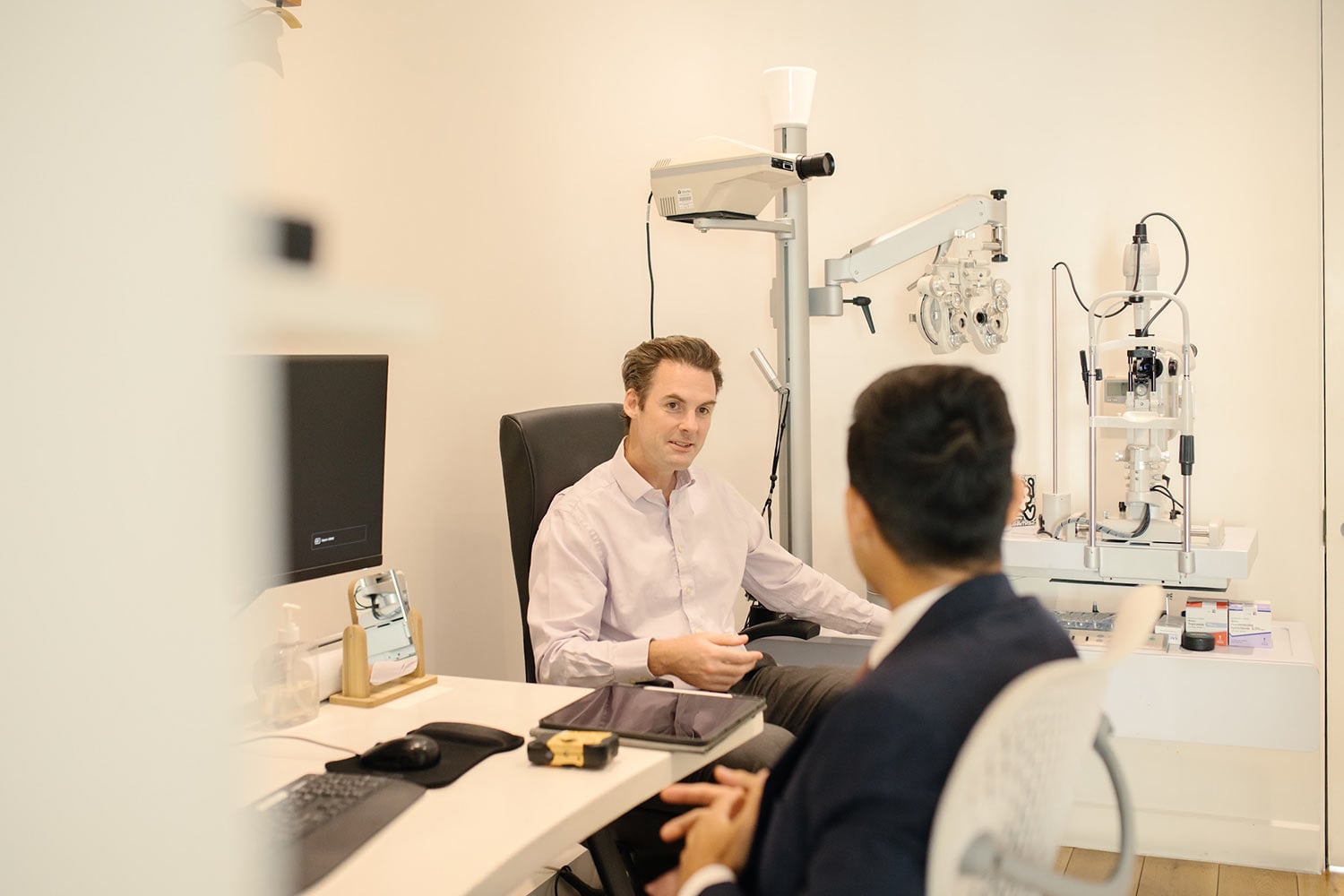
As our expert Laser Eye Surgeon, Dr Glenn Carp, explains in the video below, pregnancy and breastfeeding are important considerations when assessing suitability for Laser Eye Surgery.
Hormonal changes associated with pregnancy can temporarily affect the cornea, tear film and sometimes your prescription. For a procedure designed around extremely precise measurements of the eye, it makes sense to perform treatment when those measurements are stable.
How Does Pregnancy Affect My Vision?
During pregnancy, the body undergoes numerous hormonal and physical changes. While most people expect changes such as fatigue and morning sickness, it can be surprising to learn that pregnancy may also affect the eyes and vision.
Fluctuating Prescription
Some women experience blurred or changing vision during pregnancy. For someone who already has a refractive error, it can sometimes feel as though their glasses or contact lens prescription has changed. Pregnancy-related hormonal and fluid changes can affect the cornea and other structures within the eye. Studies have reported changes in corneal thickness and curvature during pregnancy, although the extent of refractive change varies considerably between individuals.
Some people notice very little difference, while others experience a temporary change in their prescription.
Laser Eye Surgery is planned around precise measurements of your prescription and cornea. If those measurements are temporarily changing, it is better to wait until your eyes have stabilised before planning permanent vision correction.
For that reason, Laser Eye Surgery is generally postponed during pregnancy and breastfeeding, with suitability reassessed once hormonal changes have settled and the prescription is stable.
Age can also affect prescription stability. Laser Eye Surgery is not performed on people under the age of 18, and younger patients also need to demonstrate that their prescription has reached an appropriate level of stability before treatment is considered.
Dry Eyes
Hormonal changes during pregnancy can also affect the tear film – the protective layer of fluid covering the surface of the eye. Some pregnant and breastfeeding women experience increased dryness, irritation or a gritty sensation. Contact lenses may consequently become less comfortable to wear.
Dry eye is also an important consideration when planning Laser Eye Surgery because temporary dry-eye symptoms can occur during recovery following some procedures. Prospective patients therefore undergo detailed assessment of the ocular surface during their screening appointments. Any significant dry eye should be identified and managed before treatment is considered.
Pregnancy, Breastfeeding and Laser Eye Surgery: Why Wait?
There isn’t just one reason why refractive surgery is normally postponed. Several temporary factors can overlap.
Vision may temporarily fluctuate during pregnancy.
Hormonal changes may affect corneal thickness or curvature.
The tear film and contact lens tolerance can change.
A cautious approach is appropriate with medicines during pregnancy and breastfeeding.
Laser Eye Surgery Medications and Pregnancy
Medication is another reason why elective Laser Eye Surgery is normally postponed during pregnancy.
Eye drops are used around refractive surgery, including anaesthetic drops during treatment and postoperative medication such as antibiotics and anti-inflammatory drops. Although these medications are applied to the eye, small amounts of some topical ophthalmic medicines can be absorbed systemically.
As Dr Glenn Carp explains in the video, the approach at London Vision Clinic is therefore deliberately cautious:
“While these topical antibiotic drugs are not known to have a negative effect on the unborn child, we tend to remain cautious. We tend to avoid performing Laser Eye Surgery when women are pregnant especially if they are within the first trimester of pregnancy.”
Because Laser Eye Surgery is elective, there is generally no clinical reason to introduce an avoidable uncertainty when treatment can simply be postponed.
What About Laser Eye Surgery While Breastfeeding?
Breastfeeding is slightly more nuanced. Research into refractive surgery during lactation is limited, and some published studies have reported good outcomes in breastfeeding patients. However, hormonal changes associated with pregnancy and lactation may persist for a period after childbirth and can continue to affect the cornea, tear film or prescription in some people.
For an elective procedure where accurate refractive measurements are fundamental to the result, the cautious approach is to wait until breastfeeding has finished and vision has returned to a stable baseline before proceeding.
How Long Should I Wait After Pregnancy?
There isn’t one universal date that makes every patient suitable. What matters most is that pregnancy and breastfeeding-related changes have settled and your prescription and eye measurements are stable.
Pregnancy → Birth → Breastfeeding → Hormones Settle → Vision Stabilises → Reassessment
Rather than treating a particular number of weeks or months as an automatic green light, your surgeon needs to confirm that your prescription and ocular measurements are sufficiently stable for accurate treatment planning.
Some clinical recommendations suggest waiting several months after pregnancy and breastfeeding, but the appropriate timing should ultimately be determined from your individual measurements and circumstances.
What If I Become Pregnant After Laser Eye Surgery?
Having previously undergone Laser Eye Surgery does not prevent you from becoming pregnant or having a normal pregnancy. Pregnancy-related hormonal changes can occasionally cause temporary changes in vision even in someone who has previously had refractive surgery.
Research in this area is mixed. Some studies have reported refractive changes or regression during pregnancy, while others have found no significant effect on previously stable LASIK results. If you notice a change in vision during pregnancy after Laser Eye Surgery, it does not automatically mean that your treatment has permanently regressed. Your eyes can be reassessed after pregnancy once your vision has had time to stabilise.
What Can You Do in the Meantime?
If you are planning a pregnancy, you can still learn about Laser Eye Surgery and discuss your future options. However, if pregnancy is imminent, it may make more sense to wait before undertaking the final measurements used to plan treatment.
Keeping an up-to-date pair of glasses can also be useful, particularly if pregnancy makes contact lenses less comfortable because of dry eye. If you’ve recently had a baby or are breastfeeding, there is no need to rush. Laser Eye Surgery is elective, and waiting until your eyes and prescription are stable gives your surgeon a more reliable foundation on which to plan your treatment.
Pregnancy doesn’t mean Laser Eye Surgery is permanently off the table. In most cases, it simply means waiting until the right time to assess your eyes accurately.
If you’d like to learn more about Laser Eye Surgery suitability, speak with one of our London Vision Clinic coordinators. Once your pregnancy and breastfeeding journey is complete and your vision is stable, we can assess your eyes and determine whether treatment may be suitable.