
FREE Consultation
EDOF Implantable Lenses
Smooth, modern vision for everyday activities from our london clinic
Personalised Vision Designed Around Modern Life
If you are becoming increasingly dependent on reading glasses, constantly switching between prescriptions or frustrated by the limitations of ageing eyes, EDOF implantable lenses may offer a smoother and more natural visual solution.
As vision changes with age, many people begin looking for longer-term alternatives to glasses or contact lenses that fit more comfortably into everyday life. EDOF, or Extended Depth of Focus, lens technology is designed to provide a continuous range of functional vision with softer transitions between distances, particularly for activities such as driving, screen use and day-to-day movement. Unlike some traditional multifocal lenses, EDOF lenses aim to reduce sharp jumps between focal zones, creating a more natural visual experience for many patients while still reducing dependence on glasses.
EDOF implantable lenses can also be particularly beneficial for patients with more demanding visual lifestyles or for those seeking advanced lens technology with reduced glare and improved contrast performance in lower-light conditions.
What You Say About London Vision Clinic
What are EDOF Lenses?
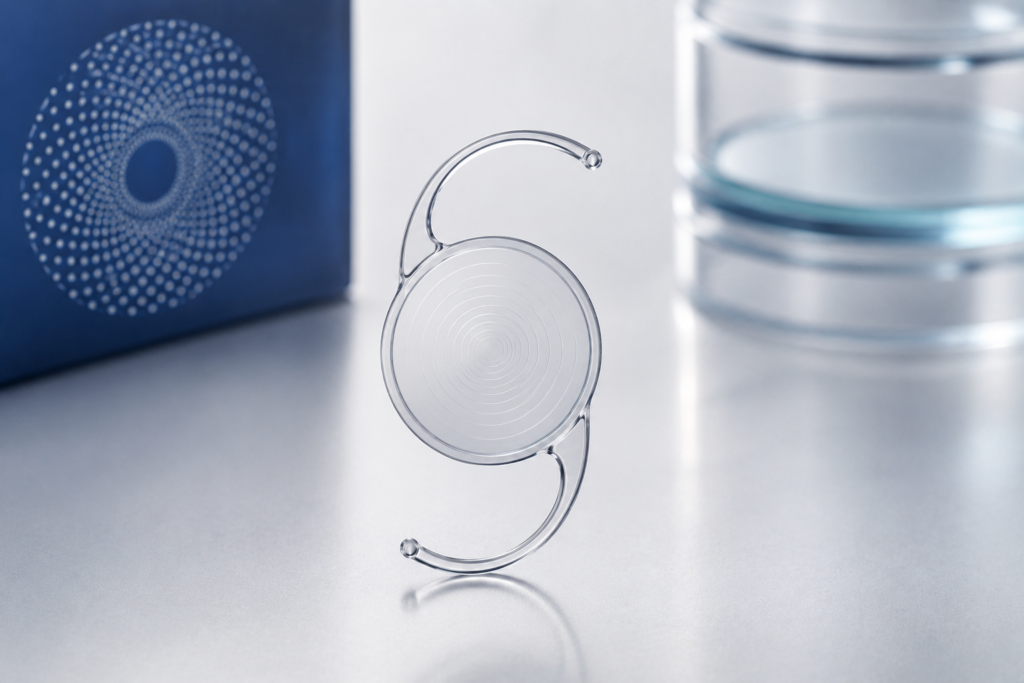
EDOF (Extended Depth of Focus) lenses are a premium intraocular lens option designed to create a smoother and more continuous range of vision, particularly between distance and intermediate focus. EDOF technology works by extending the eye’s depth of focus to create more natural visual transitions throughout everyday life.
This approach can help reduce dependence on glasses while minimising some of the sharper visual transitions and light phenomena sometimes associated with older multifocal lens designs.
EDOF lenses are especially popular among patients who spend a lot of time driving, using screens, travelling or moving between different visual environments throughout the day.
Features & Benefits
| Lens Feature | Patient Benefit |
|---|---|
| Extended Depth of Focus | Creates a smoother range of functional vision between distance and intermediate focus. |
| Reduced Visual Transitions | Designed to provide more natural movement between viewing distances. |
| Enhanced Intermediate Vision | Particularly useful for screens, dashboards, office work and modern lifestyles. |
| Reduced Glare Potential | Many patients experience fewer halos and light disturbances compared to older multifocal designs. |
| Greater Visual Freedom | Helps reduce dependence on glasses for many everyday activities. |
The Procedure
EDOF lens surgery is a straightforward procedure performed under local anaesthesia. The treatment typically involves the following steps:
- Preoperative Assessment: Our surgical team carries out a detailed evaluation of the eyes, including measurements of the cornea, pupil size and eye length to help determine the most suitable EDOF lens for your visual needs.
- Lens Removal: A small incision is made in the cornea, and the natural lens is gently softened and removed using advanced ultrasound technology known as phacoemulsification.
- Lens Implantation: The EDOF lens is folded and inserted through the same small incision. Once inside the eye, the lens unfolds naturally and is positioned securely. The procedure typically takes around 15 to 30 minutes per eye.
- Recovery and Adaptation: Most patients notice visual improvement within the first few days following surgery. As the eyes heal, the brain gradually adapts to the smoother visual transitions created by EDOF lens technology.
- Aftercare: Personalised aftercare appointments and prescription eye drops are provided to support healing and monitor your visual progress following treatment.
Benefits
- Smoother Vision Between Distances: EDOF lenses are designed to create more natural transitions between distance and intermediate vision for everyday activities.
- Reduced Dependence on Glasses: Many patients enjoy greater visual freedom for driving, screen use and day-to-day life without constantly switching glasses.
- Modern Lifestyle Performance: EDOF technology is particularly well suited to digital lifestyles, helping support clearer vision for computers, tablets and modern working environments.
Challenges and potential risks
- Visual Adaptation: Some patients may notice halos, glare or mild visual fluctuations during the early healing period as the brain adapts to the new optics.
- Reading Glasses for Fine Print: While EDOF lenses are designed to improve distance and intermediate vision, some patients may still prefer reading glasses for very small print or prolonged close-up work.
- Surgical Risks: As with any eye surgery, there is a small risk of infection, inflammation or complications that could affect vision.
What’s the next step?
Come and visit us, book now using our contact form to attend your no-obligation consultation, or call our friendly team on 020 7224 1005
FAQs
Are EDOF lenses suitable for driving in London?
Yes. EDOF (Extended Depth of Focus) lenses are particularly popular among patients who spend a lot of time driving, commuting or travelling around London. The technology is designed to provide strong distance and intermediate vision, which can be especially useful for dashboards, navigation systems and everyday driving situations.
Will I still need reading glasses after EDOF lens surgery?
Many patients experience significantly reduced dependence on glasses after EDOF lens treatment. However, unlike some trifocal lenses, EDOF lenses prioritise smoother distance and intermediate vision, so some patients may still prefer light reading glasses for very small print or prolonged close-up reading.
Why are EDOF lenses becoming more popular in London eye clinics?
Modern lifestyles involve constant switching between screens, phones, office work and driving. EDOF lenses are becoming increasingly popular in London because they are designed to support these everyday visual demands while offering a more natural visual experience with reduced glare and halos for many patients.
How long does recovery take after EDOF lens surgery?
Most patients notice improved vision within the first few days after surgery, although vision can continue refining over several weeks as the eyes heal and adapt. At London Vision Clinic, detailed aftercare appointments help monitor recovery and optimise long-term visual outcomes.