
Technology
Technology is at the heart of modern vision correction. Every stage of laser eye surgery, from your initial assessment to the procedure itself, is guided by advanced diagnostic and surgical systems designed to measure, plan and deliver treatment with exceptional precision. These technologies allow your surgeon to understand the unique structure and behaviour of your eyes in microscopic detail, ensuring that any treatment is tailored specifically to you.
Rather than relying on standard prescriptions alone, modern systems analyse the full optical characteristics of your eye, including corneal shape, thickness, focusing behaviour and visual quality. This level of detail allows your surgeon to select the safest and most effective approach, improving both visual clarity and long-term stability.
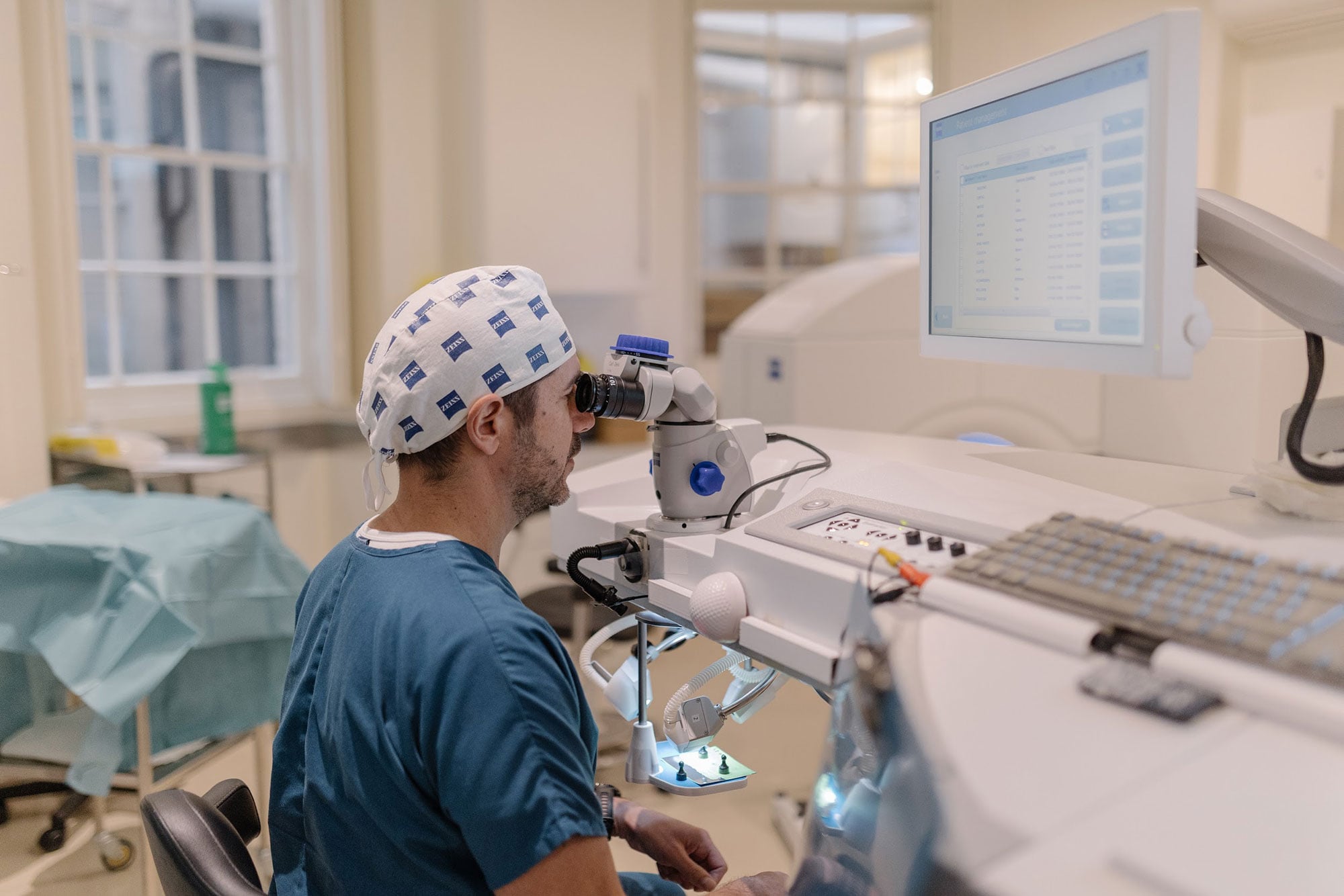
Diagnostic Technologies
Topography and tomography
These scans create detailed maps of the front and internal structure of your cornea. Topography measures the surface curvature, while tomography examines deeper layers, allowing your surgeon to assess corneal stability, shape and suitability for treatment. This is essential for identifying even subtle irregularities that may influence your treatment plan.
Pachymetry
Pachymetry measures the thickness of your cornea with extreme accuracy. Corneal thickness is a critical safety factor, as it determines how much laser correction can be safely performed while maintaining long-term structural stability.
Very high-frequency digital ultrasound
This advanced imaging technology measures the individual layers of your cornea in microscopic detail. It allows your surgeon to understand the precise anatomy of your eye and plan treatment with an exceptionally high level of accuracy.
Pupillometry
Pupillometry measures how your pupil behaves in different lighting conditions, including low-light environments. This helps your surgeon plan treatment that maintains high-quality vision in both daytime and night-time conditions.
Wavefront aberrometry
Wavefront analysis measures how light travels through your eye, identifying subtle optical imperfections beyond standard prescription measurements. This allows treatment to be personalised to improve clarity, contrast and overall quality of vision.
Tonometry
Tonometry measures the pressure inside your eye. This is an important part of assessing overall eye health and ensuring there are no underlying conditions that could affect treatment safety.
Corneal biomechanics
Measurement of the corneal biomechanics is an important part of evaluating suitability for laser surgery.
Quality of vision measurement
This evaluates how clearly and efficiently your visual system performs in real-world conditions. It helps identify issues such as glare, blur or reduced sharpness that may benefit from customised treatment.
Night vision simulation
Night vision testing assesses how your eyes perform in low-light environments. This helps predict visual quality when driving at night or in dimly lit settings, allowing treatment to be planned accordingly.
Contrast sensitivity testing
This measures your ability to distinguish subtle differences between light and dark. Good contrast sensitivity is essential for clear vision in everyday environments, particularly in low light or poor weather conditions.
Ocular dominance and tolerance assessment
This identifies your dominant eye and evaluates how your eyes work together as a visual system. This is particularly important when planning treatments designed to improve vision at multiple distances.
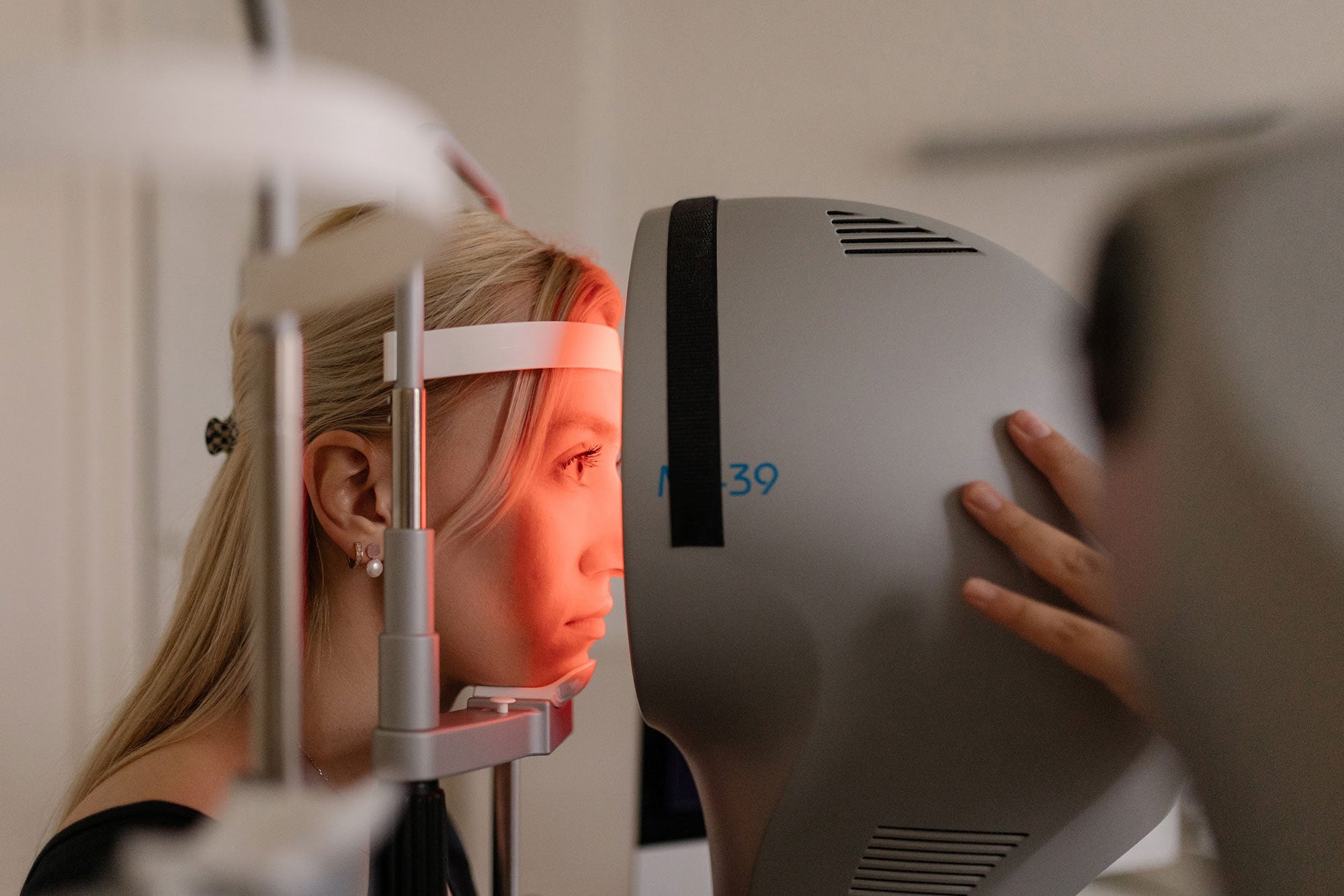
Surgical Technologies
Microkeratome
A microkeratome is a precision surgical instrument used in some LASIK procedures to create a thin flap on the surface of the cornea. This allows the laser to reshape the underlying tissue safely and accurately.
Femtosecond laser
A femtosecond laser uses ultra-fast pulses of light to create precise, microscopic tissue separation within the cornea. This technology allows surgeons to perform highly controlled, blade-free procedures with exceptional accuracy.
Excimer laser
The excimer laser is the core technology used to reshape the cornea and correct vision. It removes microscopic amounts of tissue with extreme precision, guided by detailed measurements taken during your assessment.
Active eye tracking
Eye tracking technology monitors and follows the natural movements of your eye during treatment in real time. This ensures the laser remains perfectly aligned, maintaining accuracy throughout the procedure.
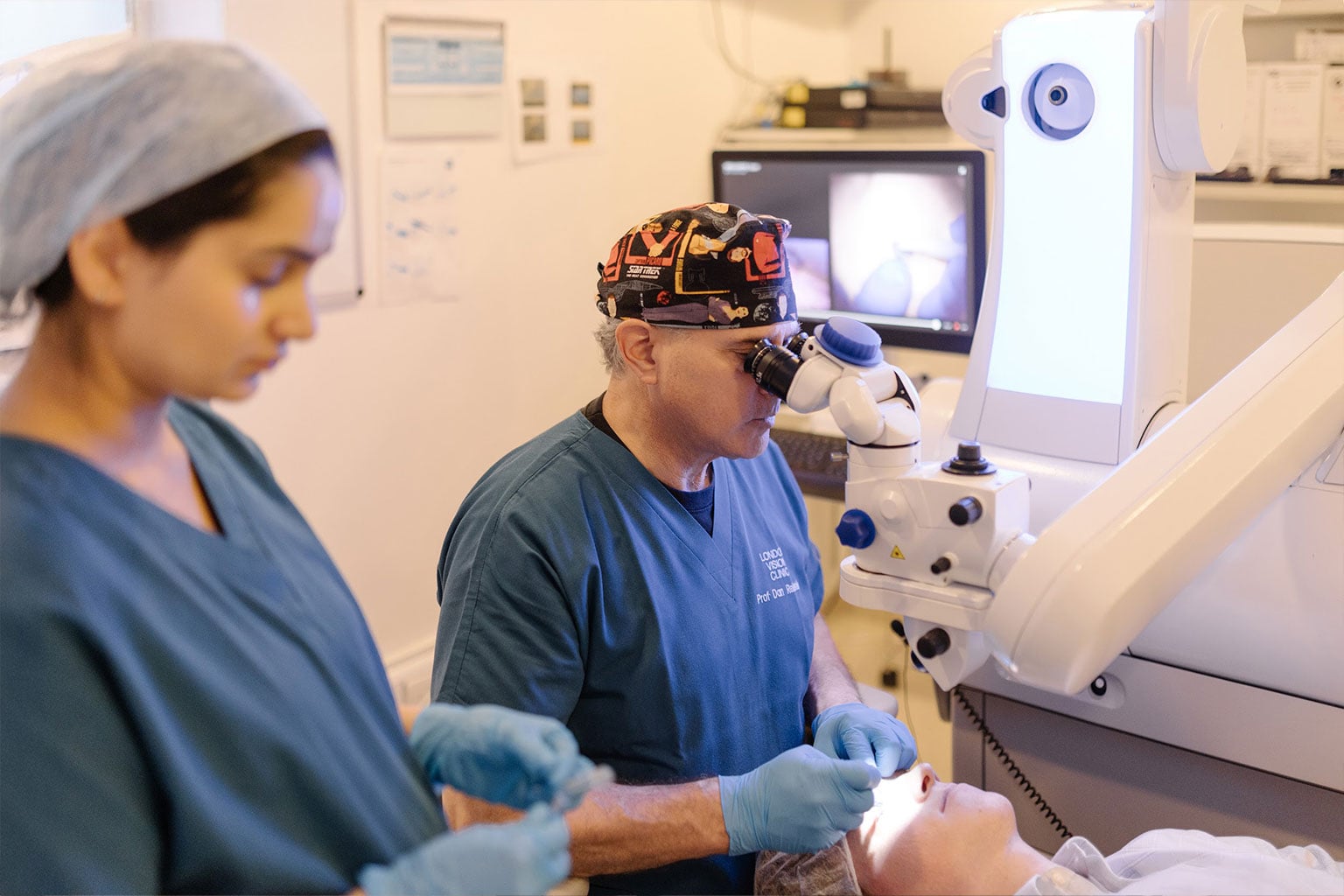
Personalised Treatment Technologies
Wavefront guided treatment
Wavefront guided treatment uses detailed measurements of the eye’s optical system to identify and treat higher-order aberrations — subtle optical imperfections that cannot be corrected with glasses or contact lenses. It is particularly useful in eyes where these aberrations are elevated and are affecting the quality of vision, allowing the laser treatment to be customised to reduce them as well as correcting the prescription.
Customised wavefront optimised treatment
Wavefront optimised treatment is designed to preserve the natural shape of your cornea while correcting your prescription. This helps minimise the induction of new optical imperfections and maintain high-quality vision, particularly in low-light conditions. This is the treatment approach we use for most people, whose eyes have normal levels of higher-order aberrations.
Topography guided treatment
Topography guided treatment uses detailed maps of the corneal surface to create a customised laser treatment. It is used when an irregularity in the shape of the cornea is affecting the quality of vision, allowing the laser to selectively reshape and regularise the corneal surface to improve visual quality.
Together, these technologies allow laser eye surgery to be planned and delivered with extraordinary precision. By combining detailed diagnostic analysis with advanced surgical systems, your treatment can be tailored specifically to your eyes, helping achieve safe, predictable and high-quality visual outcomes.