
FREE Consultation
Trifocal Lens Exchange. Say farewell to glasses!
Available from london vision clinic
Whether browsing Instagram, working on your laptop or reading a restaurant menu, if you have to read the text at an ever-increasing distance, then it is likely you have close-range vision impairment.
Implantable Trifocal Lenses
What You Say About London Vision Clinic
What are Trifocal lenses?
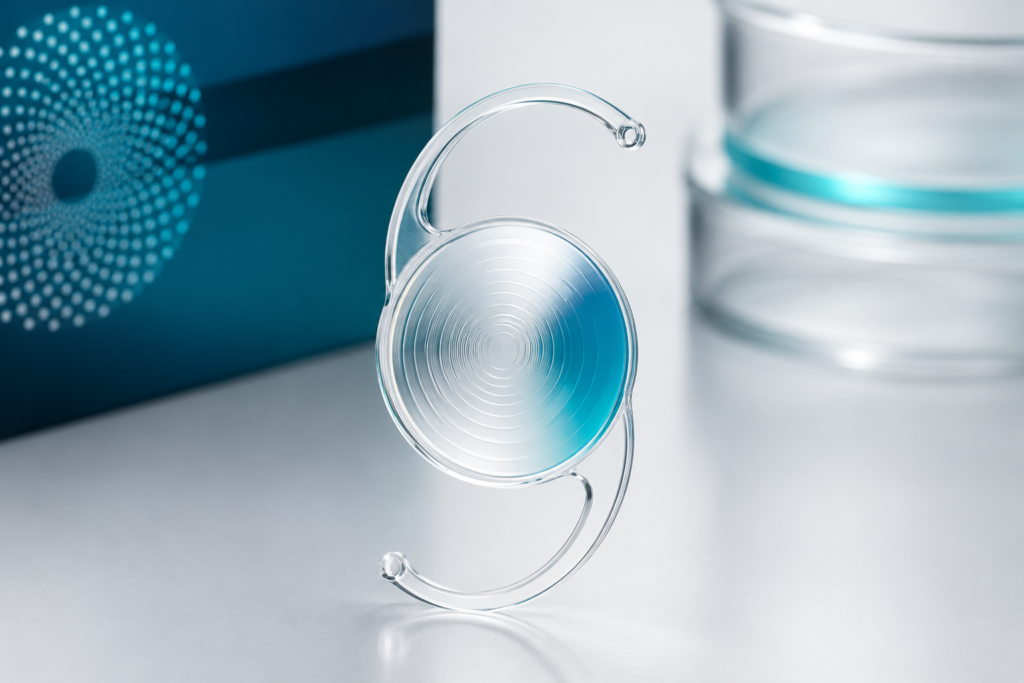
Trifocal lenses are advanced intraocular lenses that correct vision across three focal points: near (reading), intermediate (computer work), and distance (driving). Unlike traditional monofocal lenses, which only address one focal point, or bi-focal lenses, which cover two, trifocals offer a comprehensive solution, making them an excellent choice for those seeking a glasses-free lifestyle.
These lenses use advanced optics to split light entering the eye, allowing for clear vision at all distances.
Features & Benefits
| Lens Feature | Patient Benefit |
|---|---|
| High Optical Precision | Clear vision across near, intermediate and distance ranges. |
| Reduced Light Scatter | Designed to minimise glare and visual disturbances. |
| Enhanced Night Vision | Improved clarity in lower-light and evening conditions. |
| Advanced Contrast Quality | Sharper detail recognition and more natural visual depth. |
| Glasses Independence | Many patients reduce or eliminate everyday glasses use. |
The Procedure
Trifocal lens exchange is a straightforward surgery performed under local anaesthesia. The procedure involves the following steps:
Preoperative Assessment: Our surgical team conducts a very thorough evaluation of the patient’s eyes, including measurements of the cornea, pupil size, and the length of the eye. This ensures the selection of the most suitable lens.
Lens Removal: A small incision is made in the cornea, and the natural lens is gently broken up using ultrasound technology (called phacoemulsification) and removed.
Lens Implantation: The trifocal lens is folded and inserted into the eye through the same incision. Once inside, the lens unfolds and is positioned securely.
The trifocal/multifocal lens corrects presbyopia in addition to other existing vision disorders such as near/farsightedness and astigmatism. The procedure typically takes 15–30 minutes per eye. Most patients have one eye treated at a time, with a short interval between surgeries.
Benefits
- Improved Vision at All Distances: Trifocal lenses provide seamless vision for daily activities, from reading to driving.
- Freedom from Glasses: Many patients no longer require glasses or contact lenses after the procedure.
- Cataract Prevention: As the natural lens is replaced, patients will not develop cataracts in the future.
- Fast Recovery: Most people resume normal activities within a few days of surgery.
Challenges and potential risks
All surgery is not without some risks and possible issues. The commonest are a) Adaptation Period: Some patients experience halos or glare around lights, especially at night, though these typically subside within a few weeks, b) Surgical Risks: As with any surgery, there is a small risk of infection, inflammation, or complications affecting vision.
What’s the next step?
Come and visit us, book now using our form to attend your no-obligation consultation, or call our friendly team on 020 7224 1005
FAQs
How long does trifocal lens exchange recovery take?
Most patients notice significant visual improvement within the first few days after surgery, although vision can continue to refine over several weeks. Many people return to normal daily activities quickly, but aftercare appointments and prescribed eye drops remain an important part of the healing process.
Will I still need glasses after trifocal lens exchange?
Many patients achieve a high level of independence from glasses for reading, screen work and distance vision. However, every eye is different, and some patients may still occasionally prefer glasses for prolonged reading or certain detailed tasks.
Why do patients travel to London for trifocal lens surgery?
London is home to some of the UK’s most advanced vision correction clinics and surgical technology. Many patients choose specialist London eye clinics for access to experienced surgeons, premium lens technology and highly personalised treatment planning.
Can trifocal lens exchange prevent cataracts later in life?
Yes. Because the eye’s natural lens is replaced during trifocal lens exchange surgery, cataracts cannot later develop in the treated eye. This makes the procedure both a vision correction treatment and a long-term solution for future lens ageing.